California- October 2021
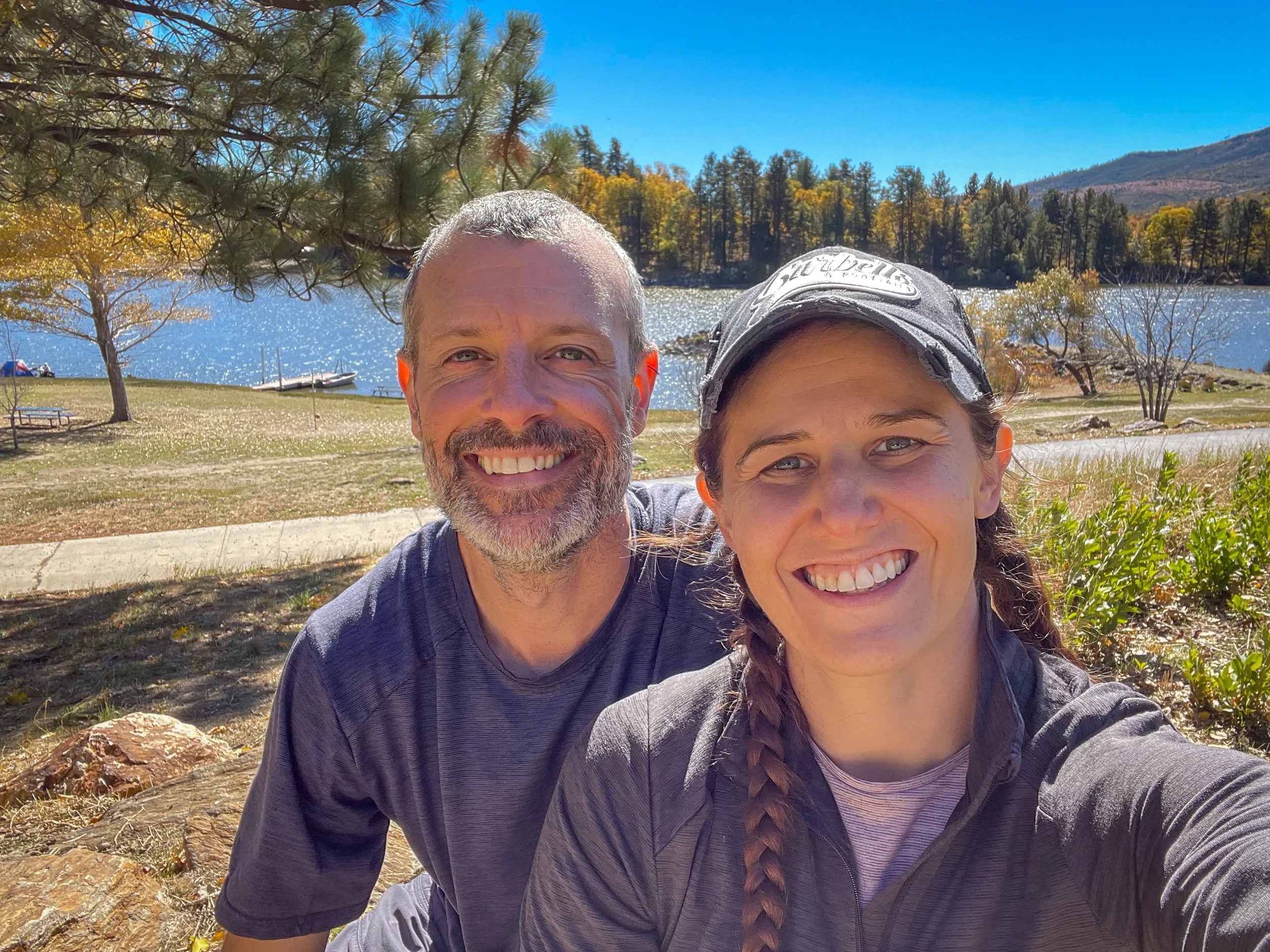
Lake Cuyamaca- San Diego County
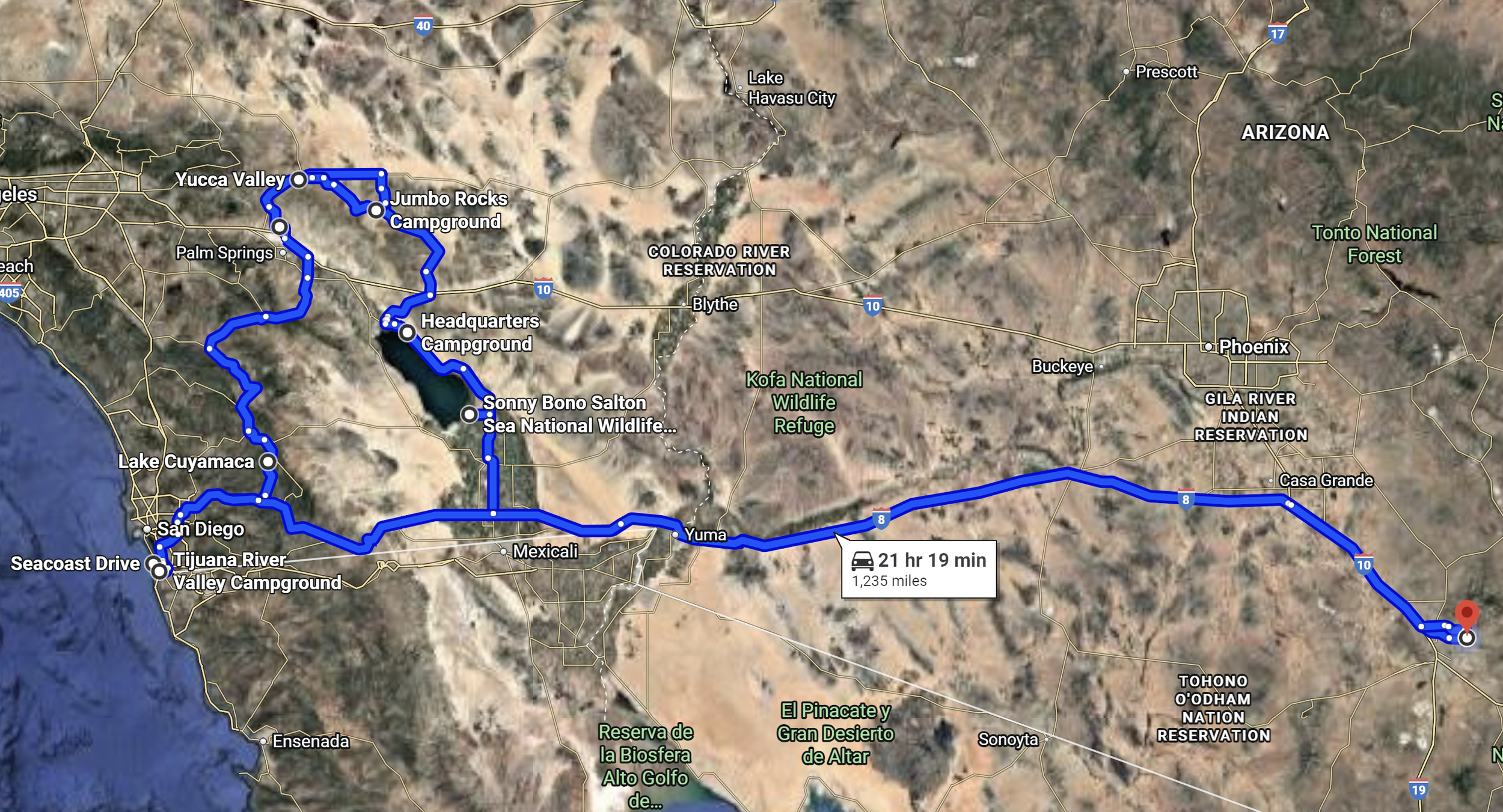
The route we drove, starting/ending in Tucson
“Learning to RV”
I’m typed this account almost exactly four years after the trip. I wasn’t journaling our trips at that point, so the details are a little more sparse than more recent trips. Hopefully I hit all the major points of interest. This trip had a major impact on how we explore and travel now, much more so than Costa Rica and even Australia. Both of those trips were absolutely wonderful, but this one literally shaped the vision of our future together. This adventure gave us a lot of firsts!
-First trip Chris planned, rather than Michelle
-First RV trip!
-First Domestic United States trip together (other than visiting family)
-First birding/photography trip
-First time Michelle visited California and the Pacific Ocean
-First time seeing the border wall (blech!)
10/23/21- “The Adventure Begins”
We rented a 25 foot Class C RV from Cruise America for this trip. Cruise America caters to beginner/first time RVers and they keep things very simple. The basic model sleeps 5 with a queen bed in the back, a queen bed over the cab and the dinette bench seat converts to a twin-size bed. We obviously didn’t need all that room for the just two of us, so we used the over-cab space to store luggage, camera bags, and such. There’s a kitchen with a sink, microwave, stove and mini-fridge, along with a pantry for dry goods. Lots of cabinets line the upper half of the RV and of course there is a toilet/shower. It had a small ceiling-mounted AC unit and propane-fueled baseboard heater. All the amenities of home!
I picked up the RV from Cruise America here in town, got the quick and dirty tour from the rental agent. I had already watched their tutorial video online and everything seemed pretty straight forward. The most important part included the how to work the gray water and black water valves. You see, the valves are open into the common dump pipe at the time of rental to air out the tanks and prove they are empty. (This will be important later). After the quick intro, I hopped behind the wheel and headed home to load her up. I even managed to navigate down a VERY narrow side street lined with traffic cones without nailing any of the cones! This was going to be a BREEZE!
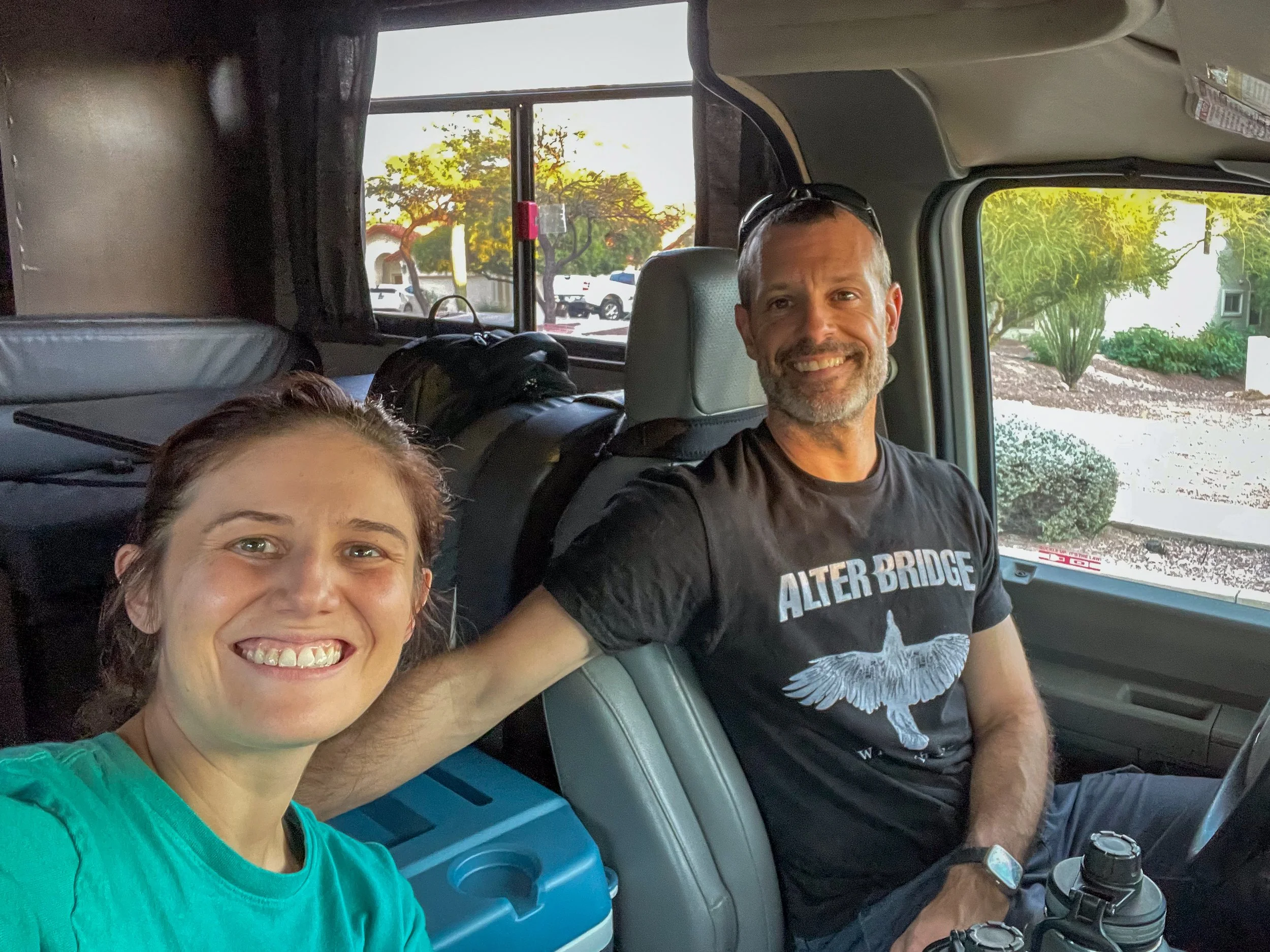
Loaded up and ready to roll!
Back home, it was time to load up! We put a big cooler between the captain’s chairs up front for road snacks/drinks and loaded up the RV with our own cookware, utensils, French press/coffee mugs, and linens to cut cost a little bit. (You can rent all of that stuff for people that are coming from out of town). Food, clothes, camera gear, toiletries, and two big 5-gallon water jugs made it in as well. It took a couple hours to get everything packed in and secure, then we hit the road. Our first stop- the Salton Sea, just over the border in southern California.
The Salton Sea is California’s largest lake, formed accidentally in 1905 when spring flooding on the Colorado River breached a canal gate used to provide water to the Imperial Valley for farming. The river flowed into the valley for two years before being stopped, forming the Salton Sea. It should have dried up over the next few decades, but local farmers kept it topped off by letting excess irrigation/flooding waters flow back into the lake. The Colorado River would also intermittently flood as well.
In the 1930s a wildlife refuge was established at the southern end of the lake due to huge numbers of migrating birds using the lake as a stopover along the Pacific Flyway. The construction of the Hoover Dam in 1938 finally stopped the influx of water from the Colorado River’s occasional flooding.
In the 50s and 60s, this place was all the rage. The lake was stocked with fish and numerous resorts popped up around its shores. Fishing, boating, and water skiing were popular activities on the lake, it was quite the summer getaway. A few big names even performed at the resorts here including Bing Crosby, The Beach Boys and even Ol’ Blue Eyes himself, Frank Sinatra.
Due to its location, agricultural runoff from the surrounding farmlands trickled into the Salton Sea over many decades, carrying high levels of salt, fertilizer and chemicals into the lake. In the 70s a few tropical storms, then Hurricane Kathleen (’76) dumped enough water to overflow the lake. This was a local disaster, flooding the surrounding towns and resorts, putting them completely underwater. The damage was irreparable and the popular resorts were no more.
The lake began to stink from all the runoff, toxic algal blooms began to occur, and even botulism became a severe problem. In a four-month period in 1996, 14,000 birds died from botulism here. The lake water levels have continued to recede, causing toxic dust from the dried up lakeshore to pollute the surrounding area and nearly abandoned towns nearby.
After painting that dire picture of the Salton Sea, you may wonder why we bothered to go here. Well, despite the rapidly receding water, increasing salinity and desolate landscape, it remains an incredible spot for avian biodiversity. The south end of the lake has the 5th highest species count of any hot spot in California and if you tally up all the birds around the entirety of the lake, it is in excess of 400 different species! It’s also a great place for photography- if you like the ghost-town, desolate motif. We had to check it out.
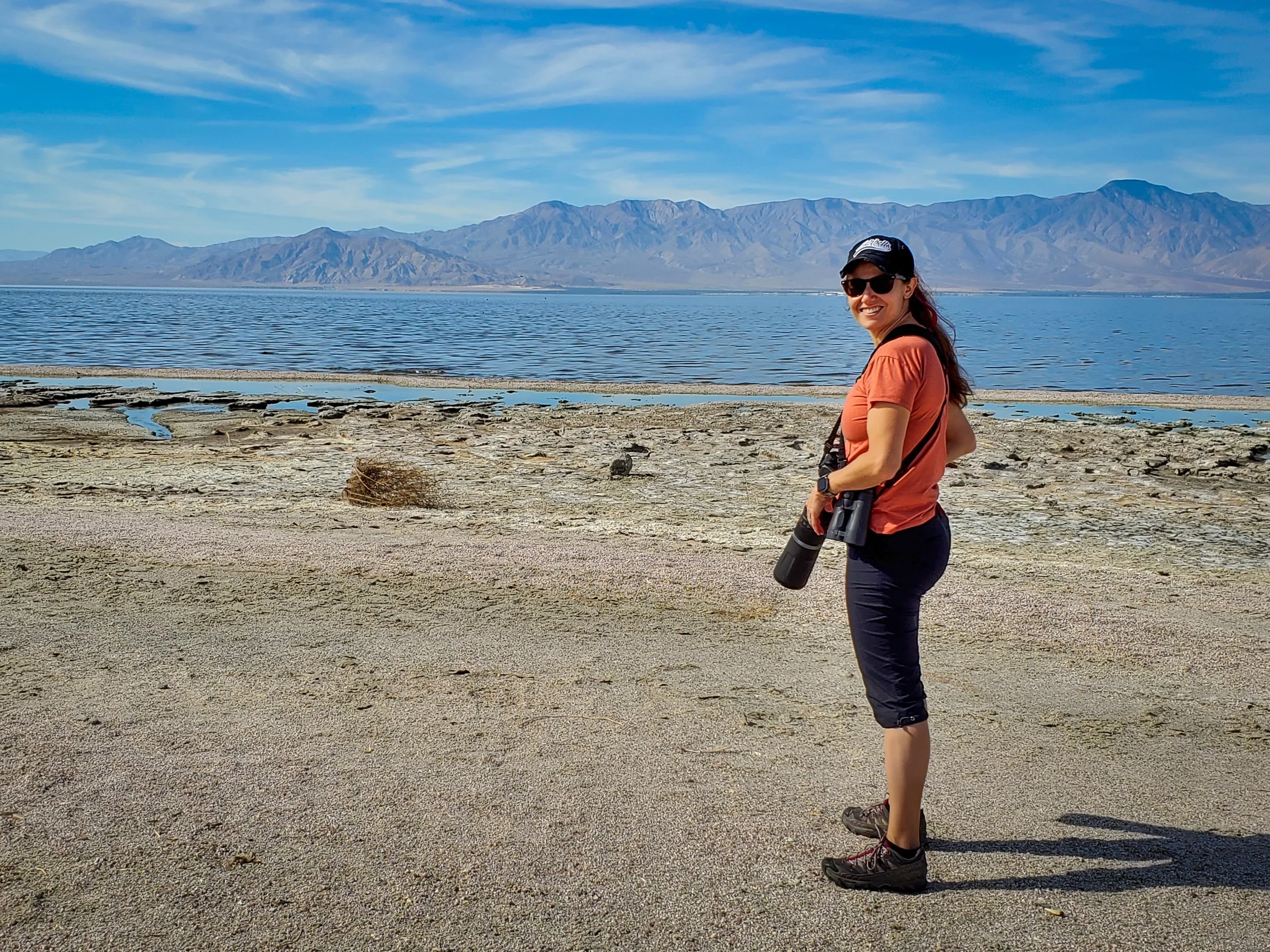
Headquarters Campground- The Salton Sea
The drive from home was about 5 and a half hours, straight west on Interstate 8. This takes you through Yuma, right on the border with Mexico and into the Imperial Valley. Here you head straight north through vast farmland- mostly used for growing alfalfa.
During our last few miles here, we learned an important RVing lesson. I wasn’t familiar with the roads or handling capabilities of the RV yet. This led me to taking a corner just a little too fast. As I did, one of our 5-gallon water jugs flew off the kitchen counter, hit the floor and had a blowout. We were on a road with no good place to pull over, so for some reason we thought it was a good idea for Michelle to go back and clean up while I kept driving. We were very careful and she managed this just fine, thankfully. We kept the water jug in the sink thereafter. Secure your stuff, folks!
Our campground was on the northeastern shores of the Salton Sea at Headquarters Campground. We arrived around 9pm and were the only people in the campground. It was a bit surreal and honestly weirded me out a little bit, this being our first night in an RV in the middle of nowhere. All went well though. We found our spot, figured out the hookups and got settled in for the night.
10/24/21 “The Salty Stinky Sea”
I don’t recall how we slept, but I can’t imagine it being very restful. The mattress was fine, but quite squishy and had a built-in plastic cover to make it waterproof. It was very crinkly and loud every time either of us moved, and I’m a very restless sleeper. We were up around 7am and made coffee with our new French press (yum!) and did a few minutes of casual birding at the RV while we tried to get going. Lots of Great-tailed Grackles and European Starlings and a smattering of bird species that we commonly see back home.
We took our time making breakfast and getting ready for the day and finally left the vicinity of the RV around 10am. The smell hits you right away, and it’s nothing like that fresh salty breeze you get at the ocean. More like salt, fertilizer, poop and dead things- not great. The scenery is nice though, at least here at the north end. The lake is huge and the southern end of the Santa Rosa mountains lies across the lake as a backdrop. Otherwise it’s dry and dusty, kinda like home in Tucson. Our path took us south down a mile of the lakeshore and back, spending around 2 hours total. There were a fair number of shorebirds, gulls and terns on the water that grabbed our attention. Snowy Egrets, Willet, Black-necked Stilts, and Least Sandpipers were flitting about the shores. Ring-billed Gulls and Forster’s Terns made occasional fly-bys as well. Some teals, phoebes, grebes and a few sparrows rounded out the list. We saw 28 species in all, thirteen of which were lifers. It was a pretty solid start to our trip.
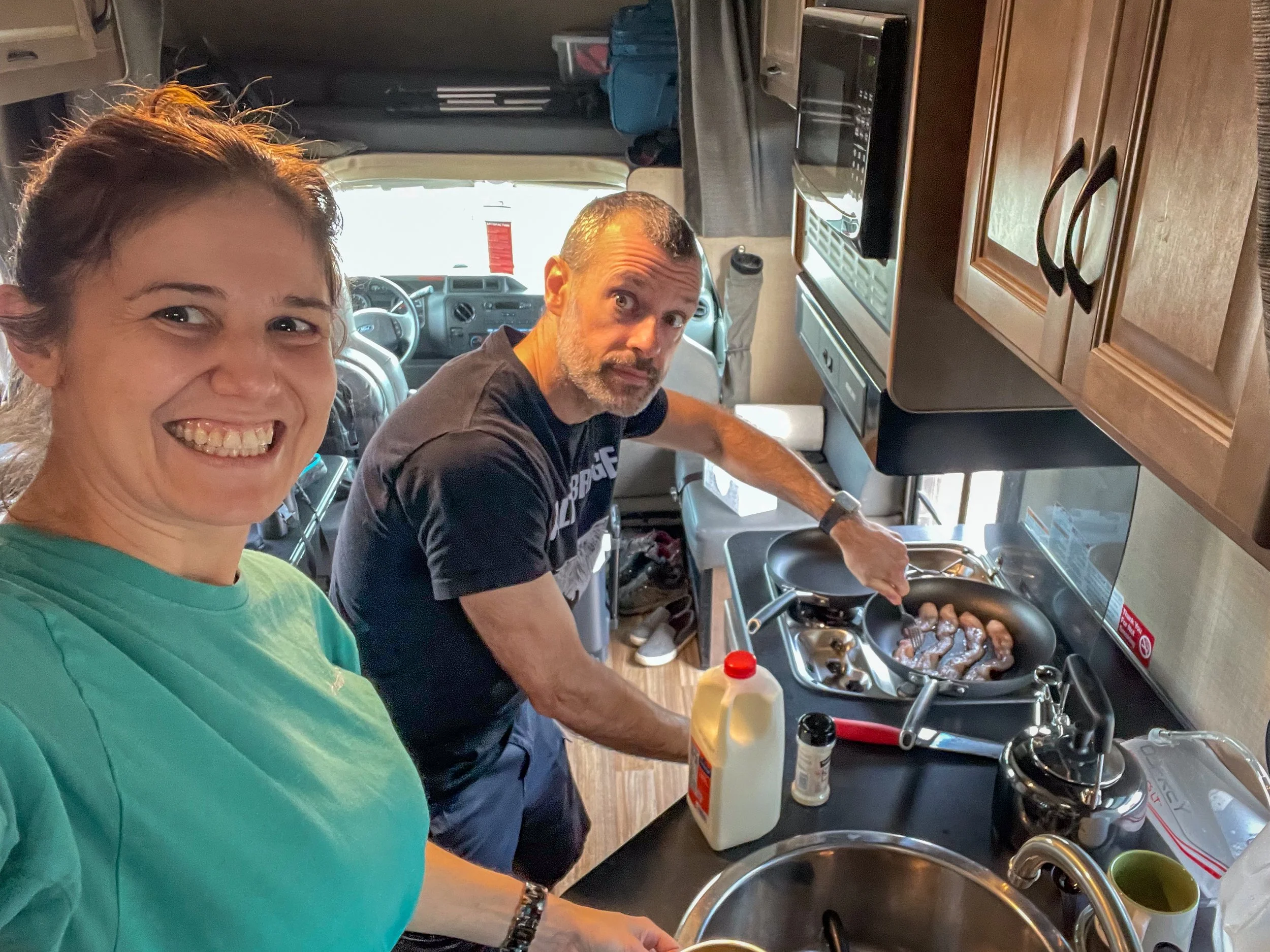
First breakfast in the RV!
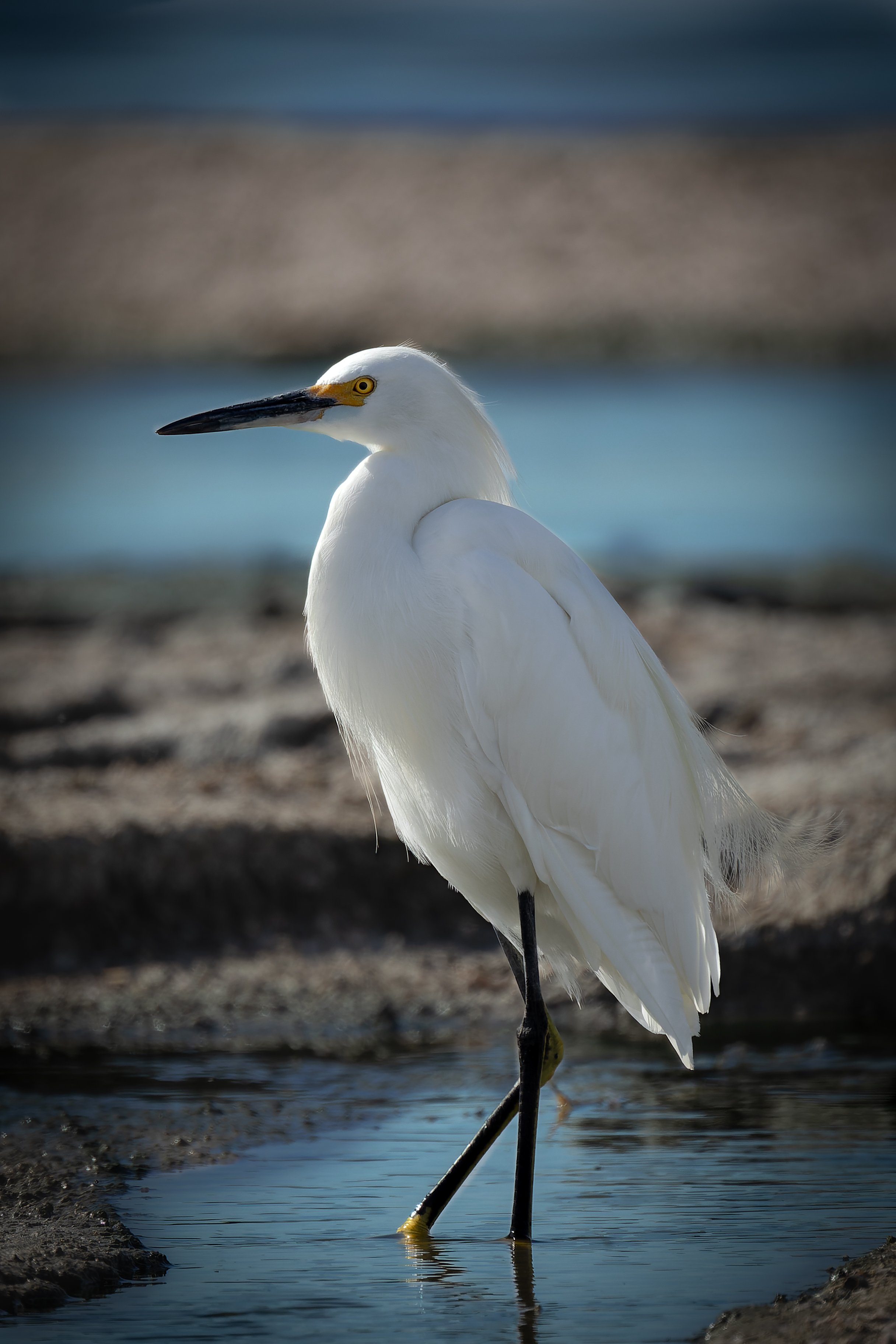
Snowy Egret- The Salton Sea
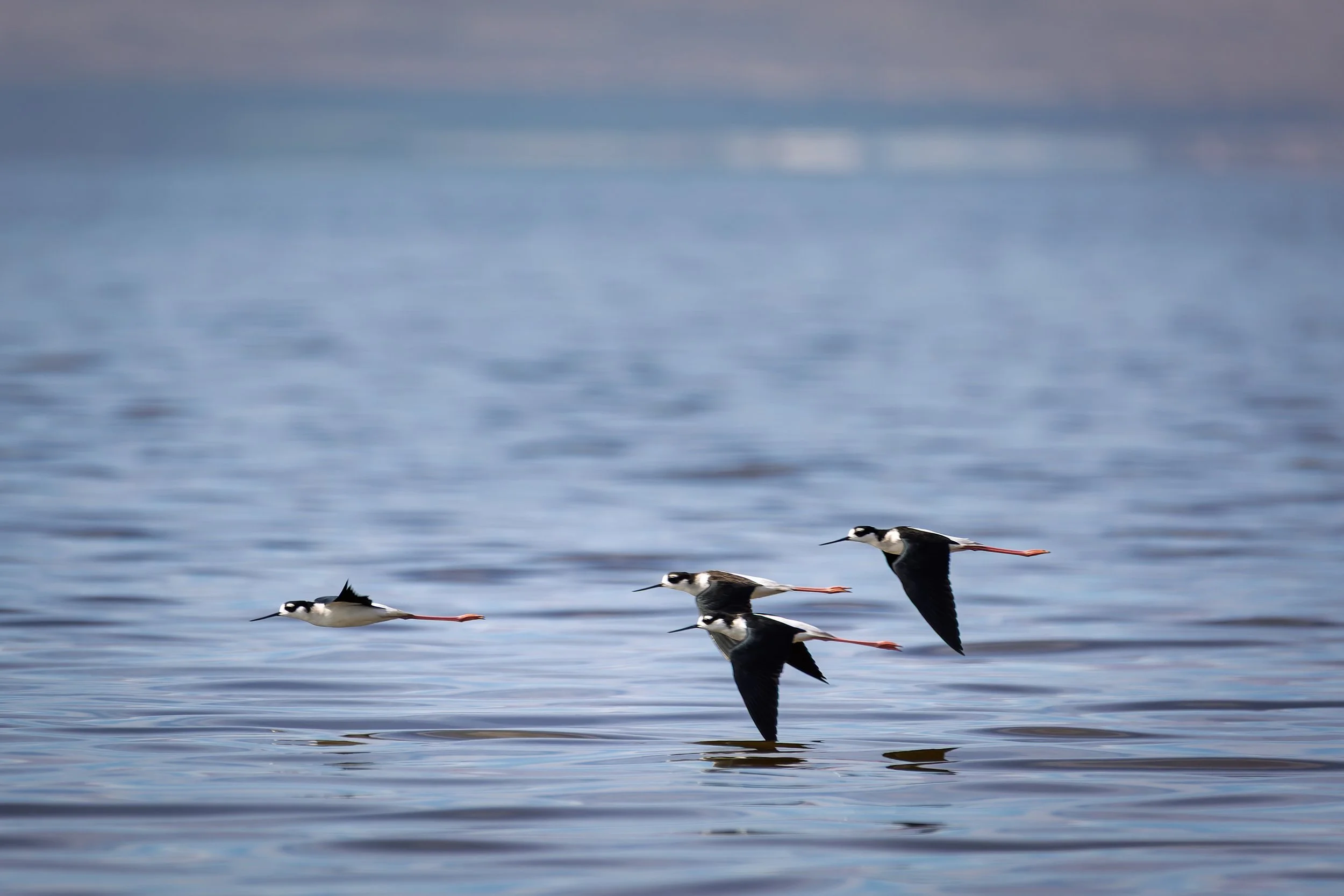
Black-necked Stilts- Salton Sea
From here we headed southeast along the shores of the Salton Sea. We checked out a few abandoned “towns,” but didn’t spend much time at them- Michelle was a little creeped out. Our next stop was Sonny Bono Salton Sea National Wildlife Refuge. This 2200 acre refuge was renamed in 1998 for congressman Sonny Bono (of Sonny & Cher fame) for his concern regarding the importance of this area and the ecological difficulties it was facing. It remains an important stopover for many bird species on the Pacific Flyway during migration. There are a number of different habitats here including wetland, open water, farmland and lakeshore. Thus, it’s a great place to see numerous different birds and other wildlife.
We spent another two hours here, mainly walking on the Rock Hill Trail (an extinct volcano, and the high point of the refuge). Our hike focused on a huge agricultural field and small freshwater lake. It was a lot “birdier” here adding species like Snow Goose, Northern Pintail, Northern Shoveler, Ruddy Duck, Marbled Godwit, Double-crested Cormorant, American White Pelican, Northern Harrier, and many others. We tallied up 44 species, and saw somewhere between 350 and 400 individual birds. Seven were life species. Bonus- it didn’t smell bad down here!
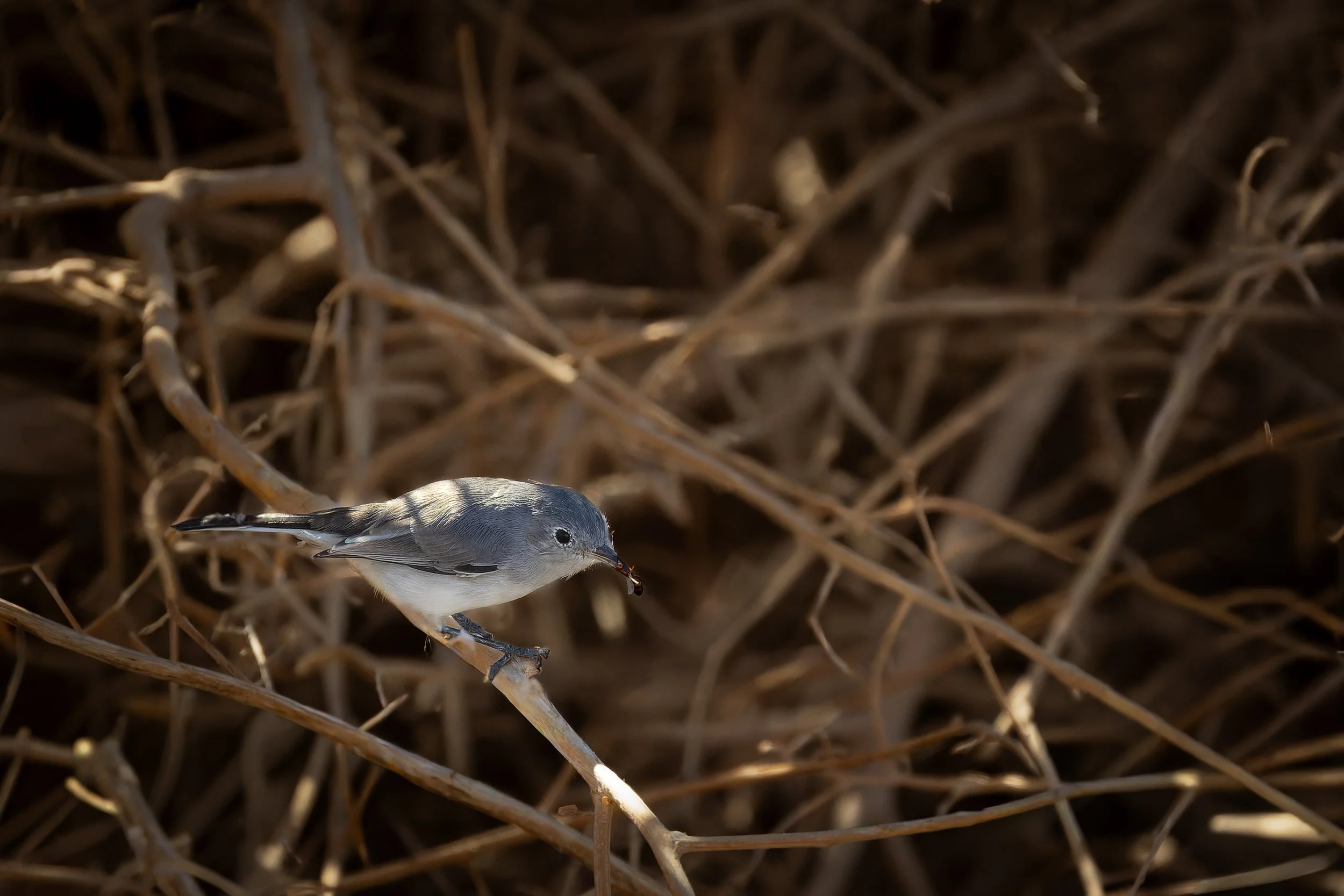
Blue-gray Gnatcatcher- Sonny Bono NWR, CA
It was around 4pm and the sun was starting to sink lower toward the horizon. We decided to hop back into the RV and look for one of our major targets for the trip. They were reported to be common in this area- preferring open grassy areas with lots of bugs. Typically, the are seen alongside the road at agricultural fields- usually perched on small berms or posts. We kept our cameras on our laps and started to cruise the dirt roads east of the reserve, scouring the roadside water channels. It didn’t take terribly long before we found our targets masquerading as rocks along the channels- Burrowing Owls! These small owls are incredibly cute, full of personality and not at all what people think of when they hear the word “owl.” They’re quite small, active during the day, and nest underground in Prairie Dog or tortoise burrows. We managed to see seven of these charismatic creatures, and even got some great pictures. Along the way we also saw several lifer Savannah Sparrows and Western Meadowlarks!
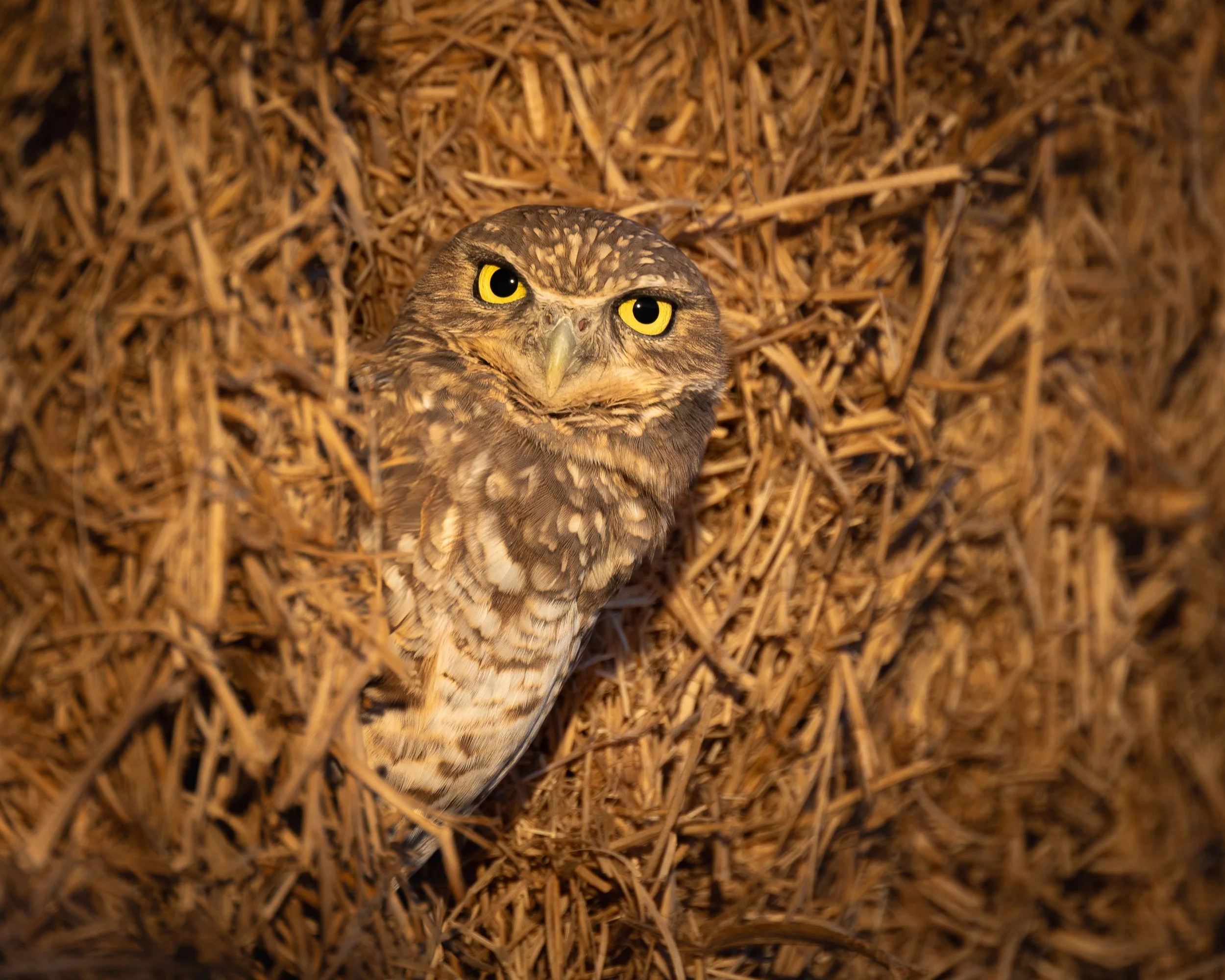
Burrowing Owl- Imperial Valley
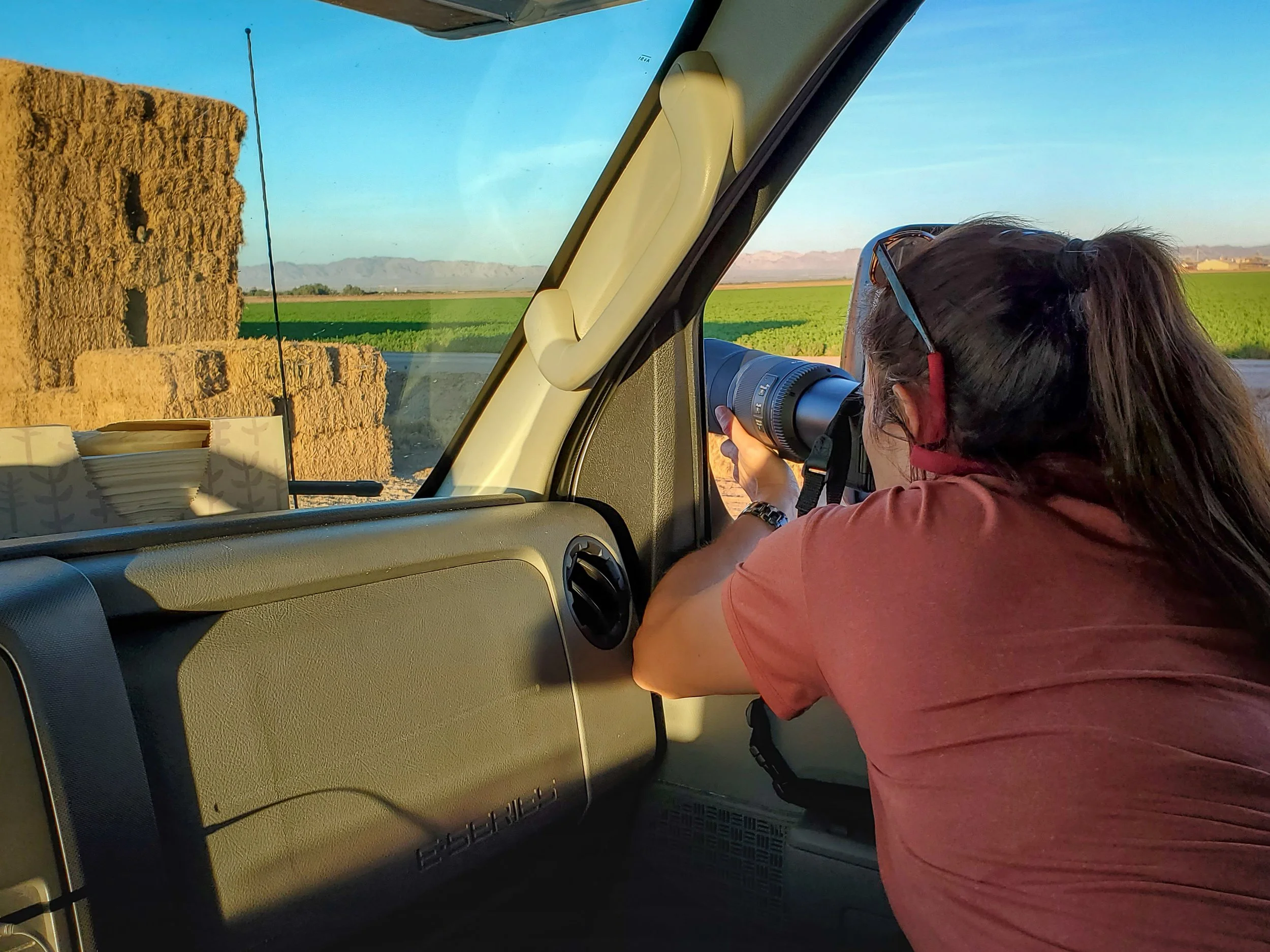
Michelle “sniping” the previous image from the RV
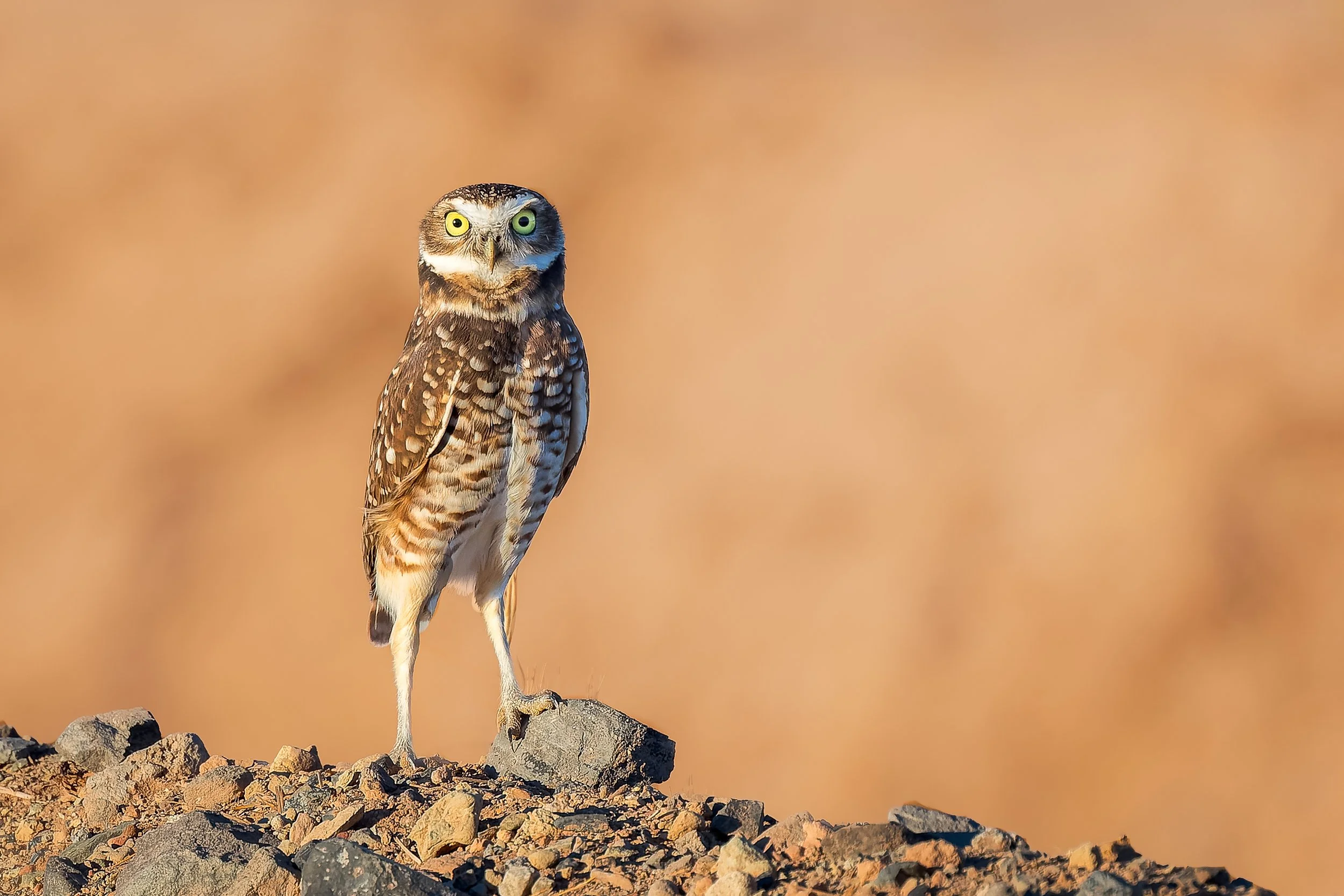
Burrowing Owl- Imperial Valley
At around 5:30pm, as the last light was waning in the golden hour, we had to say goodbye to the Imperial Valley. We had a roughly two hour drive north to our campground at Jumbo Rocks in Joshua Tree National Park! The majority of the drive was in the dark after sunset, so wasn’t particularly spectacular, but I imagine that would not be the case in the daytime. It’s a winding drive on the edge of the desert, near the foothills of the Little San Bernadino Mountains. We’ll have to retrace our steps here in the daytime to get the views we missed on this trip.
We arrived at Jumbo Rocks around 7:30pm and managed to get backed into our campsite without any incidents. A fairly impressive feat, as this was the first careful parking job I had to do in the rig and it was a very tight squeeze. Our site only accommodates RVs up to 26 feet and we were in a 25 footer. Excited to explore the park in the morning, we made dinner in our little kitchen and called it a night.
10/25/21- “The Alien Trees”
The morning broke clear and crisp, in the mid-50s. We were up around 8am with our coffee and made a quick breakfast- Bacon, pancakes and eggs (for me- M is allergic). We relaxed for a bit, then had some work to do. First off, we headed to the east entrance to buy our America the Beautiful annual pass. The park is open 24/7 are there are no gates keeping you out, so you can show/purchase your pass on the way out. Pretty smart. The line wasn’t too bad and quickly we were legal and on our way north to Twentynine Palms. You see, today was the day I realized that I had made a real rookie mistake. After renting the RV, I hadn’t remembered to close the gray and black water valves. Both of us had used the facilities a few times over the last two days, so now there was sink water and human waste in the sewer outlet. We had to do something about this. Today. Ugh.
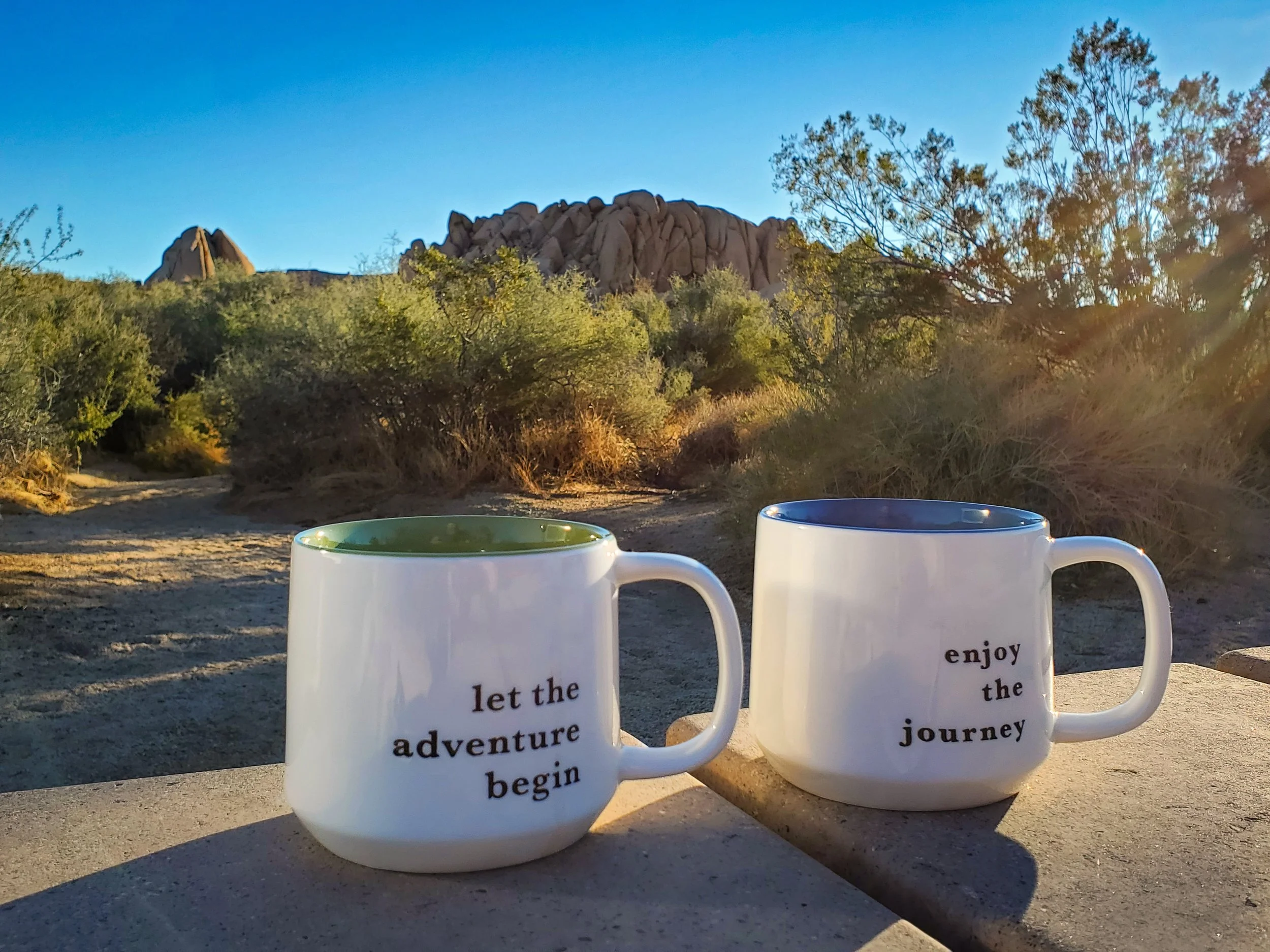
Sunrise at Joshua Tree National Park
We left the park towards Twentynine Palms for lunch and supplies, but didn’t find anything suitable in that tiny town. Looking on Google Maps, we saw there was a super Walmart out west past Joshua Tree (the town proper). So we headed west on 29 Palms Highway past Joshua Tree (which is quite cute) to the Wal-Mart in Yucca Valley for supplies. In addition to a box of gloves and a bucket, we needed a couple wooden utensils for cooking and a few other miscellaneous things we overlooked. I stayed with the RV (I’m going to pretend that it was for safety and not because I just plain hate Walmart) and Michelle went in and bought all our supplies. That done, we looked for a nice local place to eat, but didn’t find anything super tempting. I believe we ended up eating McDonald’s or something equivalent. Lame.
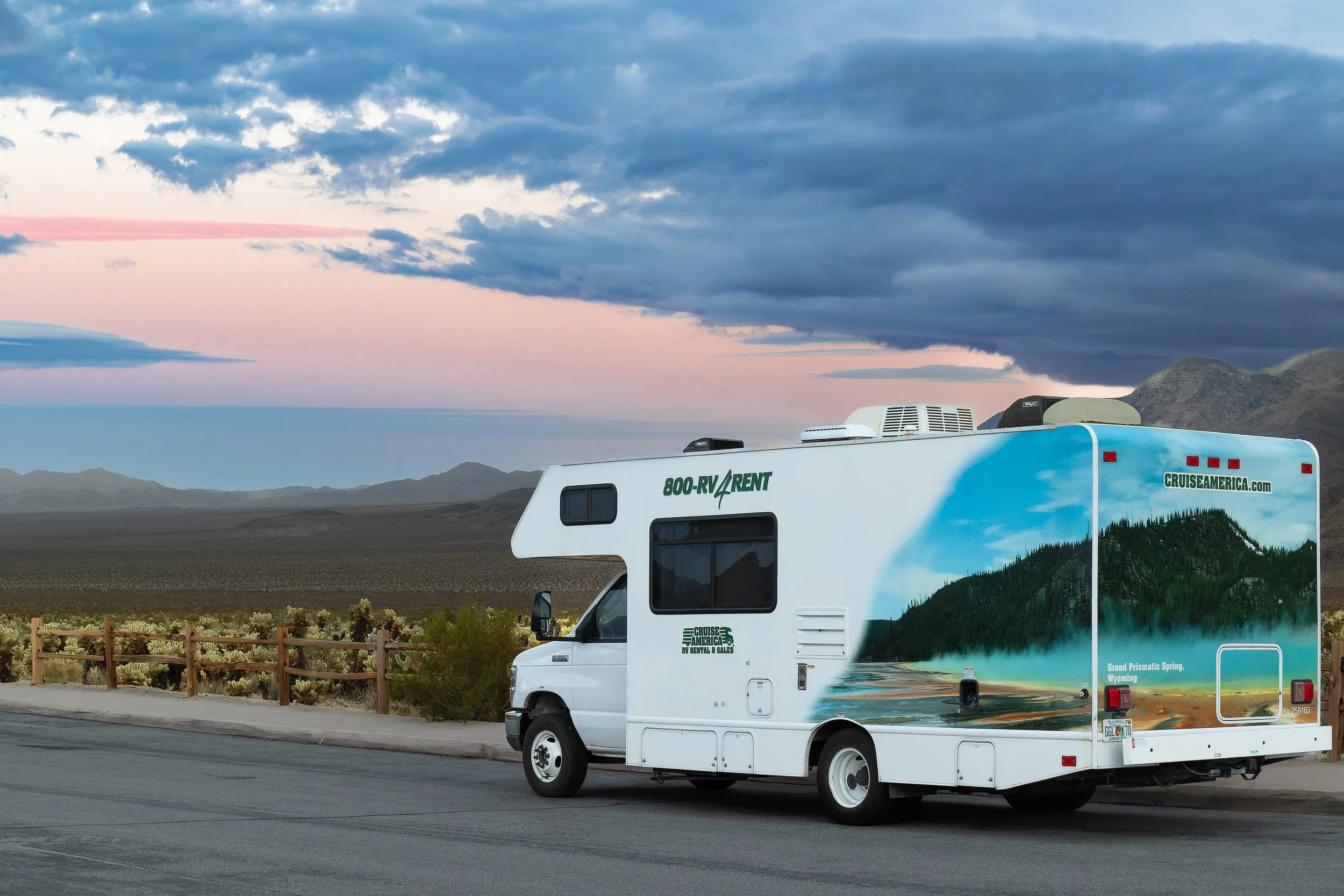
The rig at the Cholla Cactus Garden
Joshua Tree National Park
Now equipped to deal with my stupidity, we headed into Black Rock Canyon Campground to the nearest dump station. We got the sewer outlet as close to the dump receptacle as possible, I gloved up, grabbed the bucket, and prayed as I opened the cap. It wasn’t a great time. But luckily there wasn’t that much volume, not even half the bucket. Everything emptied, valves CLOSED, and a new deodorant pack flushed down the toilet. Phew. Crisis averted, lesson learned, we headed back into the park to start our JTNP adventure.
Joshua Tree National Park is a pretty big place, slightly larger than the state of Rhode Island. It’s named for the funky looking yucca plant endemic to the area. The neat part about this is that the Joshua Tree is ONLY in the higher elevation, cooler Mojave Desert in the western part of the park. The eastern portion of the park is in the Colorado Desert, which is a small portion of the Sonoran Desert. The park transitions between these two deserts at around 3000 feet of elevation. The other thing the park is known for is the large alien-landscape of rock formations. The oldest of these are about 1.7 billion years old! Most were formed by millions of years of erosion from ground water and flooding. Popular activities here are camping, hiking, rock climbing, and stargazing. JTNP is a designated dark sky area and is one of the darkest areas at night in the United States.
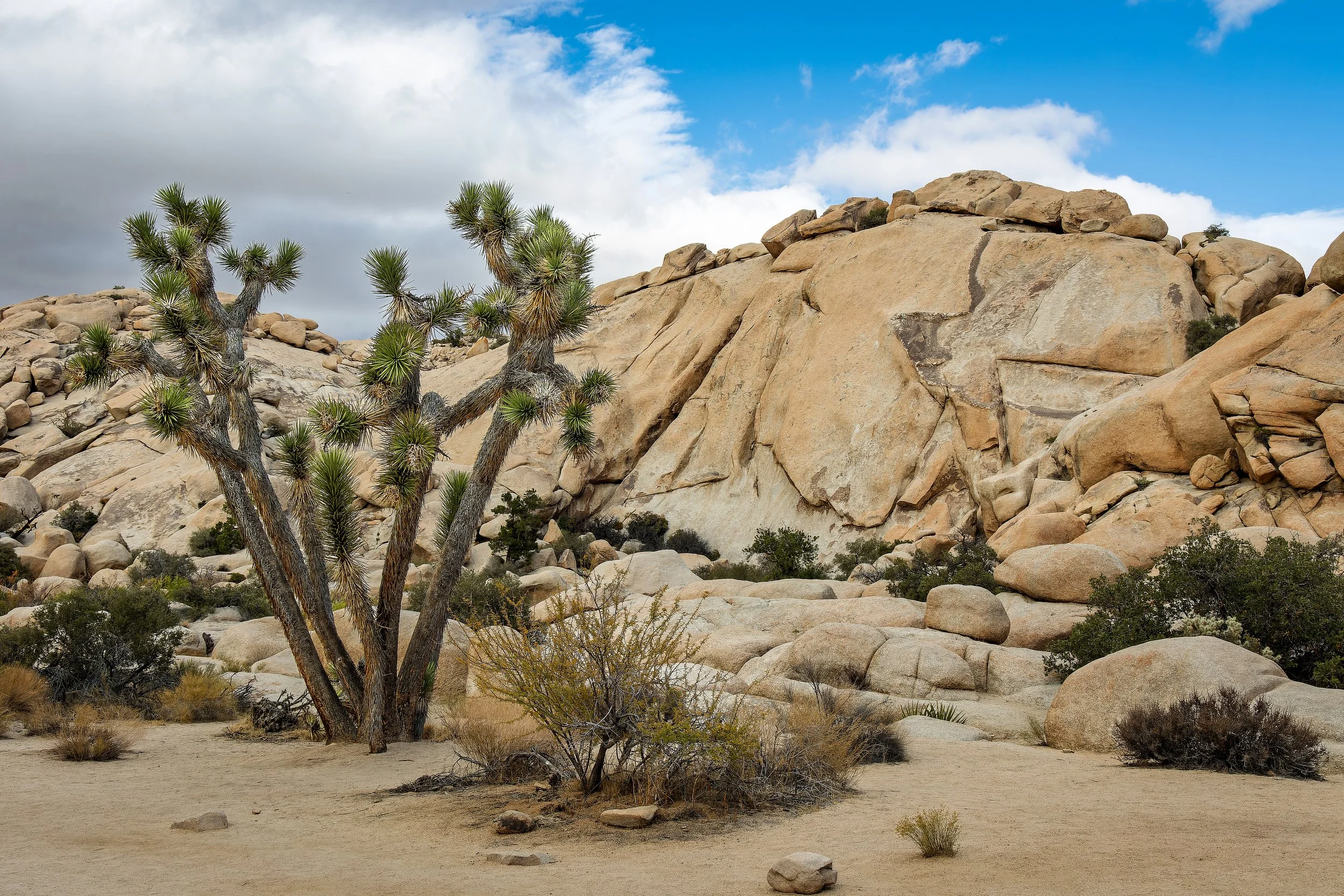
Joshua Tree- JTNP
Around 3pm we started the fun part of our JTNP adventure by hiking the Barker Dam Trail. This is in the western portion of the park in the Mojave Desert. Its an easy hike- a little over a mile and minimal change in elevation. There are lots of cool rocks, some Joshua Trees, and a few birds. We saw several Gambel’s Quail, lots of Common Ravens and got a lifer California Scrub-Jay! We spent about an hour here, then decided to try and visit the Cholla Cactus Garden to finish out our day.
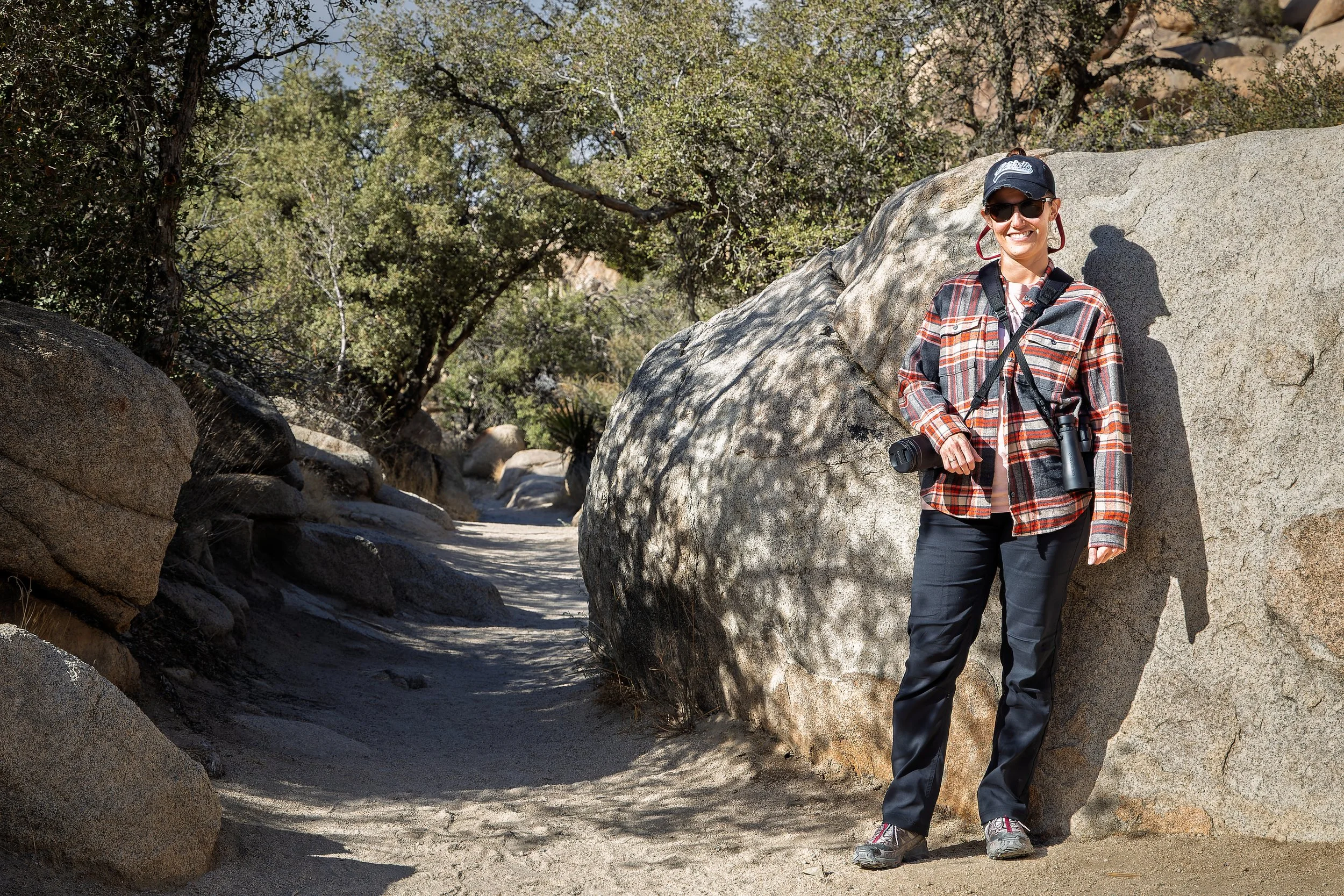
Michelle at Barker Dam Trailhead- JTNP
It was about a 30-minute drive southeast, past our campground and down into the Colorado Desert. We arrived a little after 5pm, just in time for sunset. We spent about 45 minutes here enjoying the sunset, mountains, desert, and of course the Cholla cactus. When most of the light was gone, we drove the RV back to Jumbo Rocks. I made a charcoal fire in the grill and we had some grilled Chicago-style hot dogs and potato salad for dinner, followed by some smores. It was a tasty end to our first day in Joshua Tree.
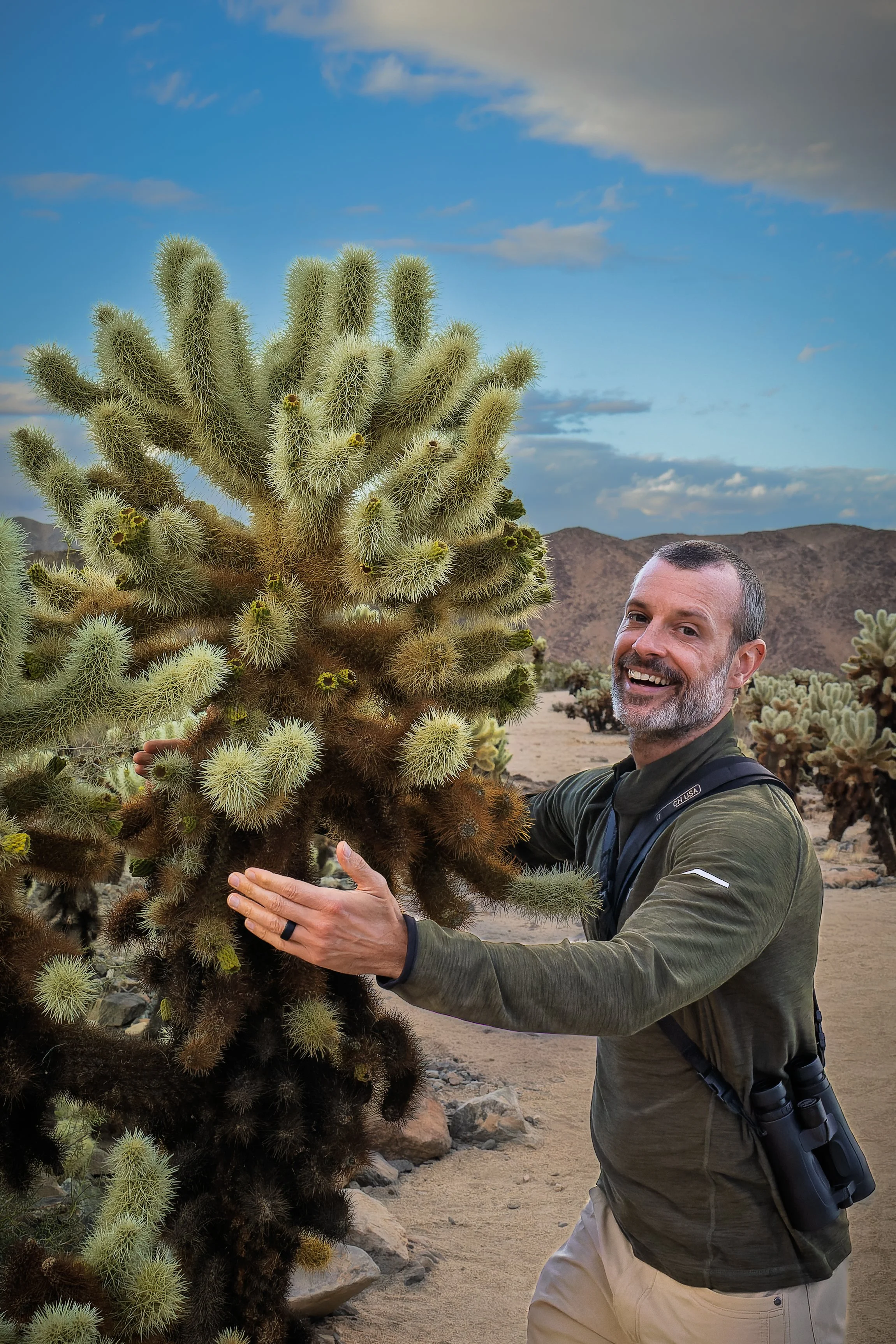
I couldn’t resist.
Cholla Cactus Garden- JTNP
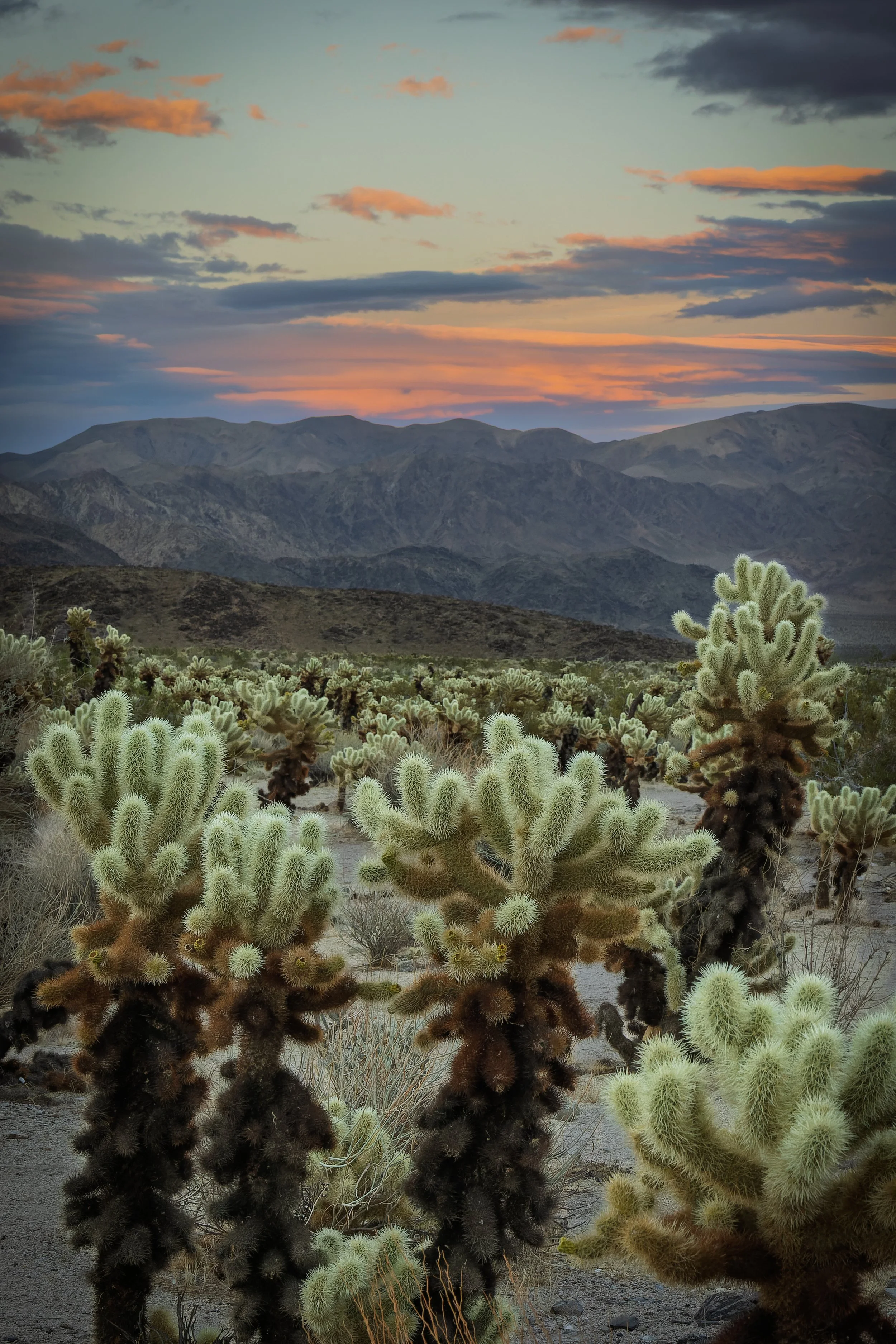
Cholla Cactus Garden Sunset- JTNP
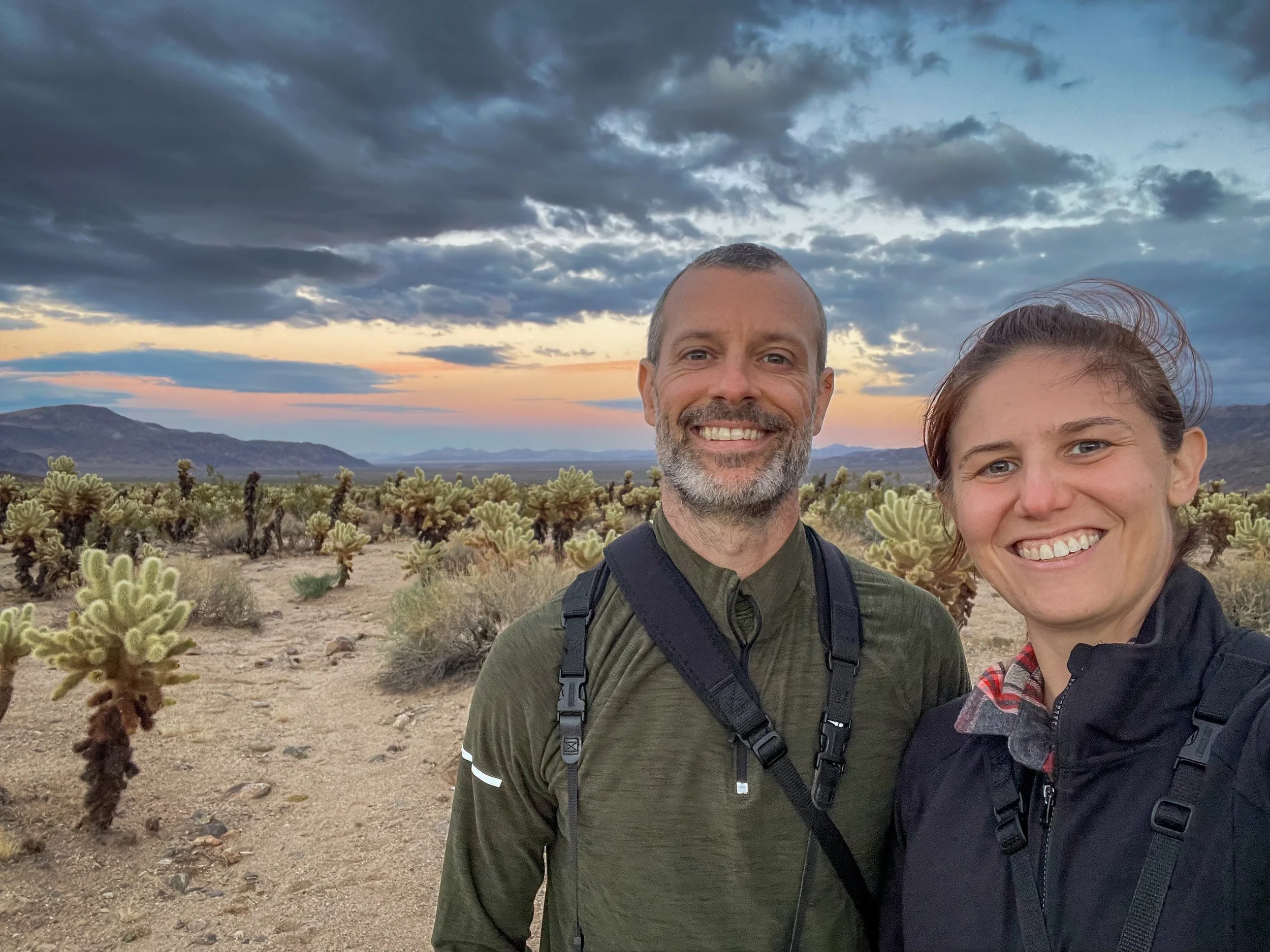
Sunset at Cholla Cactus Garden- JTNP
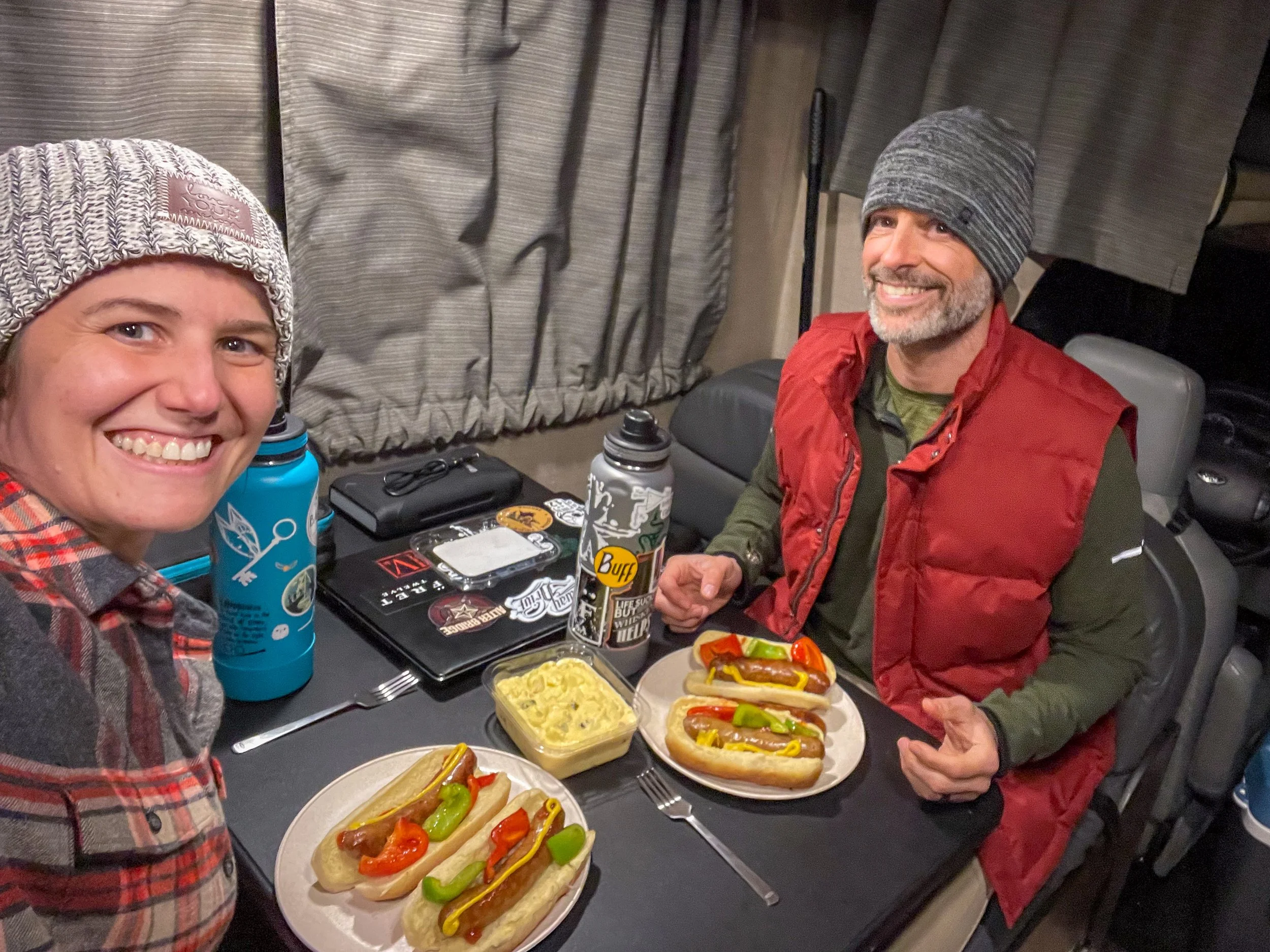
Dinner time!- JTNP
10/26/21- “One Among the Rocks”
We had a relaxed morning with our typical coffee and a light breakfast. It was a bit of a late start- around 10am, but luckily our next activity started right at the campsite. The Skull Rock cuts right through Jumbo Rocks campground on the north side. This is a fairly easy 1.7 mile loop through boulders, desert washes and of course features one of the park’s highlights- Skull Rock! We got our lifer Rock Wren and a few other birds, enjoying the nice relaxed hike. The time of day wasn’t great for pictures of Skull Rock, but we got some passable photos.
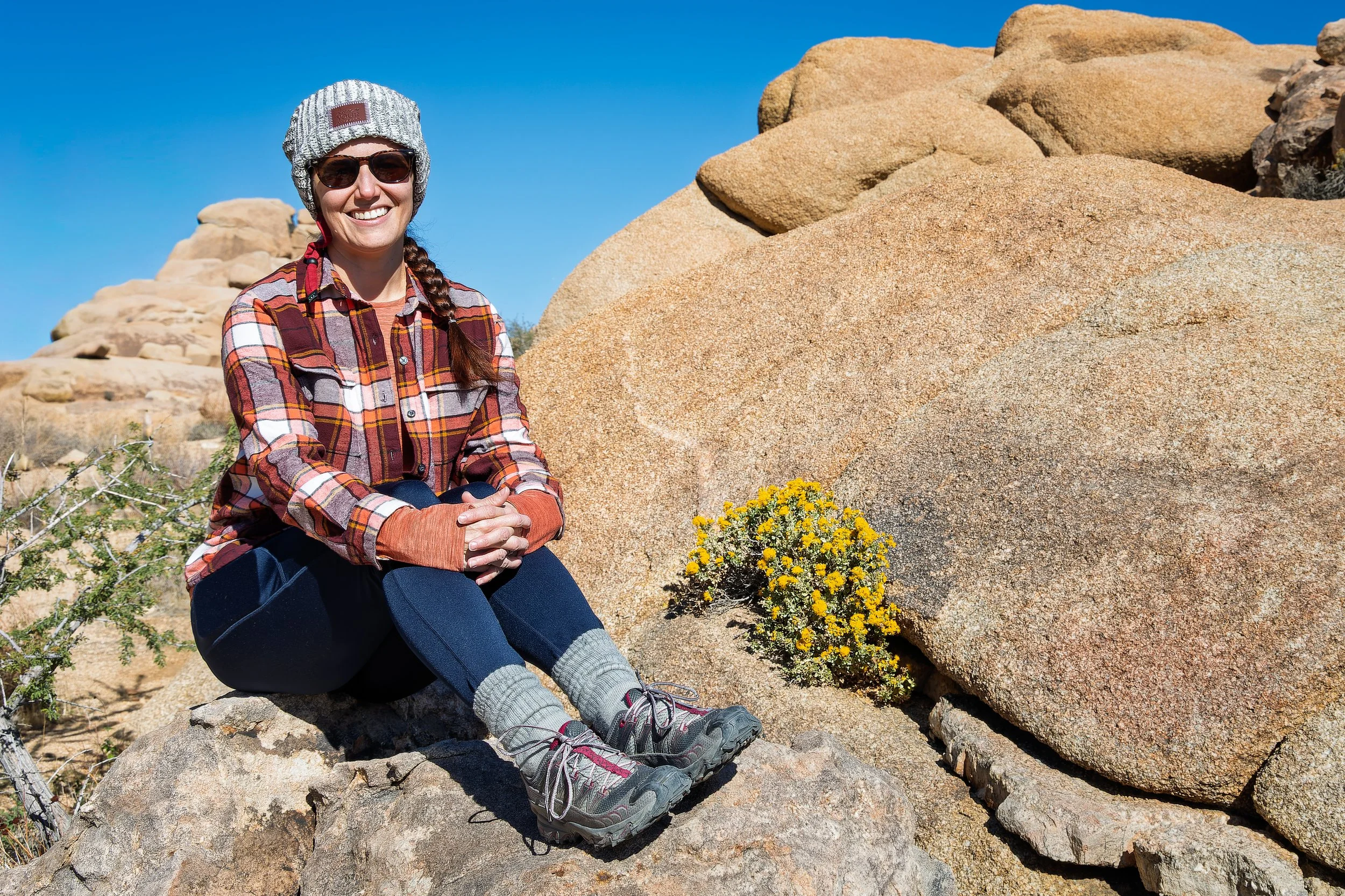
Skull Rock Trail- JTNP
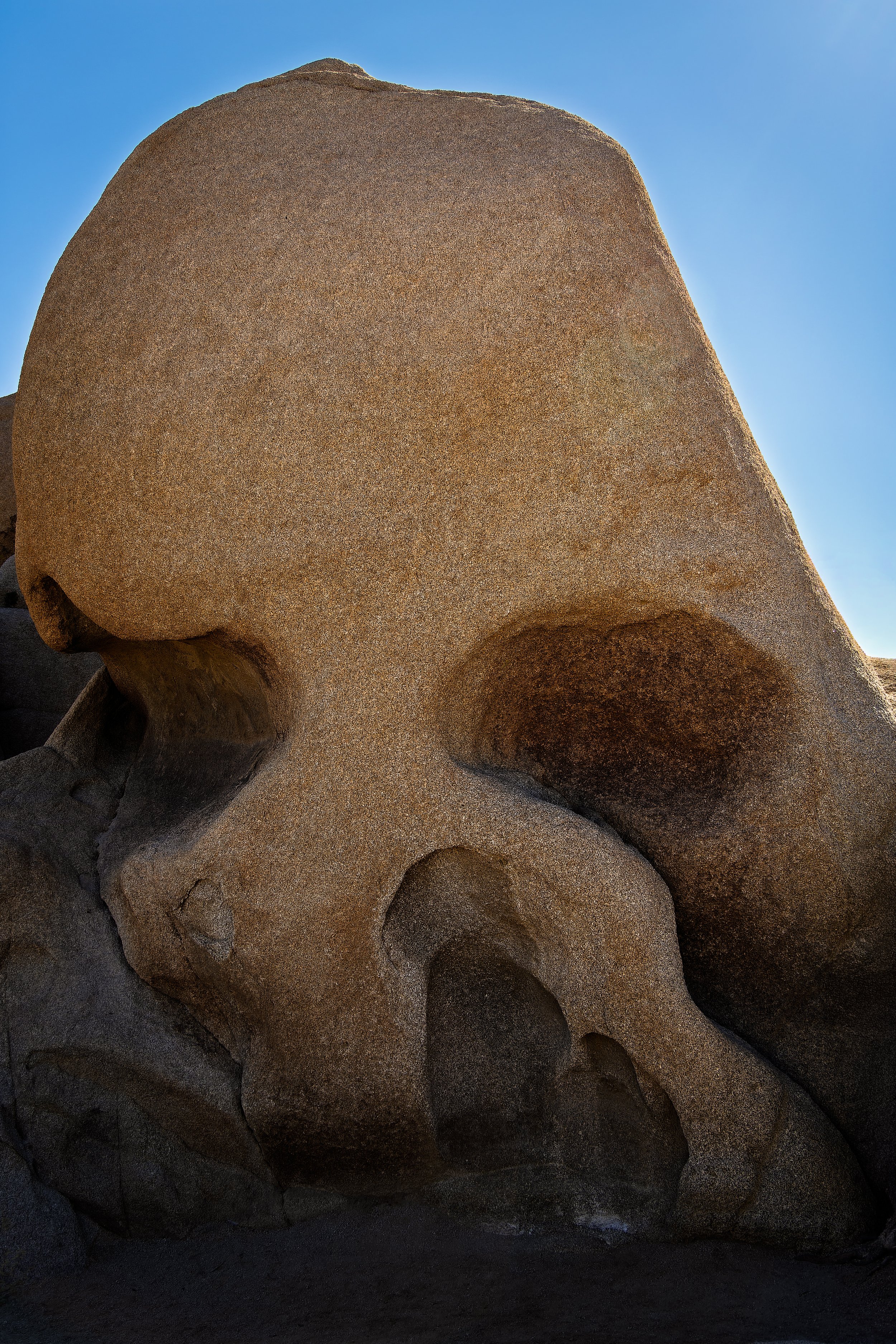
Skull Rock- JTNP
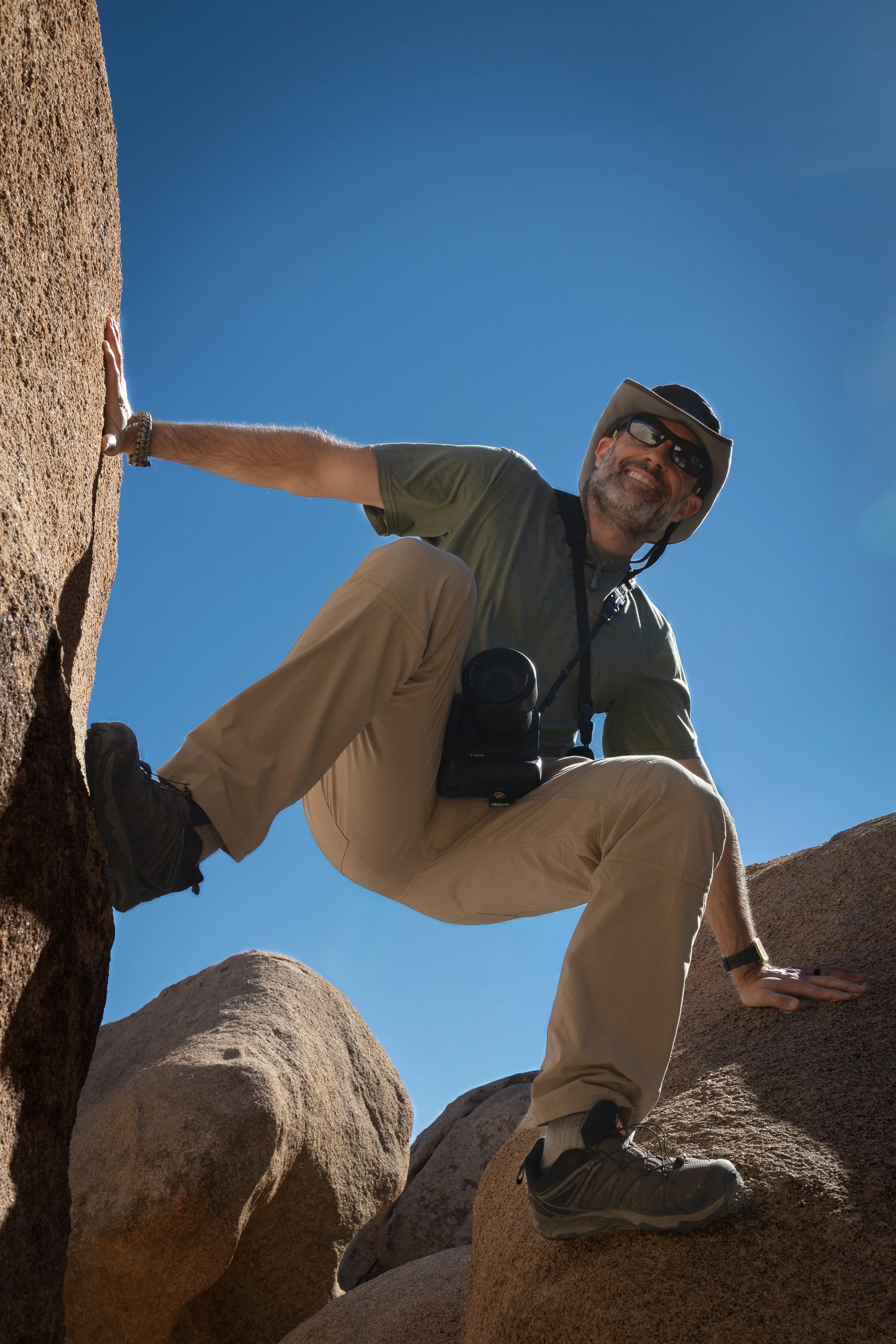
National Parkour! (sorry)- JTNP
Next we headed to the Hidden Valley Nature Trail for some more hiking. This is a popular, short 1 mile easy hike through a “hidden” valley surrounded by spectacular large rock formations. We took our time here, getting lots of practice with our cameras and of course just enjoying being outside in this unique landscape. We spent a little over an hour to complete the whole circuit. We finished up around 2pm and reluctantly decided we needed to move on. Ahead of us was a little over 3 hour drive south to Lake Cuyamaca, high up in the San Diego Mountains.
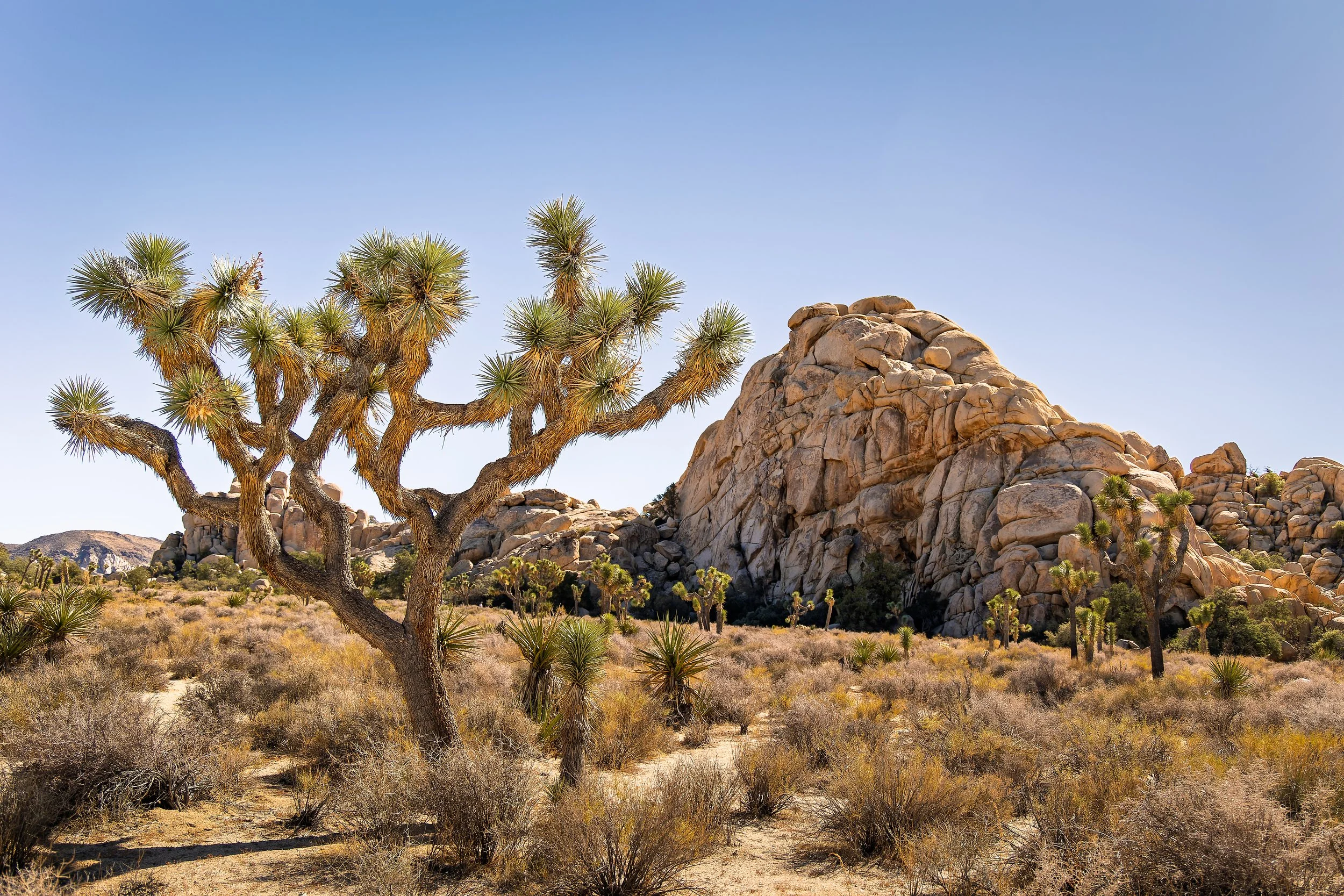
Hidden Valley Nature Trail- JTNP
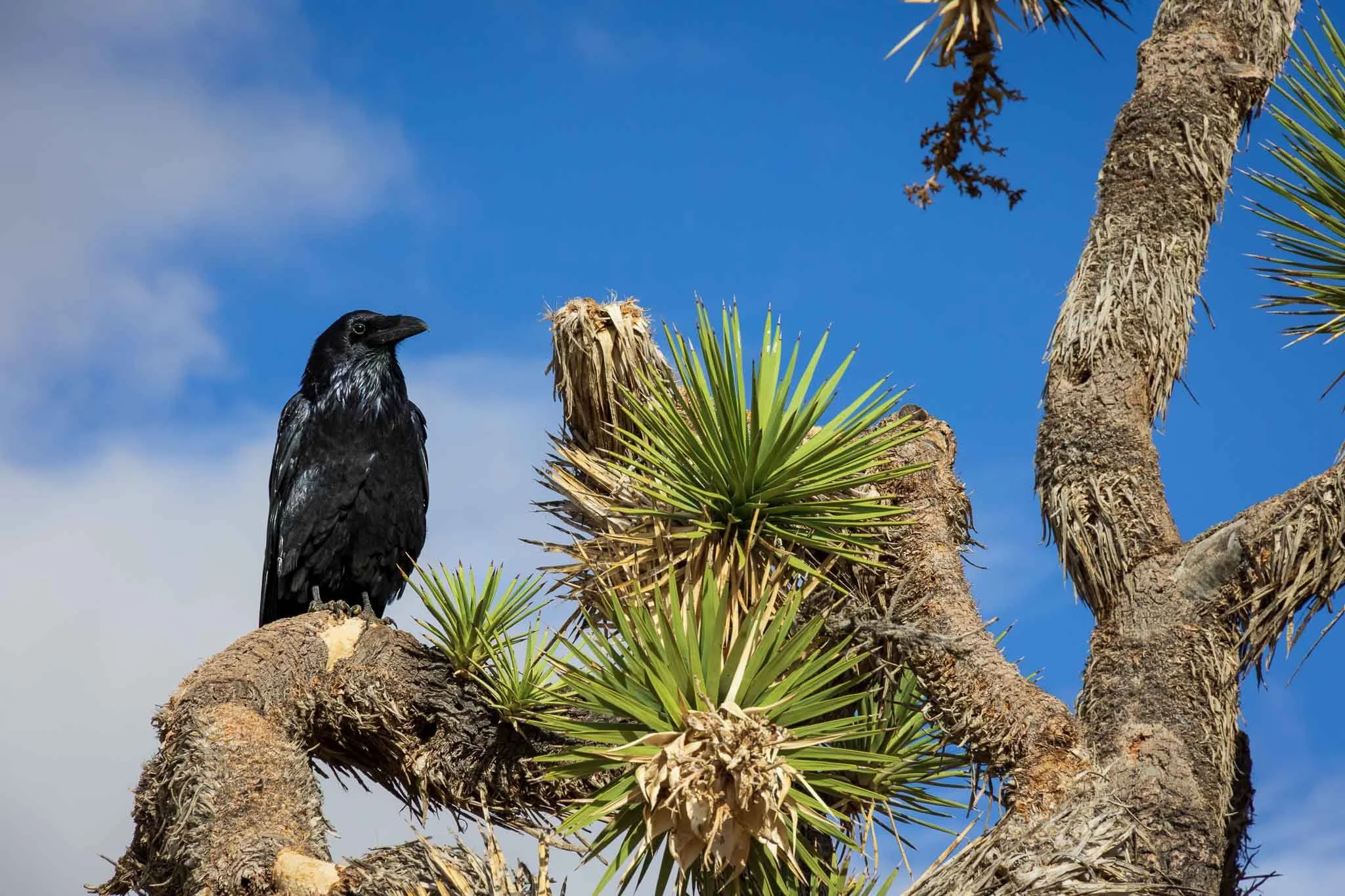
Common Raven on a Joshua Tree- JTNP
The drive to Lake Cuyamaca was interesting. Starting south past Palm Springs and Palm Desert, there are massive windmills as far as the eye can see! As you might imagine, it was quite blustery through this valley and driving the oversized aluminum box was a bit challenging. Along the way down through the Santa Rosa and San Jacinto Mountains, we glimpsed a panicked California Quail running across the road in front of the RV, and a Prairie Falcon harassing a Red-tailed Hawk. The last leg of the journey was up through the San Diego Mountains, past Julian (famous for it’s apple pie!), through some mildly challenging windy roads as the sunlight was waning. It got a little hairy at times, but was pretty fun driving nonetheless. We arrived a little after dark and found our way to the Lone Pine Campground. We had another tight parking spot and Michelle got out to help me navigate into the back-in spot. Our “neighbor” in the spot next to us popped out and helped spot us, but he was clearly judging me for my overly cautious approach. Safely parked in out spot for the night, we hooked up the electric and water and relaxed for the evening.
10/27/21- “The Magical Lake”
We awoke at sunrise, made our coffee, stepped out of the RV- and were magically transported to New England in the fall. The oranges and reds of deciduous leaves combined with the verdant evergreens was truly a sight to behold. Their reflections on the still lake and dawn birdsong completed the ambience. We were in heaven. After finishing breakfast, we bundled up (it was in the 50s) and headed out for a lake hike, hoping to see some new birds and practice our photography.
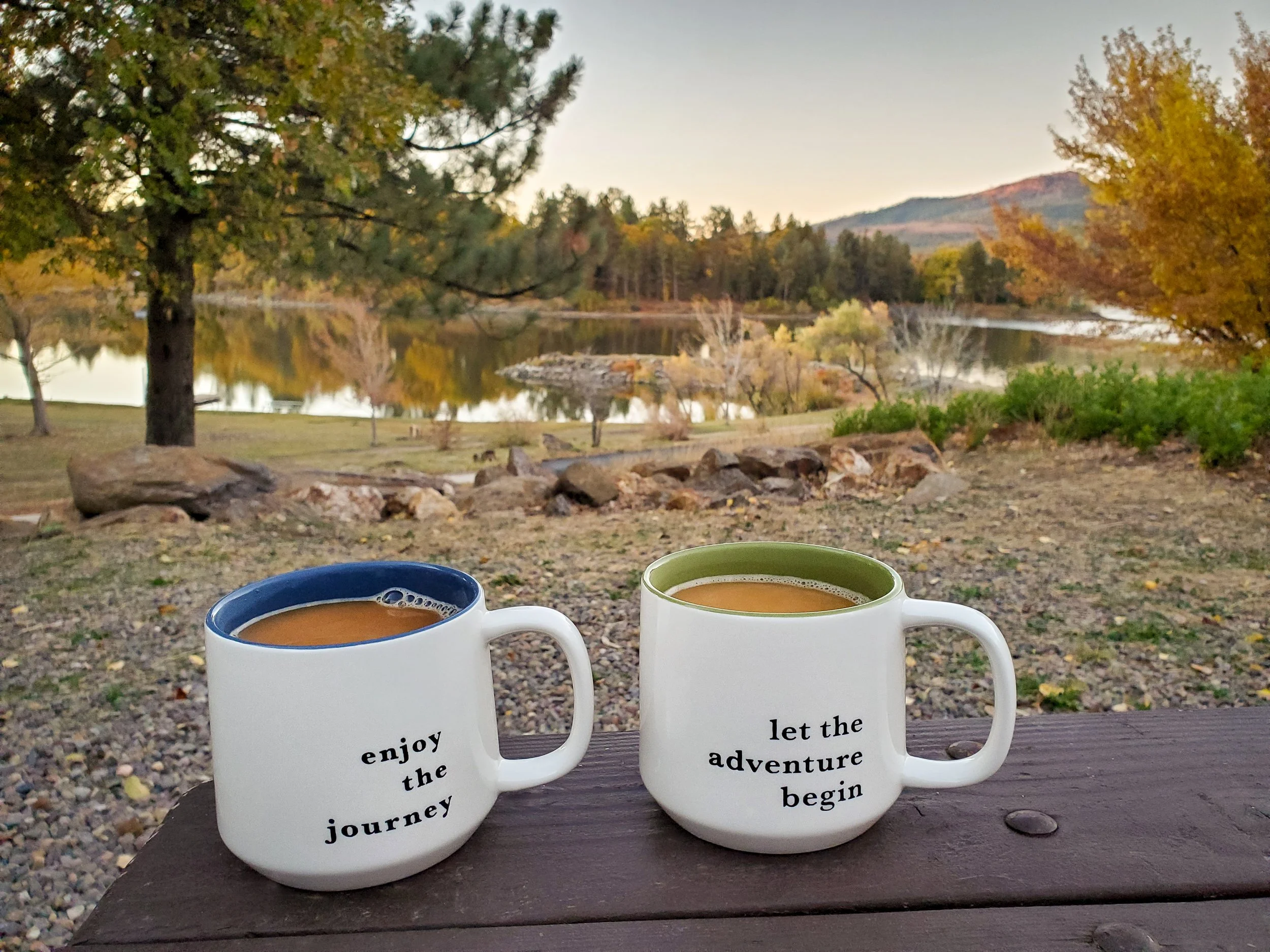
Lake Cuyamaca, San Diego County
We started out heading west from the campground on the north side of the lake. There were oodles of Brewer’s Blackbirds along the shore, along with both Red-winged and Tricolored Blackbirds. Michelle’s sharp eyes spotted a pair of White-tailed Kites atop a tall pine tree! They are an incredibly cool looking compact raptor in white, gray, and black- with ruby red eyes! We enjoyed watching them interact for several minutes. There were tons of other birds around including Northern Flicker, Canada Goose, Belted Kingfisher, Red-breasted Sapsucker and Ruby-crowned Kinglets.
We doubled back towards the RV and spotted a female Northern Harrier hunting the grassy fields near the road. We headed that direction to try and get a few pictures. We watched her drop into the grass and she came up with a vole for breakfast! She had landed on a fencepost and started to eat. We slowly and carefully headed in her direction. Call it fieldcraft, call it beginner’s luck, who cares- we painstakingly crept into position for excellent pictures. We didn’t want to spook her and interrupt her meal, so we stayed a respectful distance. For 10 minutes she remained on the post while we watched. We hunkered down, giving her space and took in this little fragment of the circle of life. My heart was pounding and Michelle and I kept making eye contact with our mouths agape. Neither one of us had experienced anything like this before. It was surreal and a memory we will both keep with us forever.
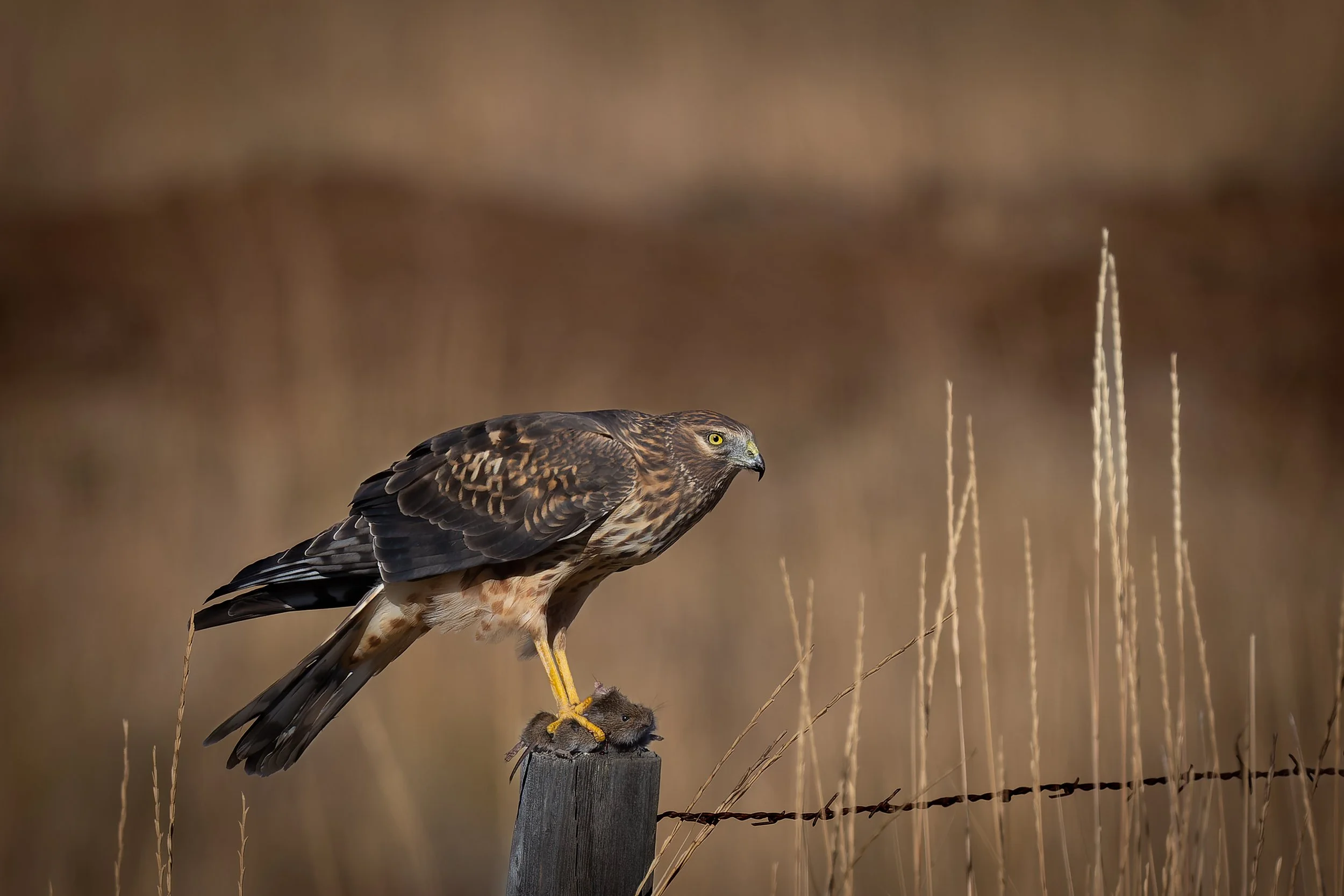
Female Northern Harrier- Lake Cuyamaca
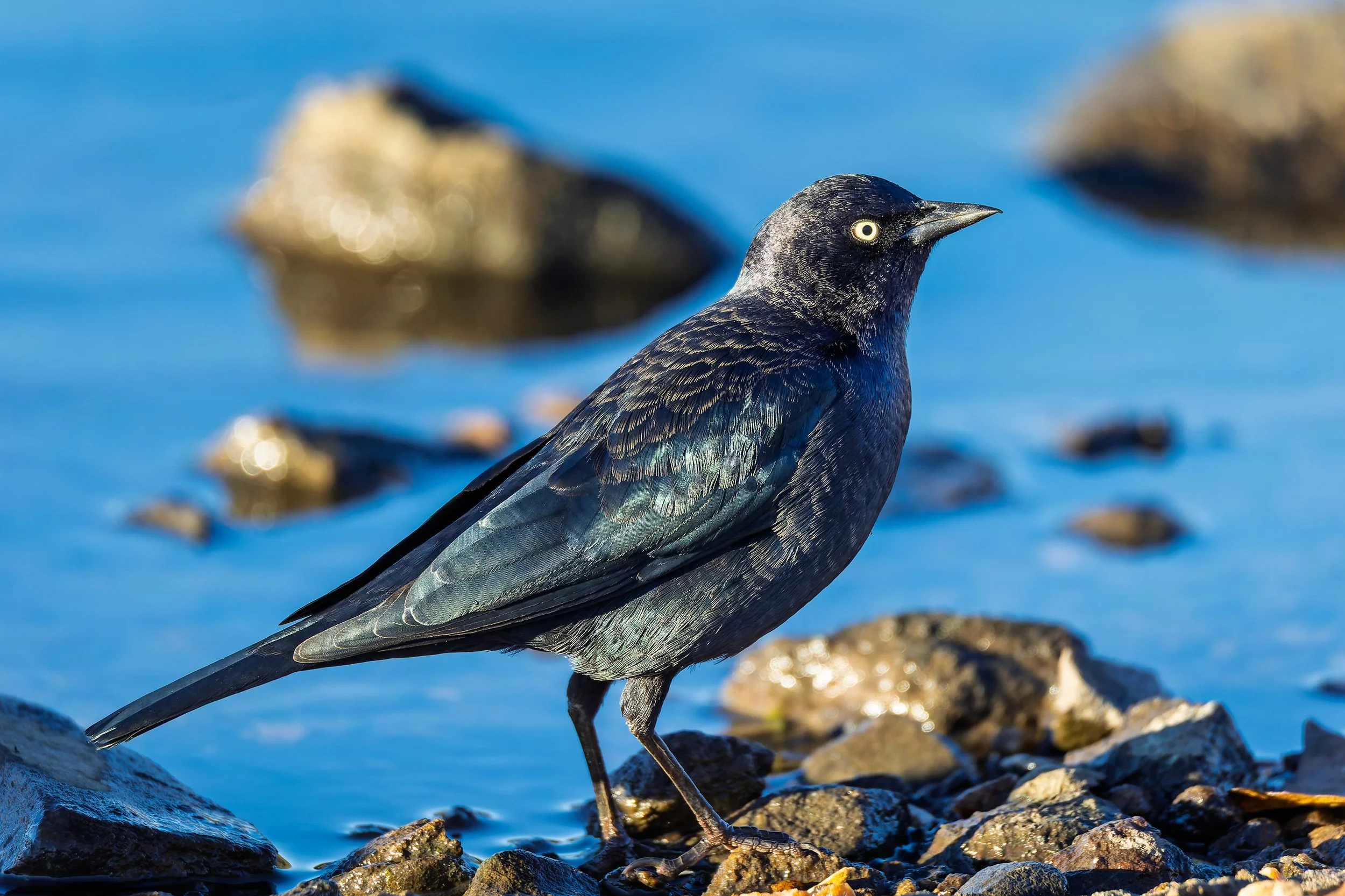
Male Brewer’s Blackbird- Lake Cuyamaca
After our Harrier friend flew off with an immensely full crop, we stopped by the RV and grabbed a quick snack before heading out along the shore again, to the east this time. As we exited the rig, I spotted a Townsend’s Solitaire nicely perched in a tree just outside the RV. A little east of camp was a rock-lined levy that led across the water, joining a peninsula jutting from the south side of the lake. (This appears to be underwater now based on recent google images- the water level appears much higher). On the peninsula we encountered Oak Titmouse, Dark-eyed Junco, White-crowned Sparrows and a rare (for the time of year) White-throated Sparrow! On the water were Great Blue Herons, American White Pelicans and Double-crested Cormorants. As we rounded the southwest corner of the peninsula and looked up, a pair of Bald Eagles flew overhead. Then seemingly out of nowhere, the second one started getting dive-bombed by a Peregrine Falcon! So cool! We came across an Acorn Woodpecker working on his winter cache, burying acorns into the bark of a pine tree. This place was just nuts with great birds! (Pun intended)
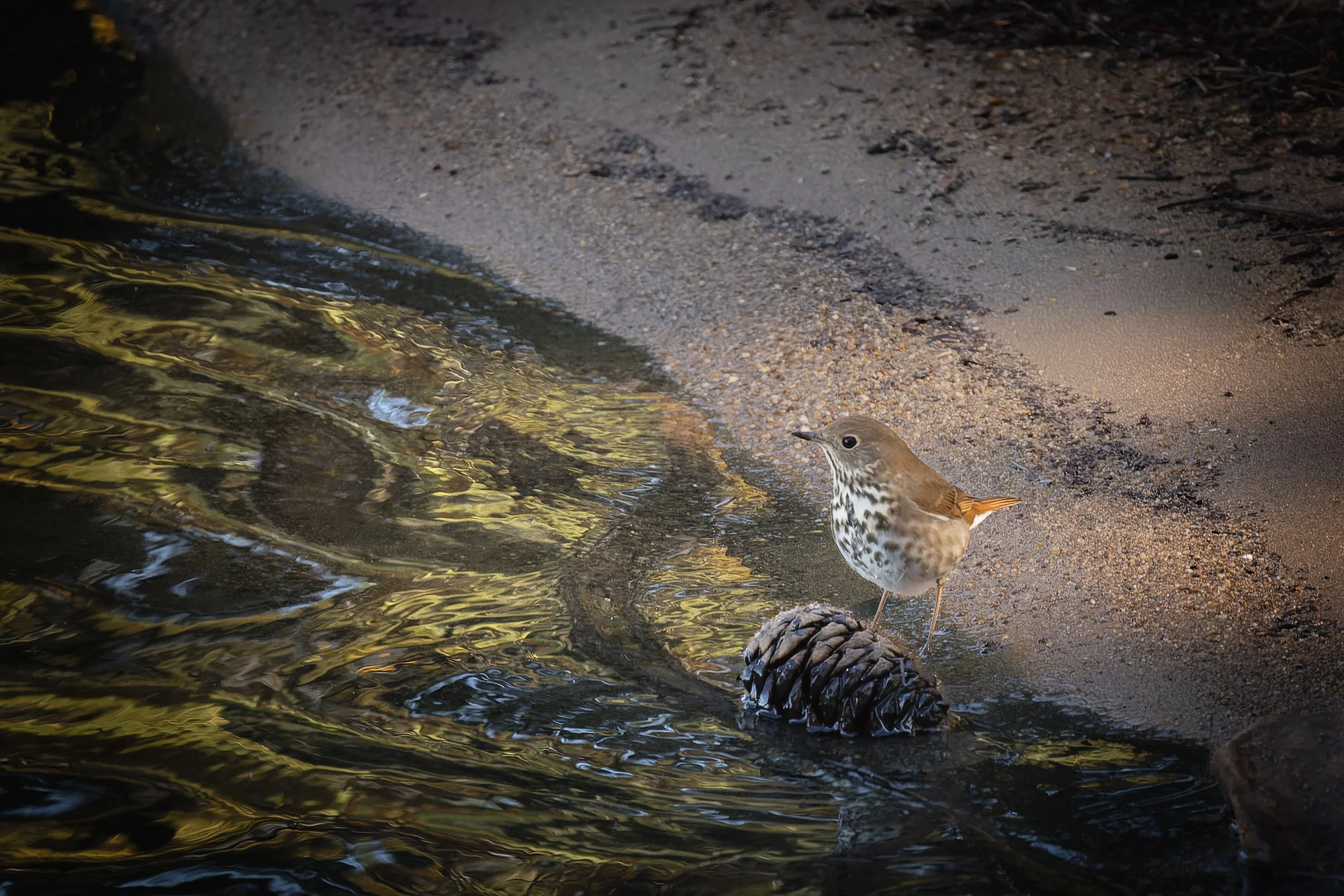
Hermit Thrush- Lake Cuyamaca
We headed around the peninsula, taking in some gorgeous views of the western lakeside and the color-changing trees. It was just breathtakingly beautiful and unlike anything near home in Tucson. Back across the levy to the RV, we hopped in and headed around the corner of the lake to the store for some food. Unfortunately for us, it was closed. However, our quick trip was rewarded by a low flyover by a Zone-tailed Hawk! This is a seriously cool hawk that feeds by mimicking Turkey Vultures by soaring with them, then swooping down on unsuspecting prey that expects it to be a vulture. Per eBird, there hadn’t been a Zone-tailed Hawk reported there for 11 years! (There was one again in the winter of ’22 and ’23, but none since). This remains one of our favorite days of birding in the 5 years we’ve been at it. 59 species, 8 lifers, and a TON of fantastic memories.
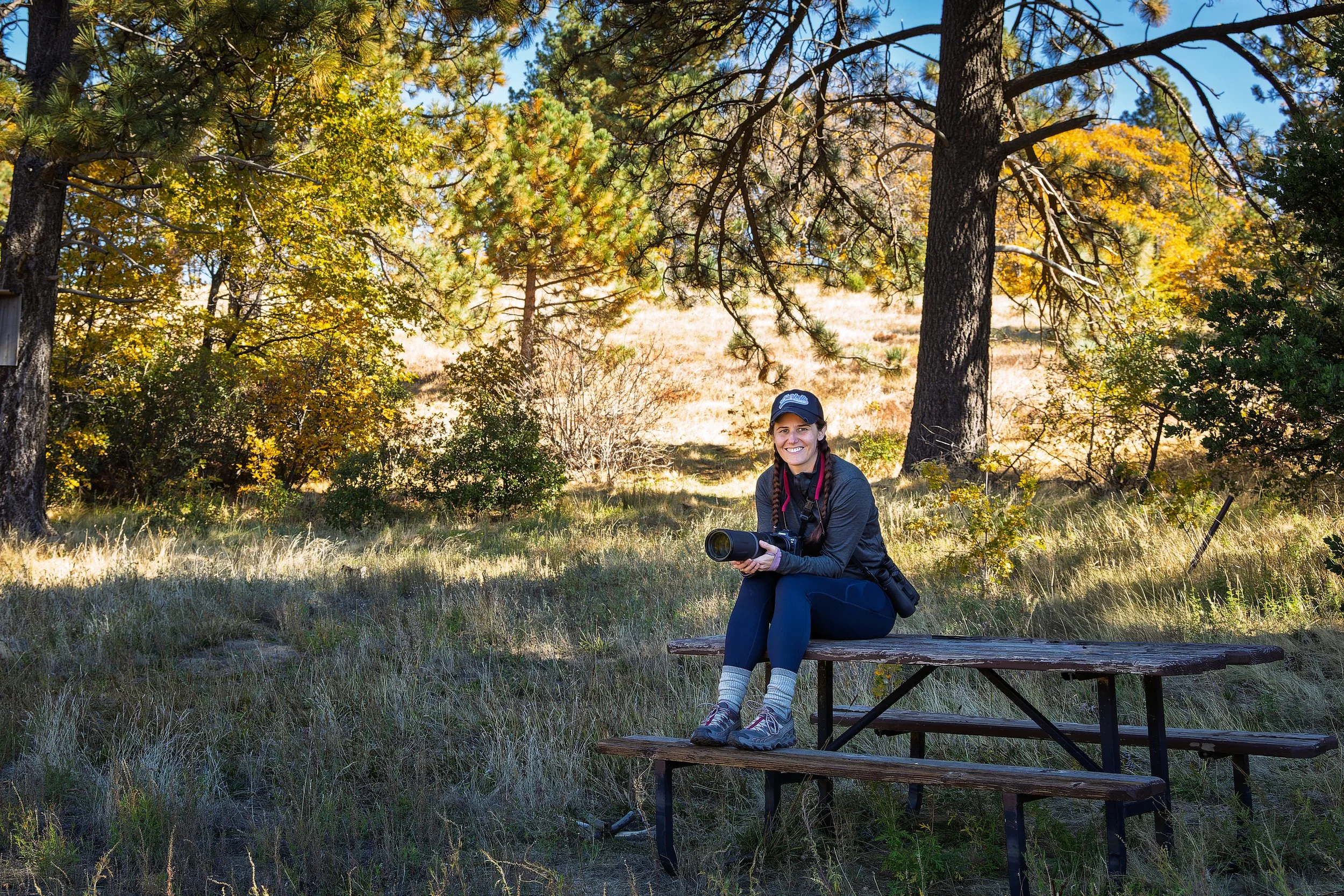
Michelle relaxing for a few- Lake Cuyamaca
True to our “trying to do too much in a short time” planning, it was time to leave Lake Cuyamaca. Tonight’s campground was right on the border with Mexico, south of San Diego. We had to get moving. Before doing so, we decided to dump the tanks as they were filling up now that we had everything properly situated and had a few more days camping under our belts. Piece of cake.
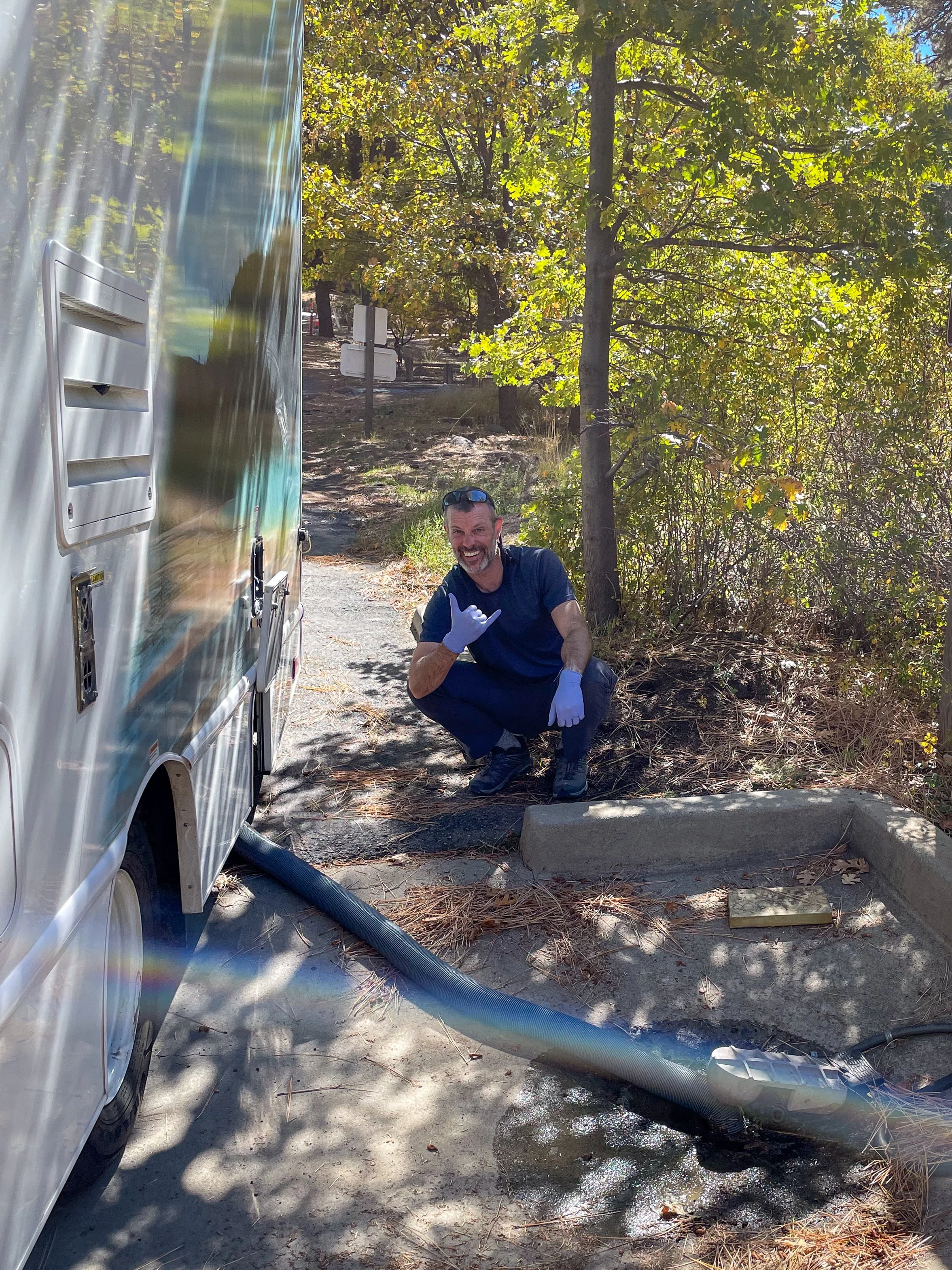
I got this!
We drove through Julian for lunch and a slice of famous apple pie. It’s an adorable little tourist-trap mountain town. You know the type. We found a place to park a bit off the main strip in a large gravel lot and walked into town. Cute little shops were hawking ALL the Christmas stuff, so naturally we had to buy an apple ornament for our tree. We stopped by Julian Pie Company for a slice of pie and a coffee (for me) and apple cider (for M). Delicious. I’m not an apple pie guy, but it was fantastic!
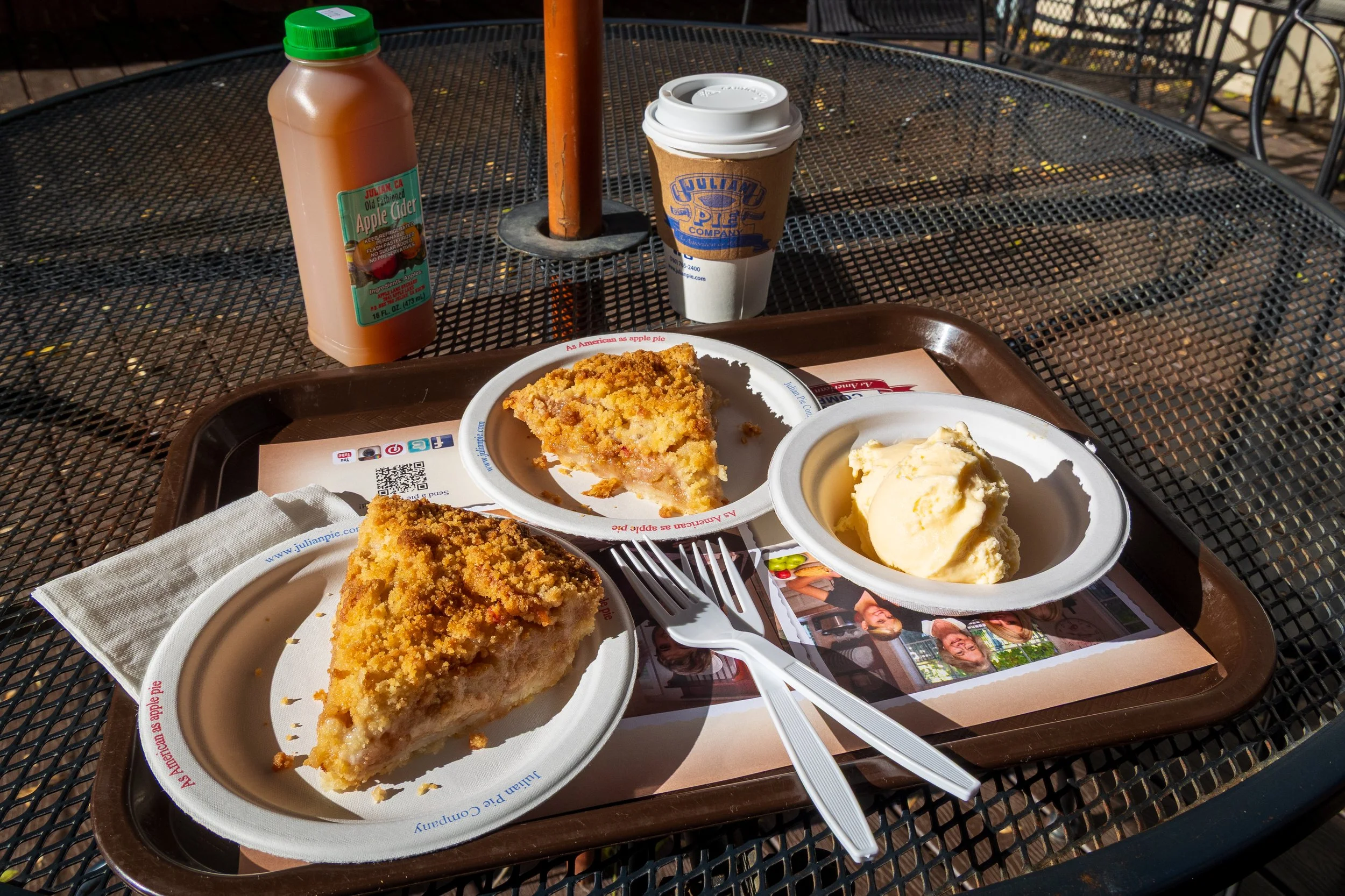
Delicious Apple Pie!- Julian, CA
After filling our tummies with pie, we hopped back in the rig and headed south to the Tijuana River Valley. It took just under an hour and a half and wasn’t a terrible drive. The aggressive city-type traffic entering town on Interstate 8 wasn’t my favorite, but I managed. We highway hopped onto the 5 South past Chula Vista and Imperial Beach, then off the interstate to surface streets again. I got just a wee bit turned around where I expected the campground to be and had to pull over and reorient myself after I thought we’d missed a turn. As it turned out, we just had to keep going straight on this narrow, dark, spooky back road within a stone’s throw of Mexico. Okeydokey. We kept heading west towards the (very close) ocean when suddenly a pair of Barn Owls swooped out right across the road in front of us! Yikes! Thankfully we didn’t clip them and they went about their silent hunting. Less than a mile from the ocean, we arrived! We checked in at the guard station (not surprising this close to the border) and the ranger was nice enough to point out that our license plate’s registration was expired (thanks Cruise America!). Had we been in a private vehicle, they would have turned us away. Luckily, the ranger knew we weren’t responsible for the expired tag, so we were OK. We found the way to our campsite, parked and backed up all our pictures while making some dinner. Then rest.
10/28/21- “To the Zoo!”
We were up right around 7am, made our morning coffee and prepared breakfast. A quick peek outside the campsite revealed that the border wall with Mexico was perched atop the hill immediately south of our camp. It extends several hundred feet into the pacific ocean just one mile west of the campground. Surveillance helicopters take off from a helipad near the camp roughly every 10-15 minutes, scouting Friendship park, the Pacific Ocean and Tijuana River mouth. Interesting.
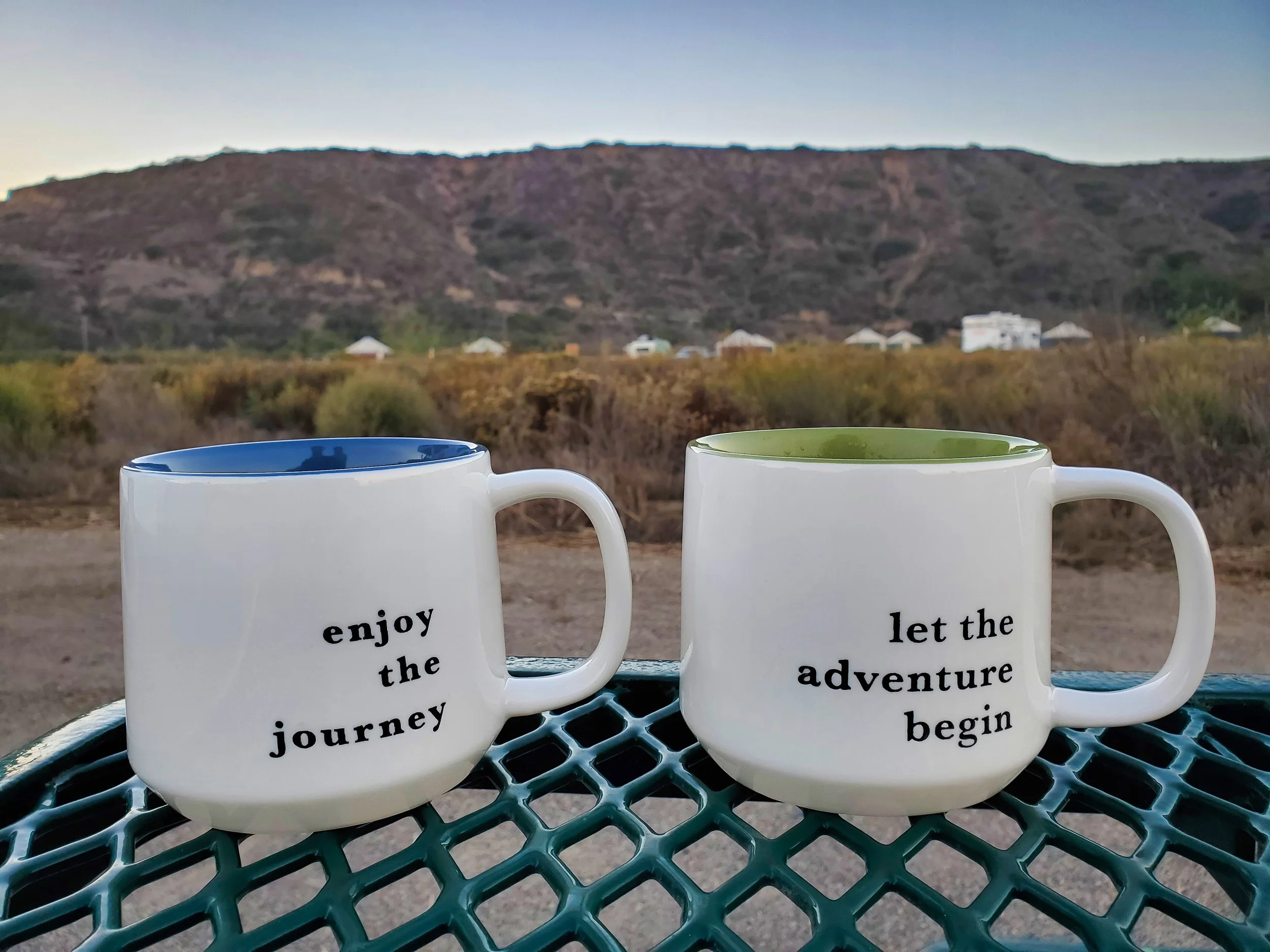
Camping at the border
Tijuana River Valley Campground
Our target for the day was the world famous San Diego Zoo! I had been twice before and was very excited to share it with Michelle. After breakfast, we headed out in the rig and braved the traffic of downtown San Diego. It was a roughly 30 minute drive, essentially straight up Interstate 5. I can’t say I enjoyed driving the RV on the interstate again, but isn’t wasn’t that much worse than doing it in a car. We arrived just after 9am and headed in. The zoo is huge, particularly for it’s urban location- over 100 acres! With over 12,000 animals of more than 650 species/subspecies, there is a LOT to take in here.
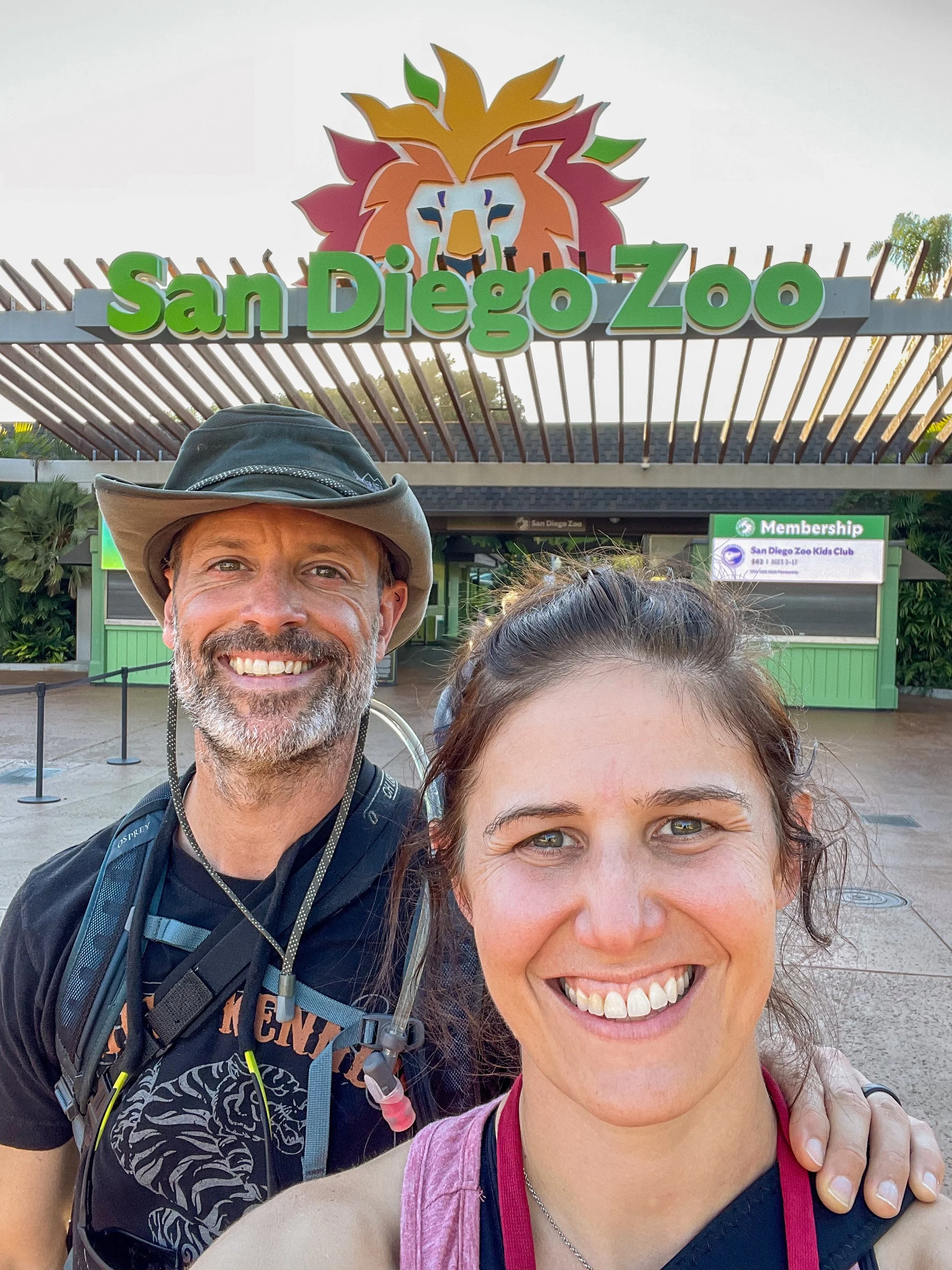
To the zoo!
We spent the entire day exploring the zoo grounds, admiring the vast diversity of animal life from all around the planet. San Diego Zoo was one of the first to feature “cageless” exhibits, most other zoos at the time simply had animals trapped in small metal boxes- yuck. Today, the enclosures and habitats here are second to none, closely replicating the environment in which these creatures would be found in the wild. You could easily spend two to three days here taking in everything. There are so many unique animals that aren’t found very many places outside their home environments- Hamadryas Baboon, Clouded Leopard, Red Panda, Pygmy Hippopotamus, Vervet Monkey, Andean Condor, Foosa, Galapagos Tortoise, Koalas and Giant Pandas being some of the highlights.
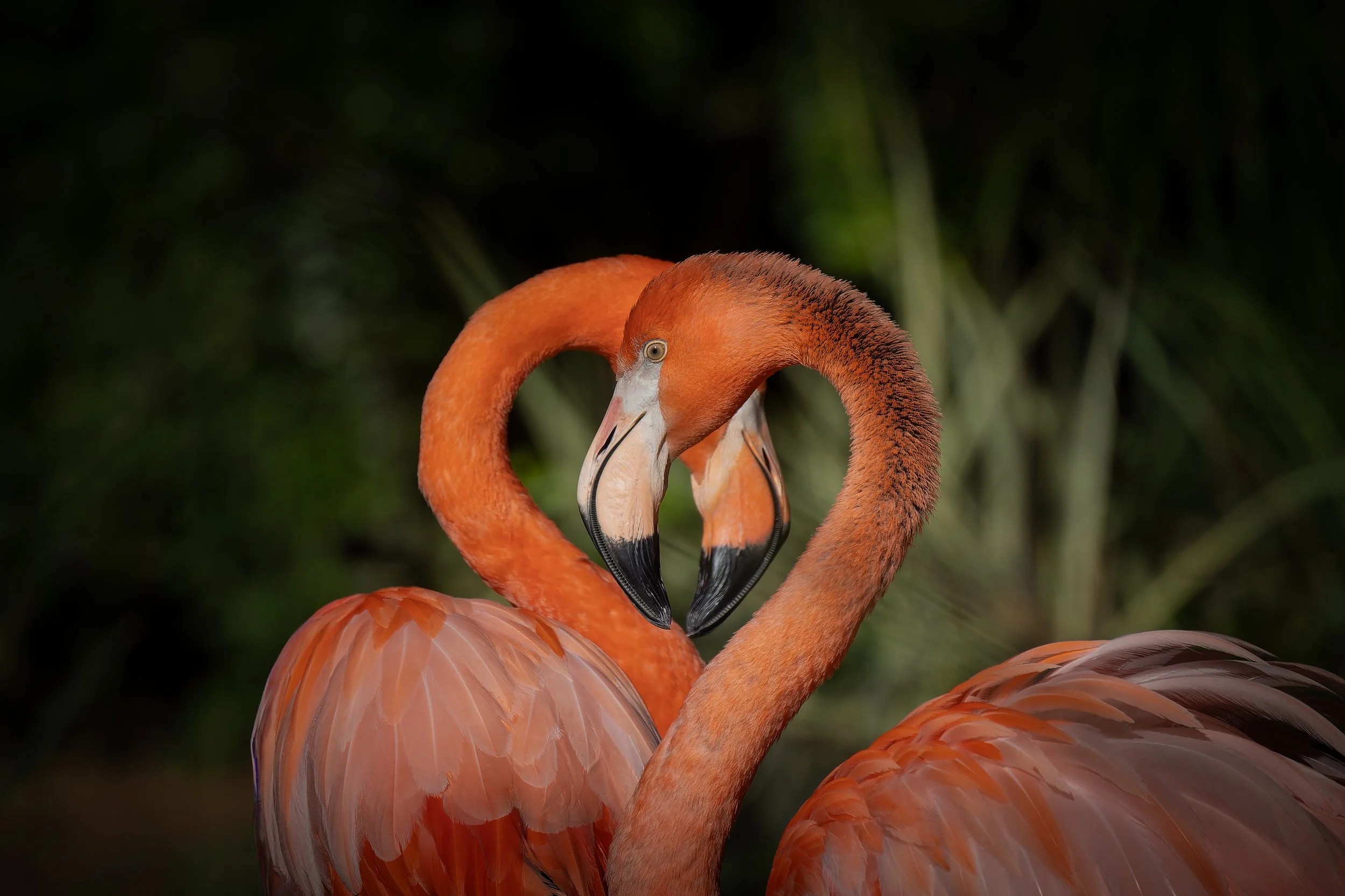
Chilean Flamingoes- San Diego Zoo
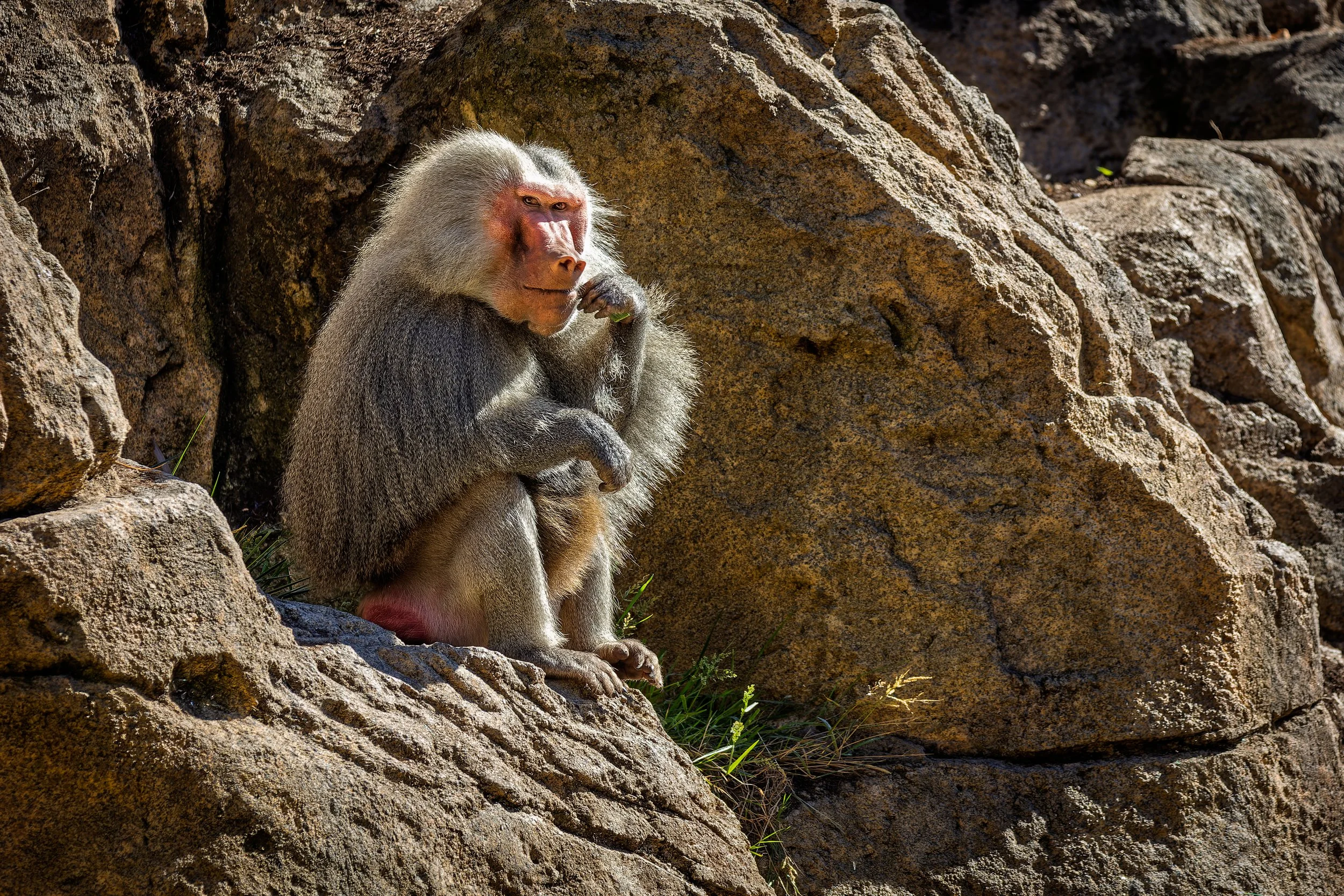
Hamadryas Baboon- San Diego Zoo
We stayed and explored for around 7 hours and managed to see each section of the zoo and nearly every exhibit. It was a bit of a mad rush and we didn’t linger at any particular spot very long. We of course birded a bit along the way and managed to pick up our lifer Allen’s Hummingbird and I spotted a Nuttall’s Woodpecker (M missed it, having moved on while I tried to puzzle out what it was. It remains the only bird species I’ve seen in the states that she hasn’t- yet!) It was a wonderful day and we certainly got all our steps in- my eBird track says we walked four miles. Tired and a bit foot sore, we left the zoo to try and catch sunset (and some critters) at the beach.
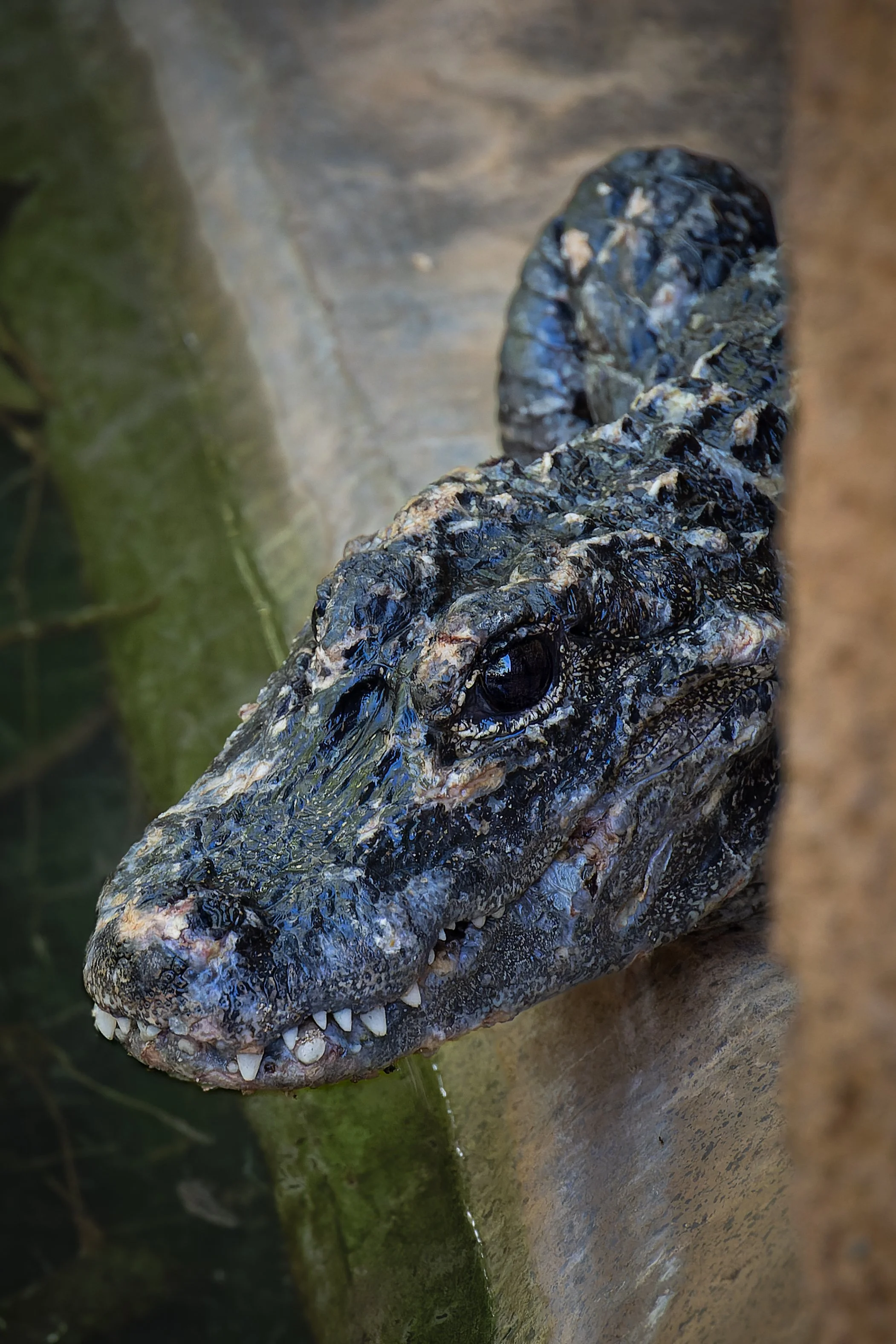
Dwarf Caiman- San Diego Zoo
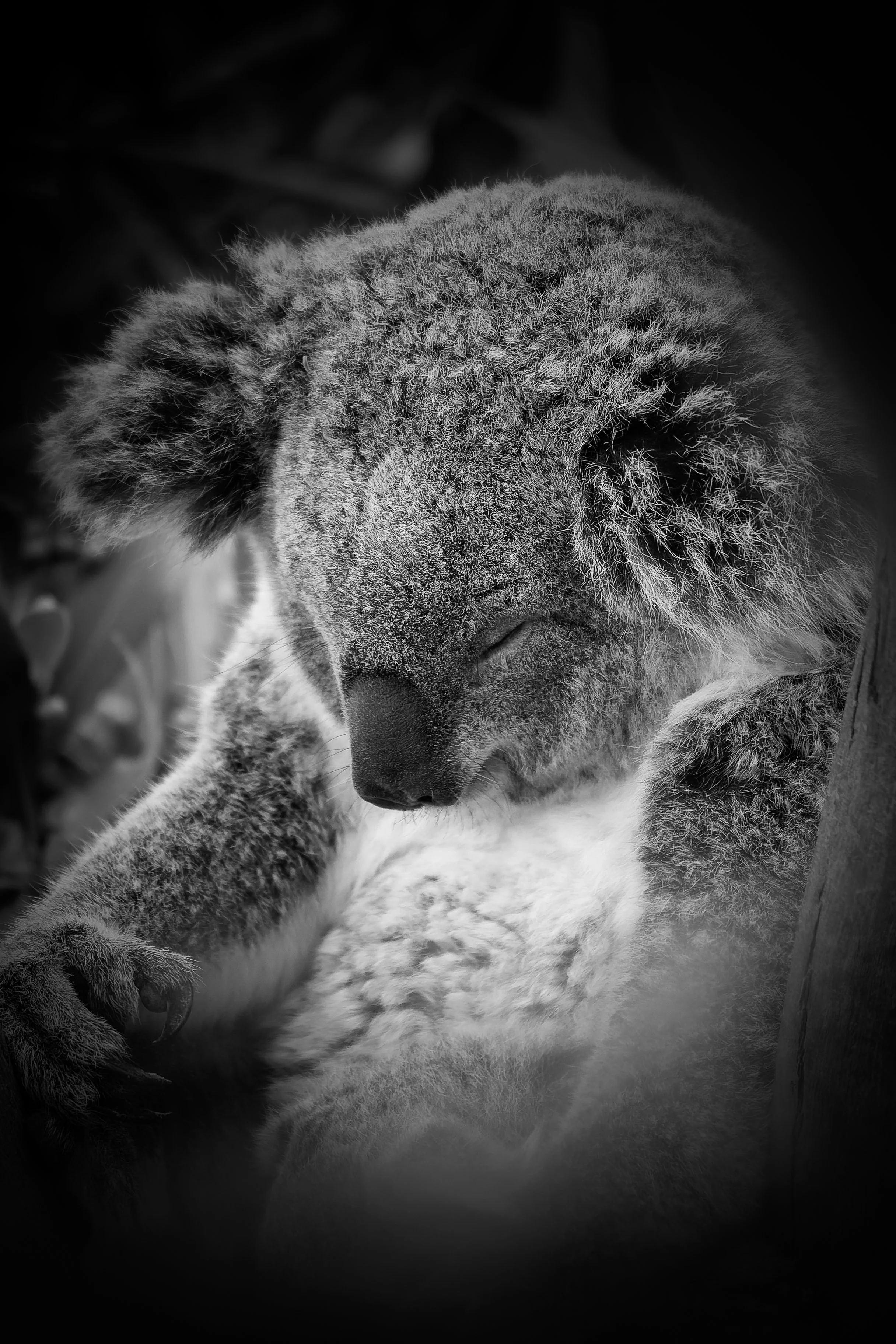
Sleepy Koala- San Diego Zoo
Another 30 minutes straight up Interstate 5 and we arrived at LaJolla Cove around 5:30pm. Parking was a bit difficult and we had to make a few laps around the block before finding a spot to accommodate the rig. We walked down to Children’s Pool and saw Pacific Harbor Seals hauled out on the rocks below and oodles of Brown Pelicans perched on the cliffs catching the last rays of golden hour. I captured what remains to date my favorite picture that I’ve taken- a Brown Pelican preening on a rock outcropping over the Pacific Ocean in the golden light of sunset. We got a few pictures of the spectacularly beautiful sunset behind the lifeguard tower, then headed down to the beach. I coaxed Michelle to take off her shoes and wade into the Pacific Ocean, right at sunset. It was a very special moment and she was adorable, as always.
I can’t recall what we did for dinner, most likely cooked something up in the RV back at camp. After that it was sleep.
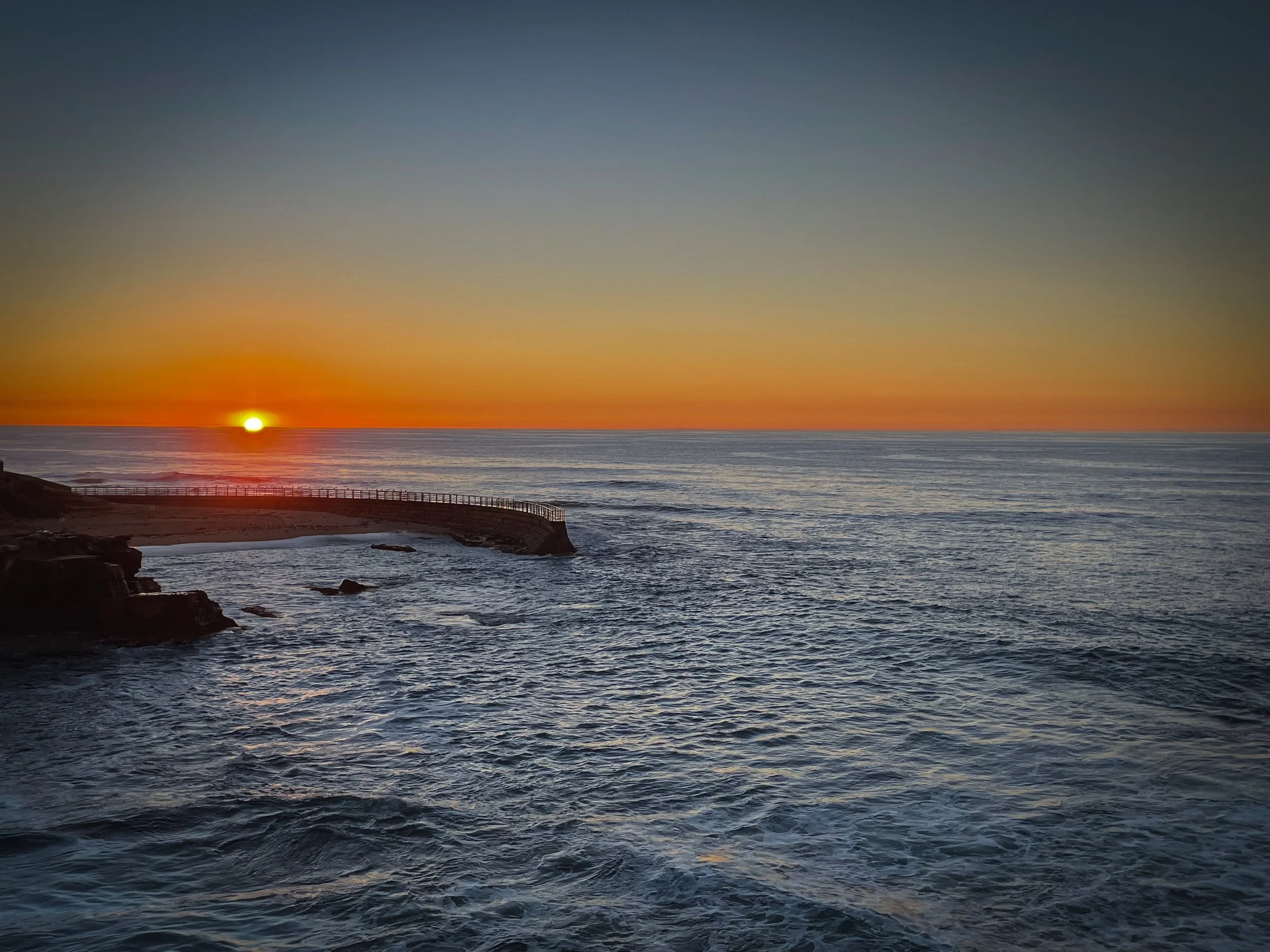
Sunset at La Jolla Cove
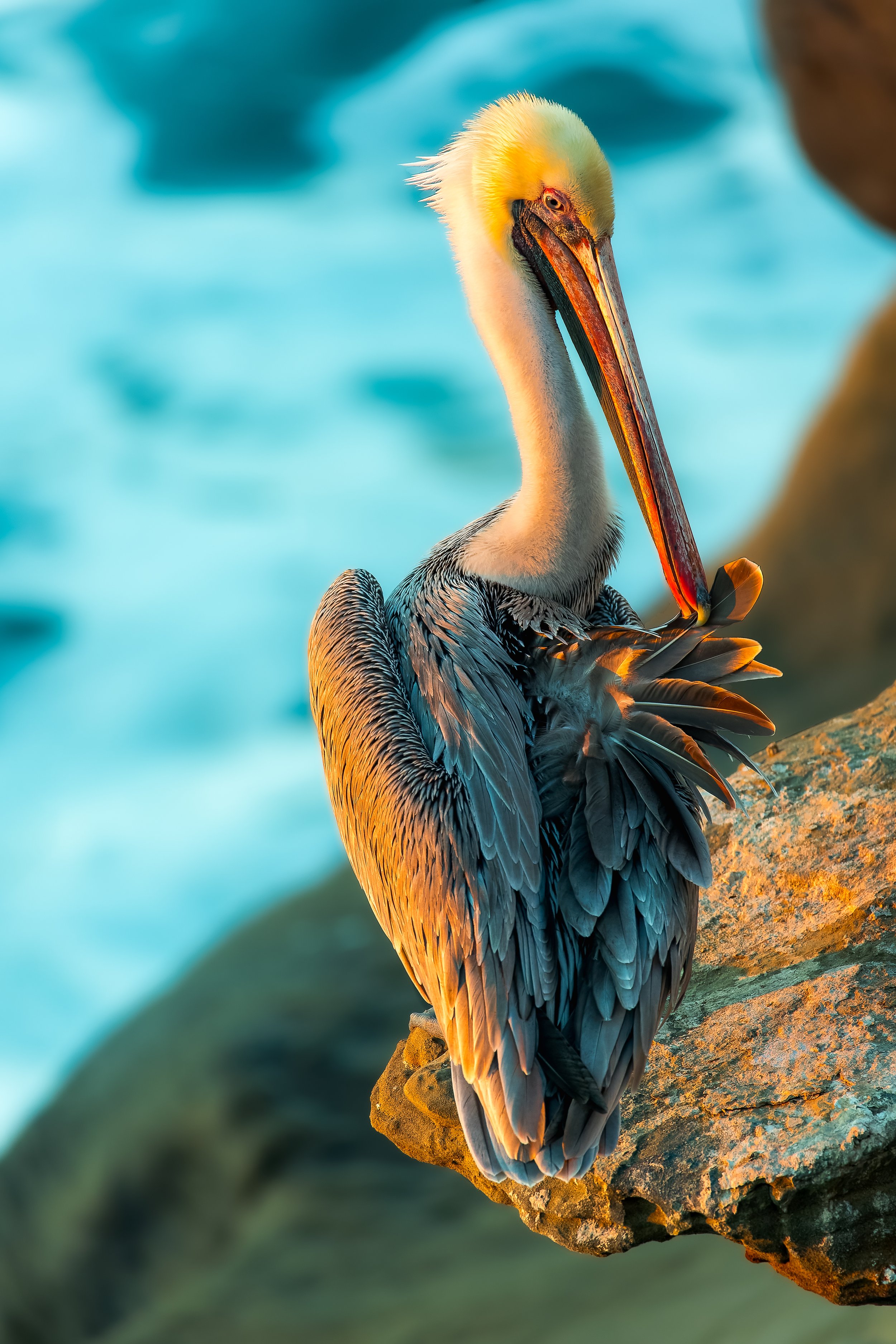
Brown Pelican- La Jolla Cove
Michelle toes into the Pacific Ocean
10/29/21- “Birding the Border”
We were up around 7am again and hit a trail right from the north side of camp towards the Tijuana River estuary. Most of the trail was a narrow dirt path through the low coastal scrub. We saw over 200 individual birds including wrens, sparrows, finches, raptors, pelicans, phoebes, crows and a few wading birds. We spent three hours meandering to the inland side of the estuary until we couldn’t go any farther towards the coast. All in all we hiked 1.5 miles out and back. We tallied 37 species including our lifer Merlin, Wrentit and California Gnatcatcher!
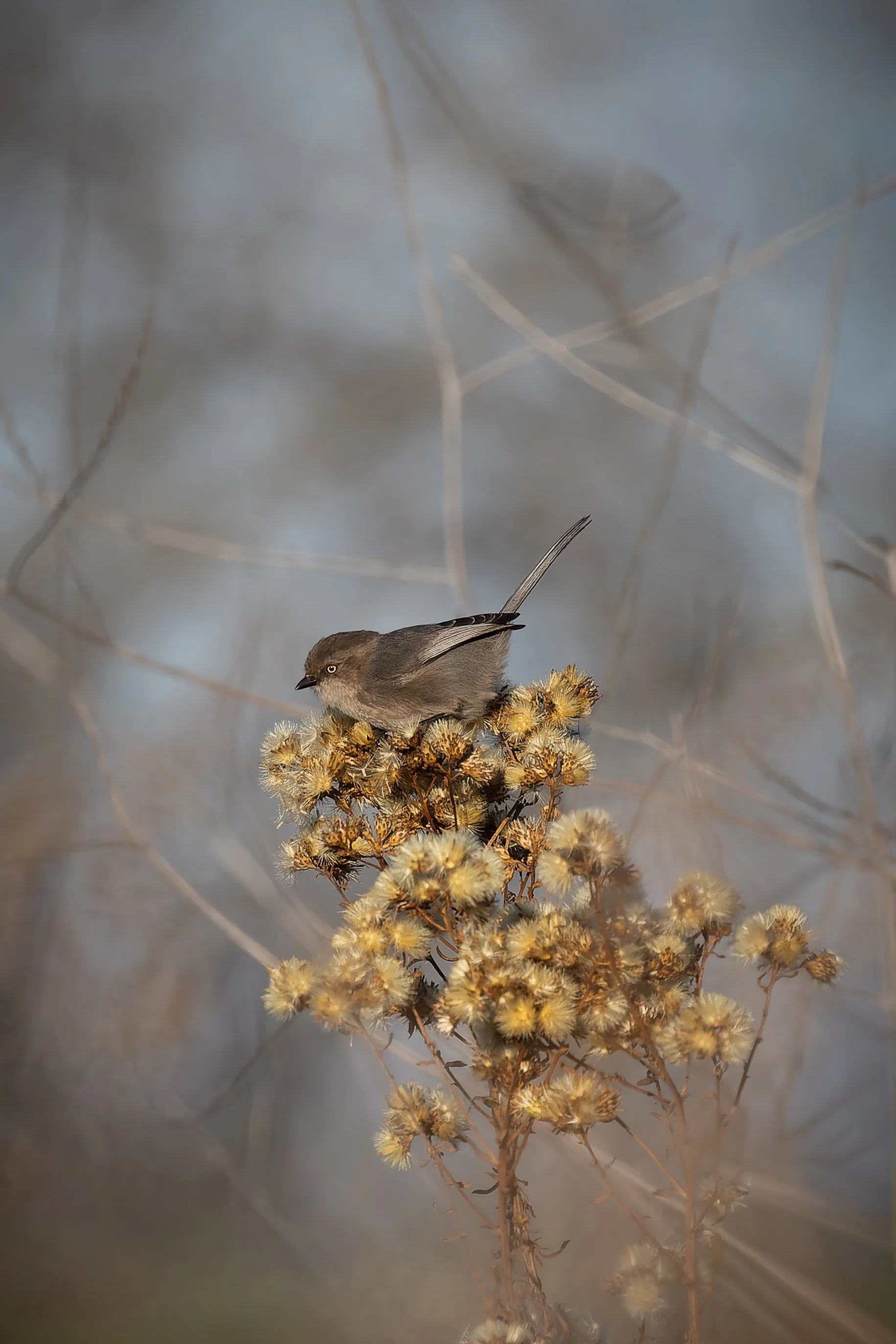
Bushtit- Tijuana River Estuary
Back at the RV, we checked out from our campground and drove to the Tijuana River Valley Bird & Butterfly Garden. This is reported to be one of the better hotspots in San Diego County, with over 250 bird species seen here. By the time we got there around 11:30am, however, it was pretty quiet. We spent just under an hour here, hiking west along a stand of trees in the river valley. We only saw about 35 birds, but did manage to get two new life species- Golden-crowned Sparrow and California Towhee.
I’d like to think we had lunch at this point, as it was around 12:30pm, however my next eBird checklist starts 45 minutes later and we had a 20 minute drive to the beach on the other side of the estuary. I also remember both of us getting quite a bit hangry at the end of our next outing, which lasted around 2 hours. Maybe we snacked first, who knows!
This last stop for the day before we started our journey home was the south end of Seacoast Drive. This leads to a little strip of Pacific Ocean beach on the opposite side of the Tijuana River estuary. We found a place to park the rig and started walking south towards the river mouth from the northwest, looking east towards where we had been exploring earlier in the morning. This side of the estuary was brackish water where the Tijuana River meets the Pacific Ocean and was just choc-a-bloc full of birds. Shorebirds, Gulls, Terns, Cormorants, wading birds, Pelicans, Osprey, Kites, Phoebes, and more! We had over 500 individuals of 29 species in less then 2 hours! We walked about a mile and a quarter south as far as possible before the beach stops at the river mouth. We had five life species- Sanderlings zipping in and out with the waves of the surf, Whimbrel and Long-billed Curlews wading through the brackish water in search of invertebrates, Royal Terns hanging out on a sandbar soaking up the sun and Black-bellied Plover waddling around with the other shorebirds. I took several opportunities to wave to Border Patrol agents in the helicopters who seemed be flying lower and closer to us as we approached the Mexican border. I guess we looked suspicious.
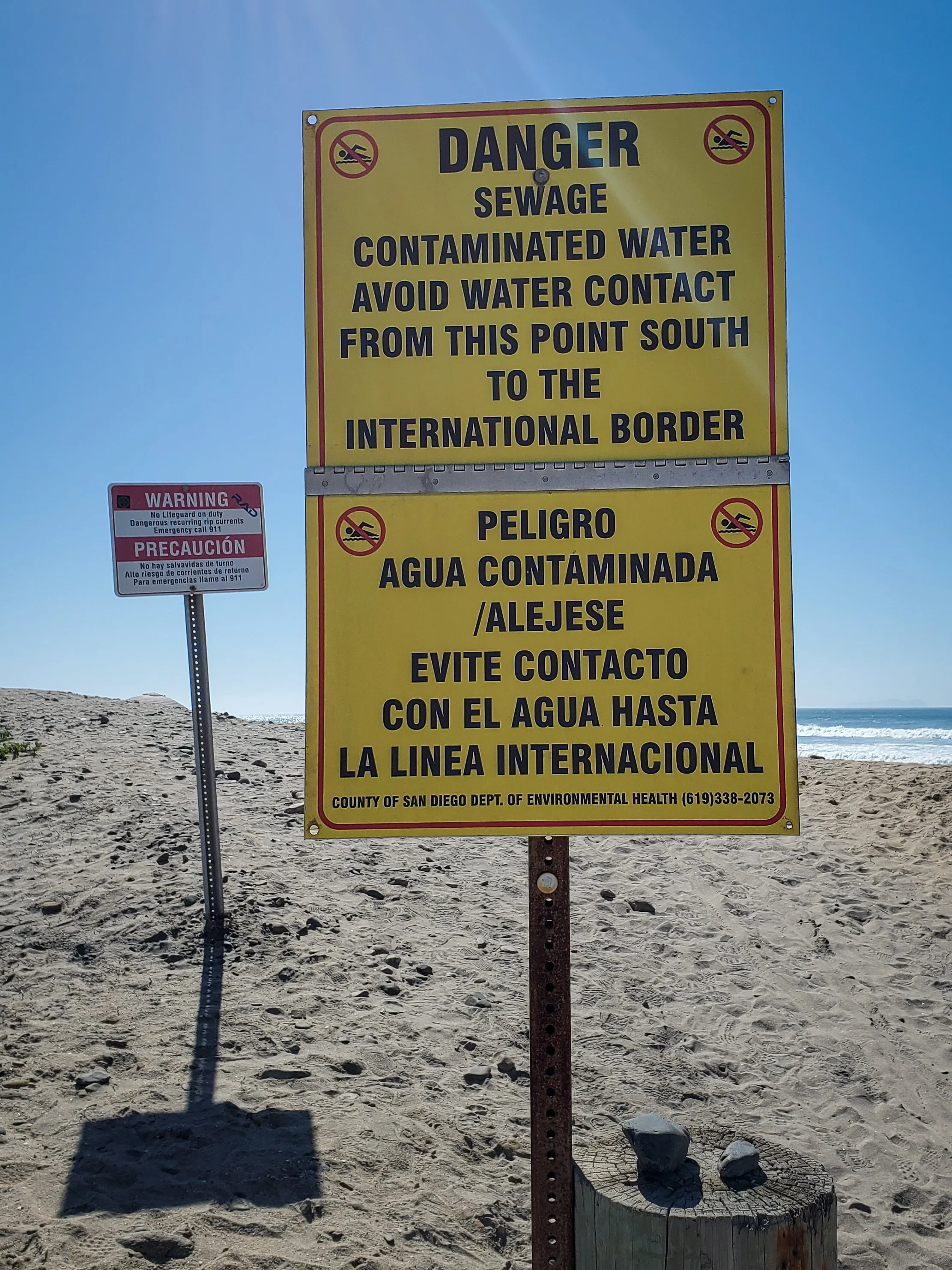
Not a great place for a swim.
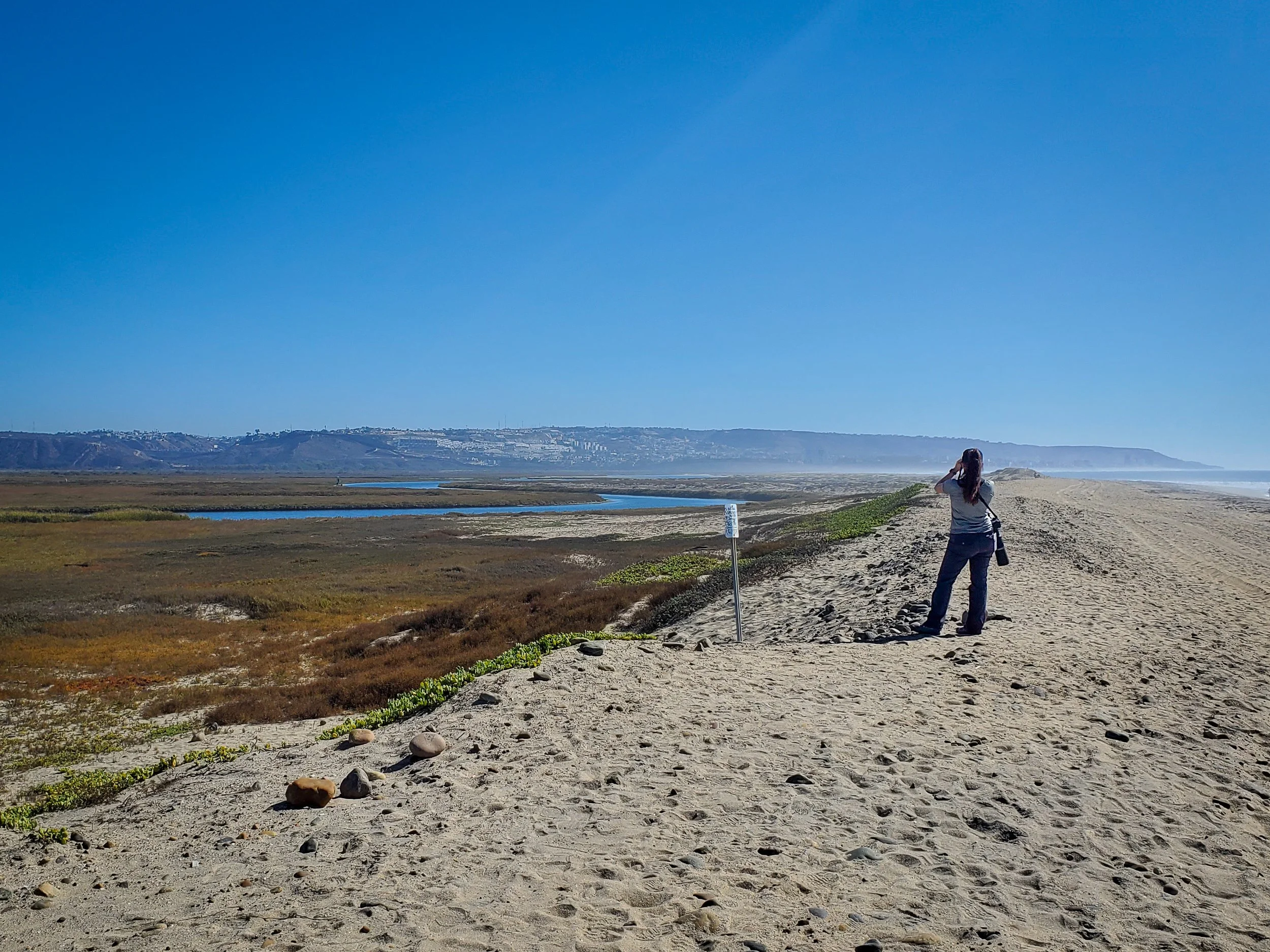
Michelle scouting the estuary.
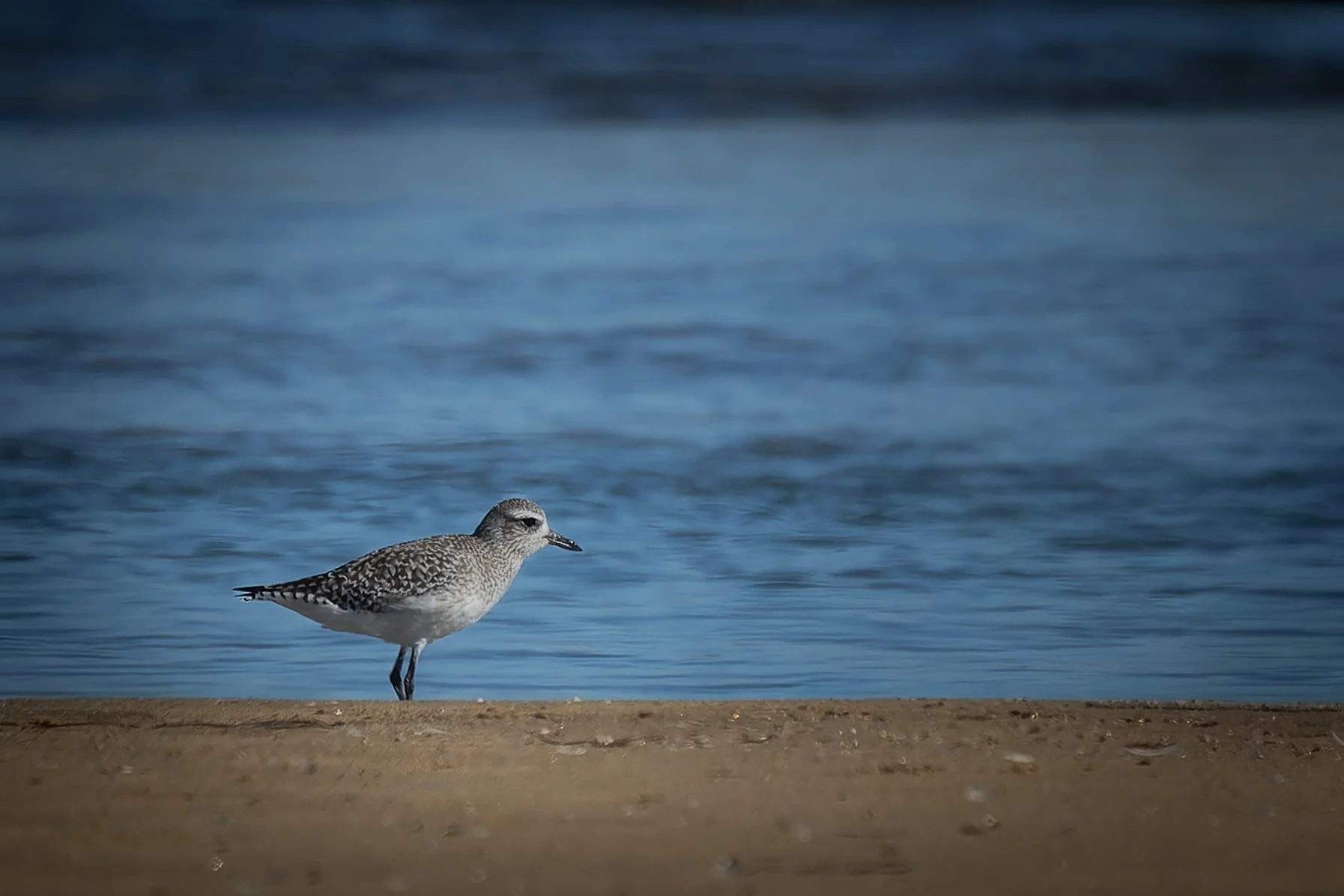
Black-bellied Plover- Tijuana River Estuary
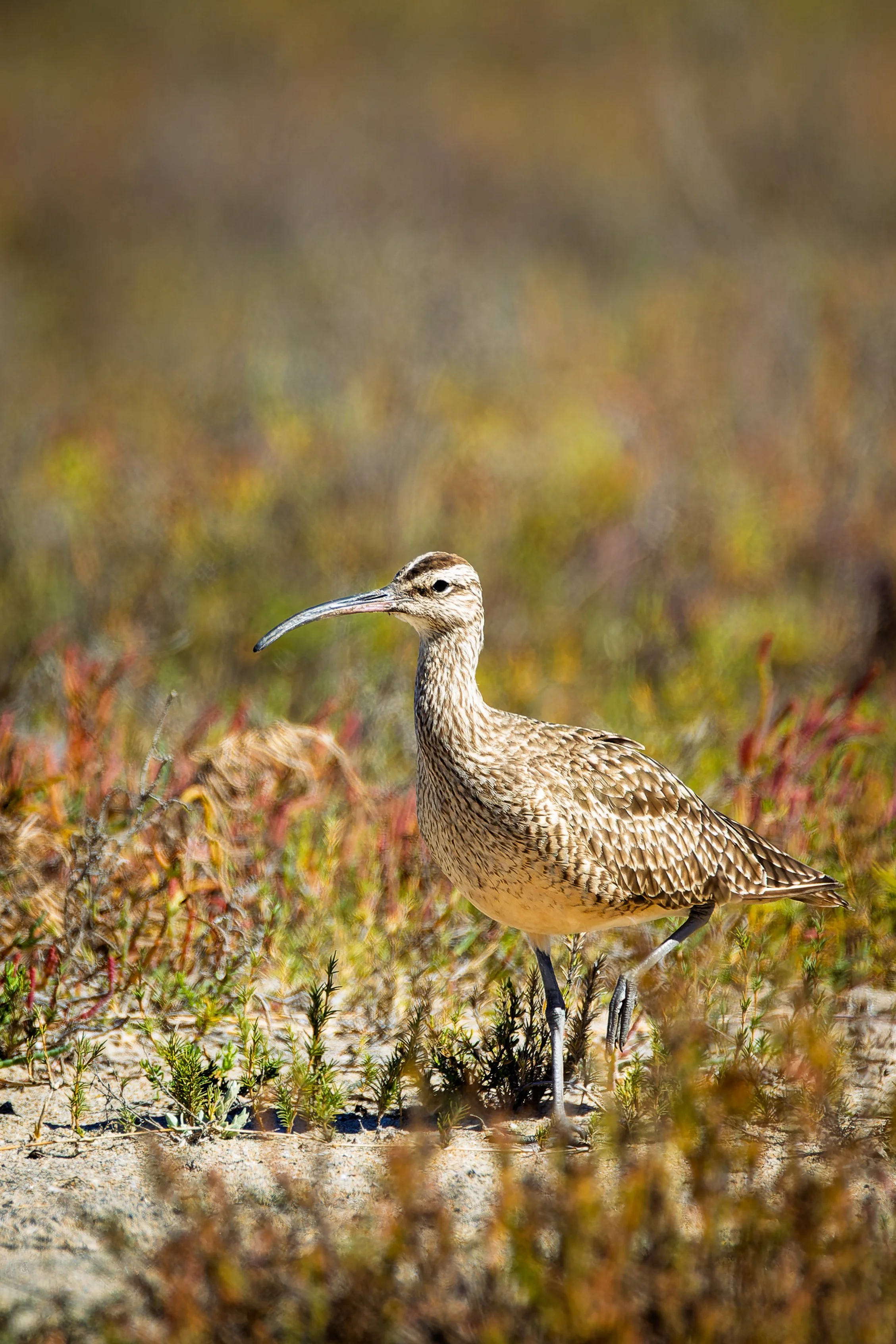
Whimbrel- Tijuana River Estuary
At this point, it was after 3pm and we had hoped to make the six hour drive back home to Tucson. But first, food! There were lots of great little restaurants up the road in Imperial Beach, I’m pretty sure we grabbed something here before heading out. Afterward, we secured everything in the RV and started the trek east towards home. Once we got out of San Diego proper, the driving was pretty relaxed, but I was TIRED. An hour or two in to the drive I realized I was in no shape to go over six hours all the way home. We started looking for places around Yuma, roughly the halfway point home. We found an RV park in Dateland, about an hour east of Yuma. We called and luckily they had a spot open for the night that had hookups and a sewer drain right at our site. It was about three and a half hours before we made it there, as the sun was going down and I was going with it. We checked in, relaxed and got organized for clearing out the RV the following day.
10/30/21- “Back Home”
We were up like clockwork at 7am. Coffee. Breakfast. We dumped the tanks (hey, I’m getting good at this!) Three more hours home to unload the RV of all our goodies. I headed back to the rental company, filled up the gas tank along the way, and again navigated the single-lane traffic cone maze like a pro. RV dropped off, we headed home.
The rest of our day consisted of scrambling to finish assembly of our Halloween costumes. I think we did OK, what do you think?
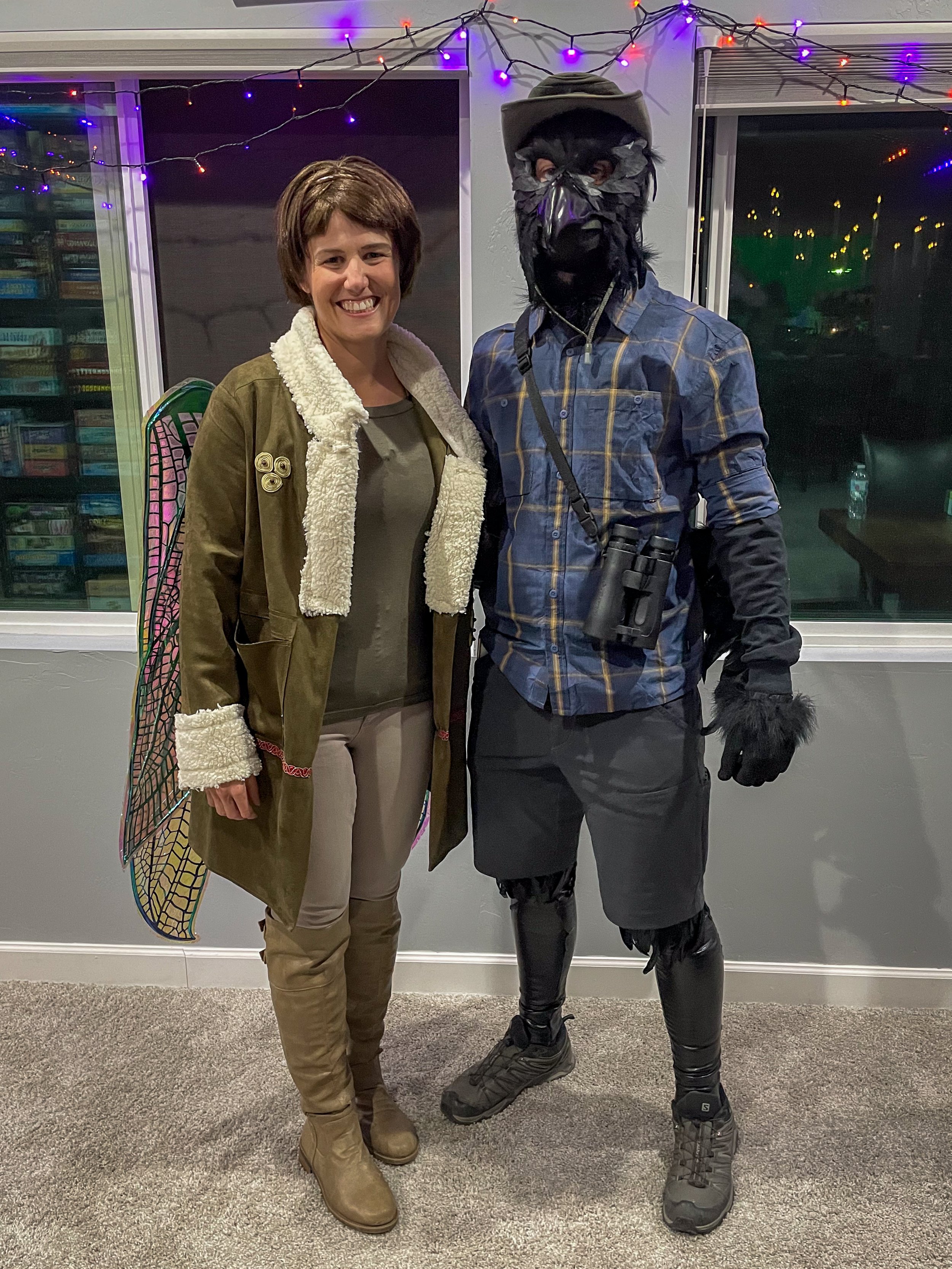
Halloween 2021!
Trip Summary:
1200 miles driven
1 new national park
132 bird species with 49 lifers
6000 pictures (each) to cull, label, rate, and edit
This trip singlehandedly convinced us that we were going to travel by RV after retirement. We truly enjoyed the peace and quiet of camping outside busy cities and having all our things with us at all times. No packing up and unpacking every few days or checking in and out of hotels. It was the perfect introduction to this type of travel and we both enjoyed it immensely. This laid the foundation for our Alaska adventure in 2024 and certainly more trips to come!
-CCC, October 2025
