Rio Grande Valley 2024-25
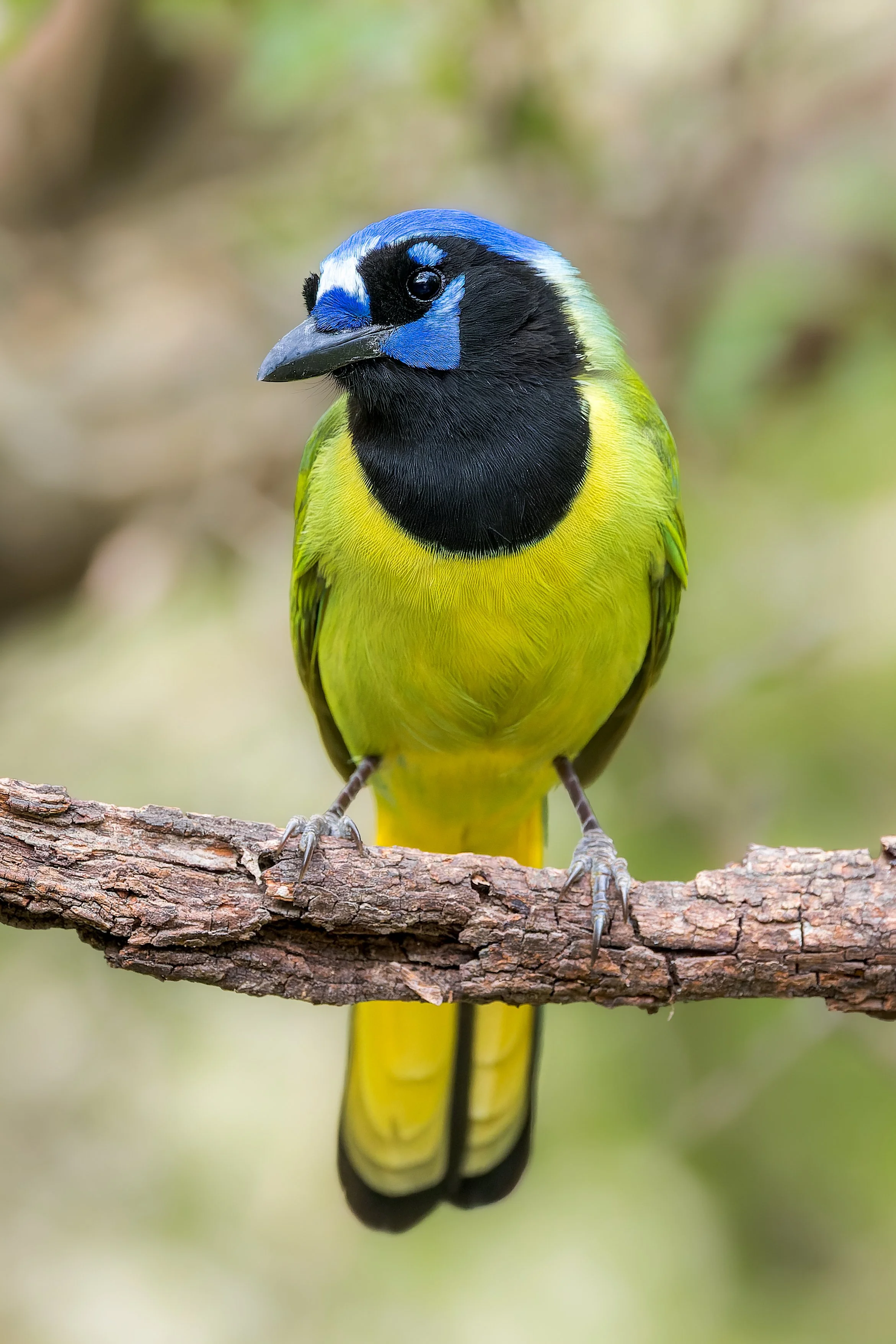
Green Jay- Bentsen Rio Grande Valley State Park, TX
This was our second domestic trip focused solely on birding, the first being our RV trip of Southern California in 2021. The Lower Rio Grande Valley had been on my radar since we started “real” birding in 2020. It’s widely considered one of the best spots in the United States due to the large number of tropical species that you can see there and nowhere else in the USA. It certainly did not disappoint!
In Search of 700
Our Texas New Year’s birding story starts in Florida, naturally. We spent Christmas with Michelle’s family, which was lovely other than Michelle catching a cold and sharing it with everyone in the family (except me). Three days before Christmas, we took a day trip up to Gainesville. For most normal people this trip would have been to the University of Florida where we spent four years learning to become veterinarians. Or maybe visiting old haunts and reconnecting with friends. Nope. We were in search of the Snail Kite! Payne’s Prairie (which to be fair, is kind of an old haunt for us) is one of very few places in the country that you can see this amazing bird. The Snail Kite is a wetland specialist raptor that feeds exclusively on freshwater snails. We spent most of the day at three different spots on the prairie and were able to see TWO Snail Kites, along with oodles of other birds such as Limpkin, Sandhill Cranes, Bald Eagles, Wood Storks, Ibis, Herons, Egrets, Ducks, and lots more! We also had lunch at the original Blue Highway Pizza in Micanopy, where we met up with Michelle’s good friend Judy. (OK maybe we’re not THAT antisocial). It was a lovely day trip.
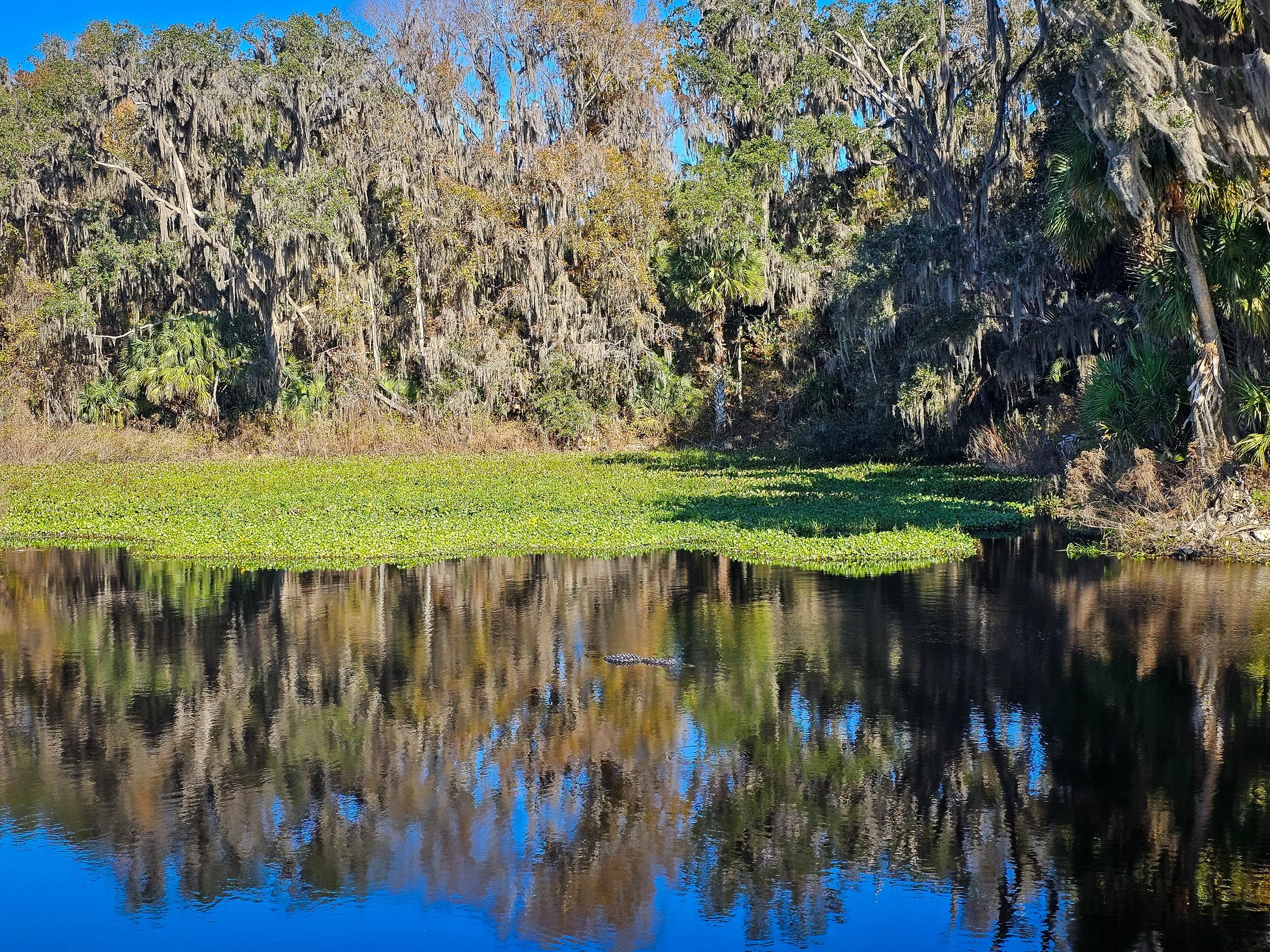
Payne’s Prairie- Gainesville, Florida
Fast forward a few days to the 27th and the Texas portion of the trip begins!
12/27/24
Our flight from Orlando to Dallas left around 9am, and it was fairly routine. Our connection to Corpus Christi, however, was delayed a couple hours. This was a bummer, as I had a few stops between the airport and our hotel that I wanted to hit to get our birding adventure rolling right away. Life happens.
Thus, it was late afternoon when we arrived in Corpus Christi. We got our Nissan Rogue rented and all our gear packed up. As we were leaving the parking lot, however, the seatbelt warning alarm started going off. The one indicating people in the back seat were unbuckled. Except there wasn’t anything IN the back seat (poltergeists notwithstanding, who knows). No bags on the seat, nothing. So M climbed into the back and buckled in our ghostly passengers, which made the car happy and quiet. Weird.
We had a roughly 40 minute drive north to Fulton and our hotel, but I had a quick stop first, which was a little out of the way. For a second winter, a very rare Cattle Tyrant (south American flycatcher species) had been hanging out behind an oyster bar in downtown Corpus Christi! I wanted to take a stab at seeing it before heading out of town. It was getting dark (thank you delayed flight) and rainy (thank you vacation weather gods), but I was optimistic. We drove across town to the spot and conditions worsened quite a bit. Barely any light, moderate rain, and no bird to be seen anywhere. Well, there was a grackle or two hanging about, but no Tyrant. Bah.
We only stayed a few minutes and gave up pretty easily. Time to head to Fulton. The drive wasn’t too bad and we found the Lighthouse Inn pretty easily. What a cute place! Unsurprisingly, the Lighthouse Inn looks like a…lighthouse. It’s a cute, quaint place right on Aransas Bay. After checking in and lugging our gear to the room, we scouted a place for dinner. We both had the hangries pretty bad (a common theme for not only trips, but our daily lives). We saw a Thai place on the map right up the road and Google said it should be open. Nope. Weird hours due to the holidays. OK, what else was there? We couldn’t find anything that was open or sounded good. Aha! There was a Domino’s in the area. Perfect. We headed back to the hotel and ordered pizza. Our bellies full and travel weary, we called it a night.
12/28/24
Dawn broke cloudy with a sprinkle of rain. We grabbed breakfast at the Inn, which was decent, grabbed coffees to go and headed out to our first destination- Goose Island State Park. We traveled northeast through Fulton and across the Lyndon B. Johnson Memorial Bridge, then east to “The Big Tree” a well-known birding hotspot for migrating warblers and local birds alike. It was deathly quiet around the tree, so we meandered east to the shoreline of Saint Charles Bay. This turned out to be a great spot! Gulls, pelicans, shorebirds, terns, spoonbills, herons/egrets, sparrows, blackbirds, and luckily, our target birds- cranes! We were treated to the sights and sounds of both Sandhill and Whooping Cranes! Experiencing them side-by-side is a fascinating study in contrast. Their physical appearance is not wildly different, with Whooping Cranes being a bit larger and bright white as opposed to gray. The interesting contrast is their numbers. Of the 15 extant crane species, the Sandhill is the most numerous crane species in the world, with some estimates of wild populations exceeding 1 million birds. The Whooping Crane is on the opposite end of the spectrum- it is the most endangered crane in the world with a global population (including captives) of about 830 individuals. The migratory population that winters in Texas is counted at around 560 individuals. This means that the 19 Whooping Cranes we saw in this foggy farm field represent 3.4% of the migratory wild population and 2.3% of the ENTIRE global population of Whooping Cranes. That’s bonkers. Contrast that to our experience in January 2023 at Whitewater Draw in southeast Arizona. On that day, I estimated we saw about 15,000 wintering Sandhill Cranes. Huge, loud birds as far as the eye could see. That group of 15,000 individuals is only about 1.5% of the global population. Very different experiences, but both fantastic!
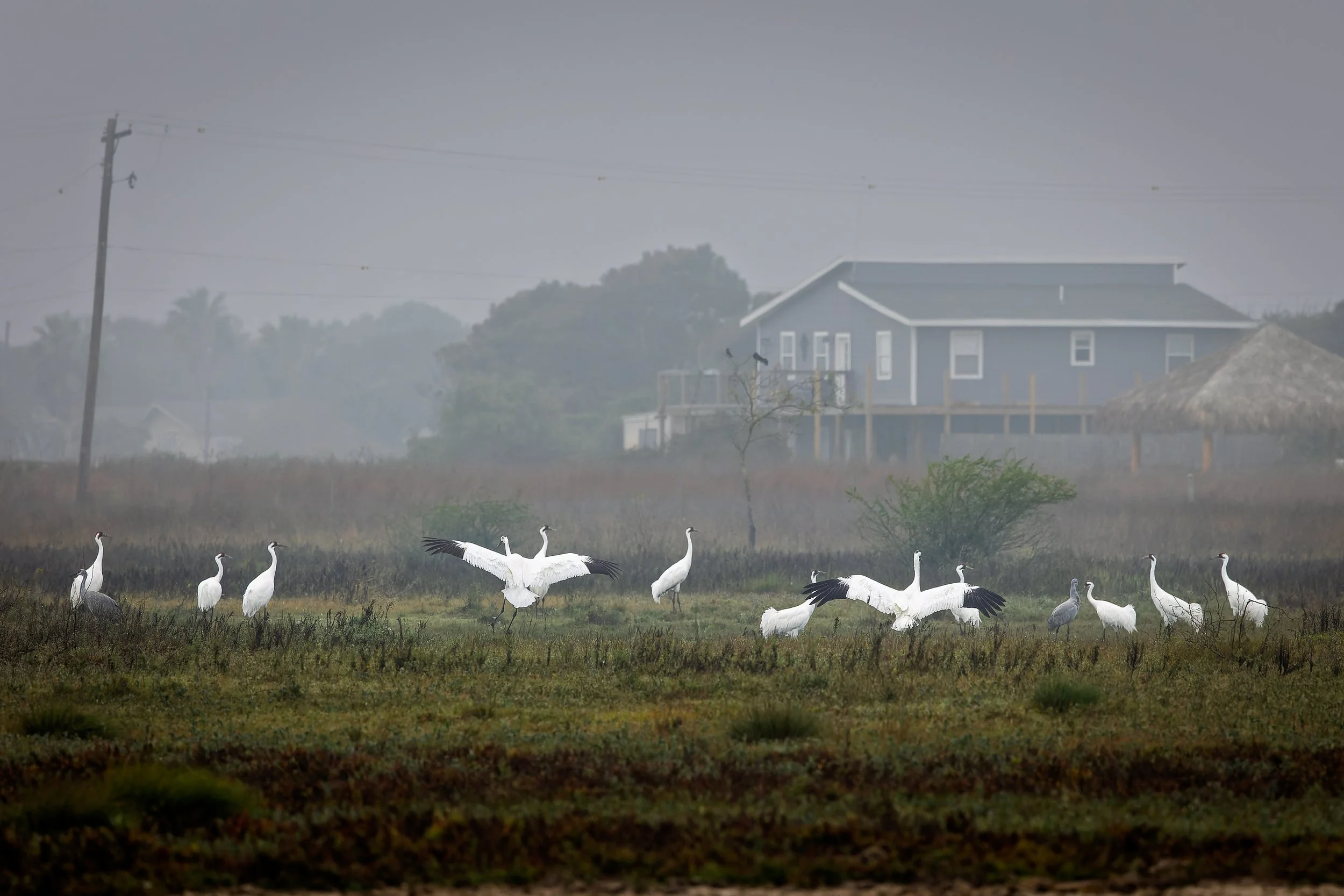
Whooping and Sandhill Cranes- Rockport
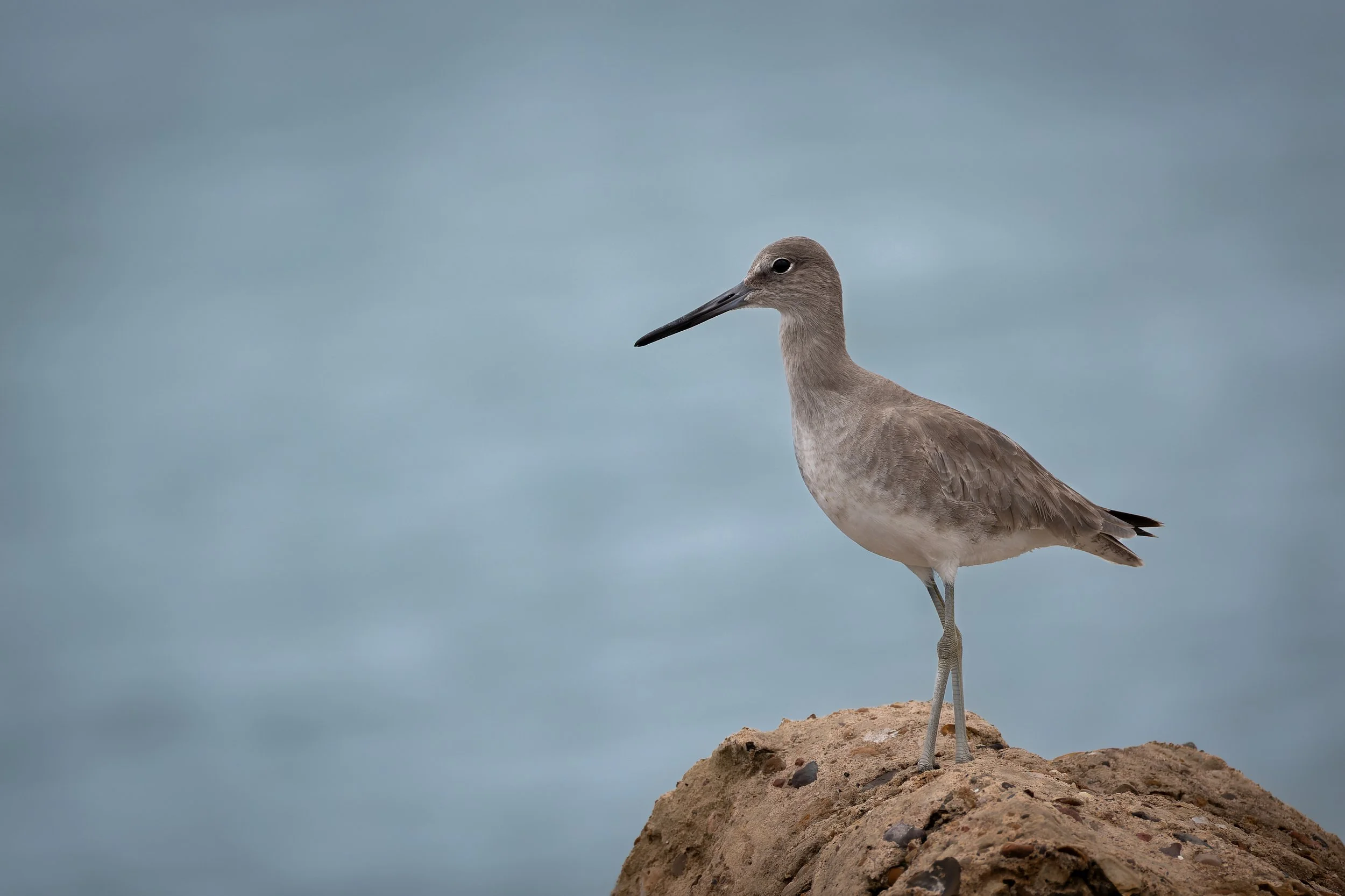
Willet- Rockport
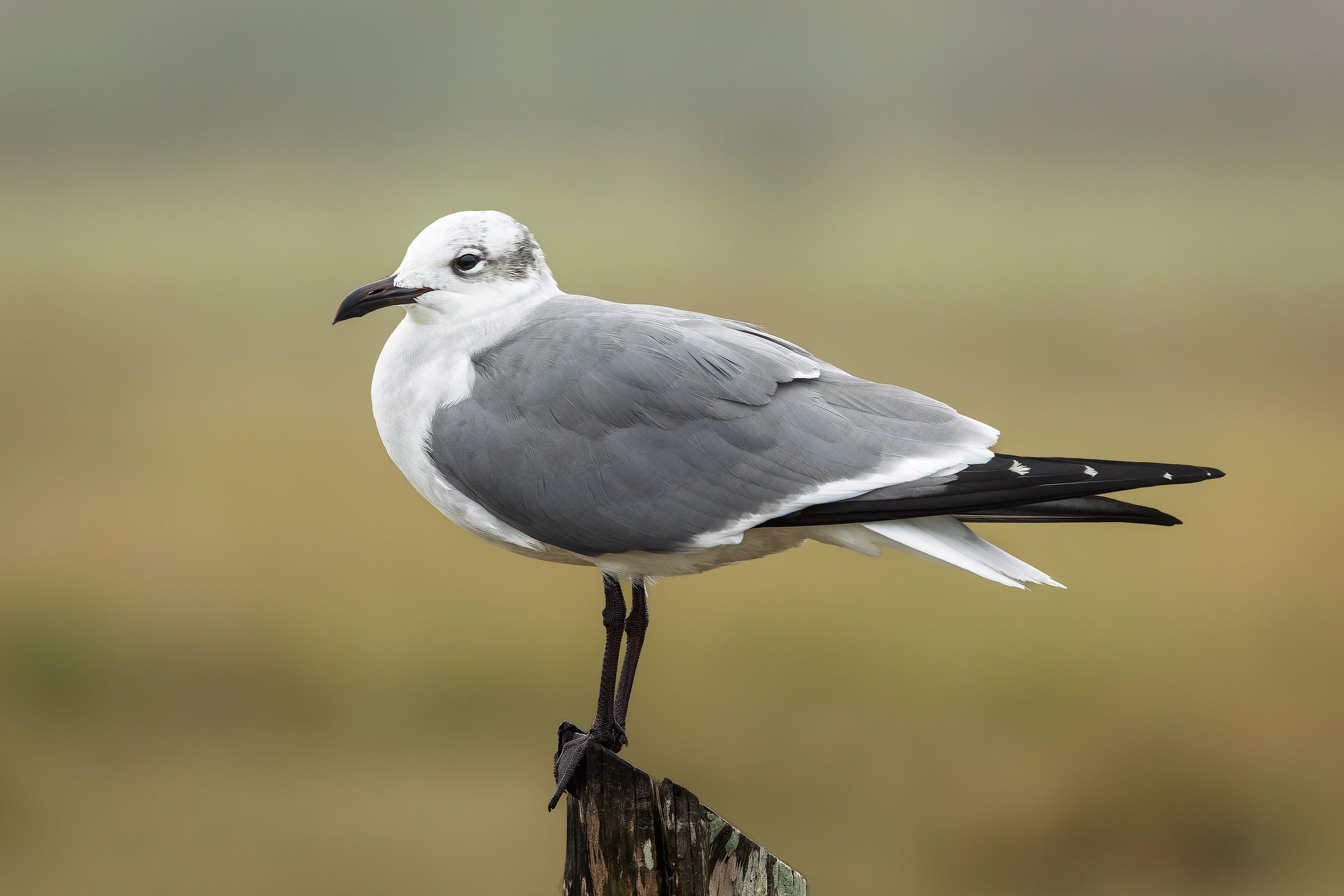
Laughing Gull- Rockport
We spent just under 2 hours strolling along a narrow, one-lane blacktop road right on the bay, taking in the sights and sounds of the birds on the waterline, the adjacent fields, and oodles of birds flying overhead. We tallied 45 species. When we had our fill, we decided to enter the state park proper, which was a short 5 minute drive south on Aransas Bay. Here we spent about an hour strolling along the boardwalk out into the bay, amongst the many fisherman and families recreating. We were treated to numerous duck species like Redhead, Bufflehead, Goldeneye, and Mergansers. Our main targets here were the American Oystercatcher, along with Black and Surf Scoters. We managed to see a pair of Oystercatchers hanging out on a distant sandbar, but the scoters were likely too far south across the bay to see from this vantage point. Nevertheless, it’s a great place to bird and relax and we enjoyed our time here.
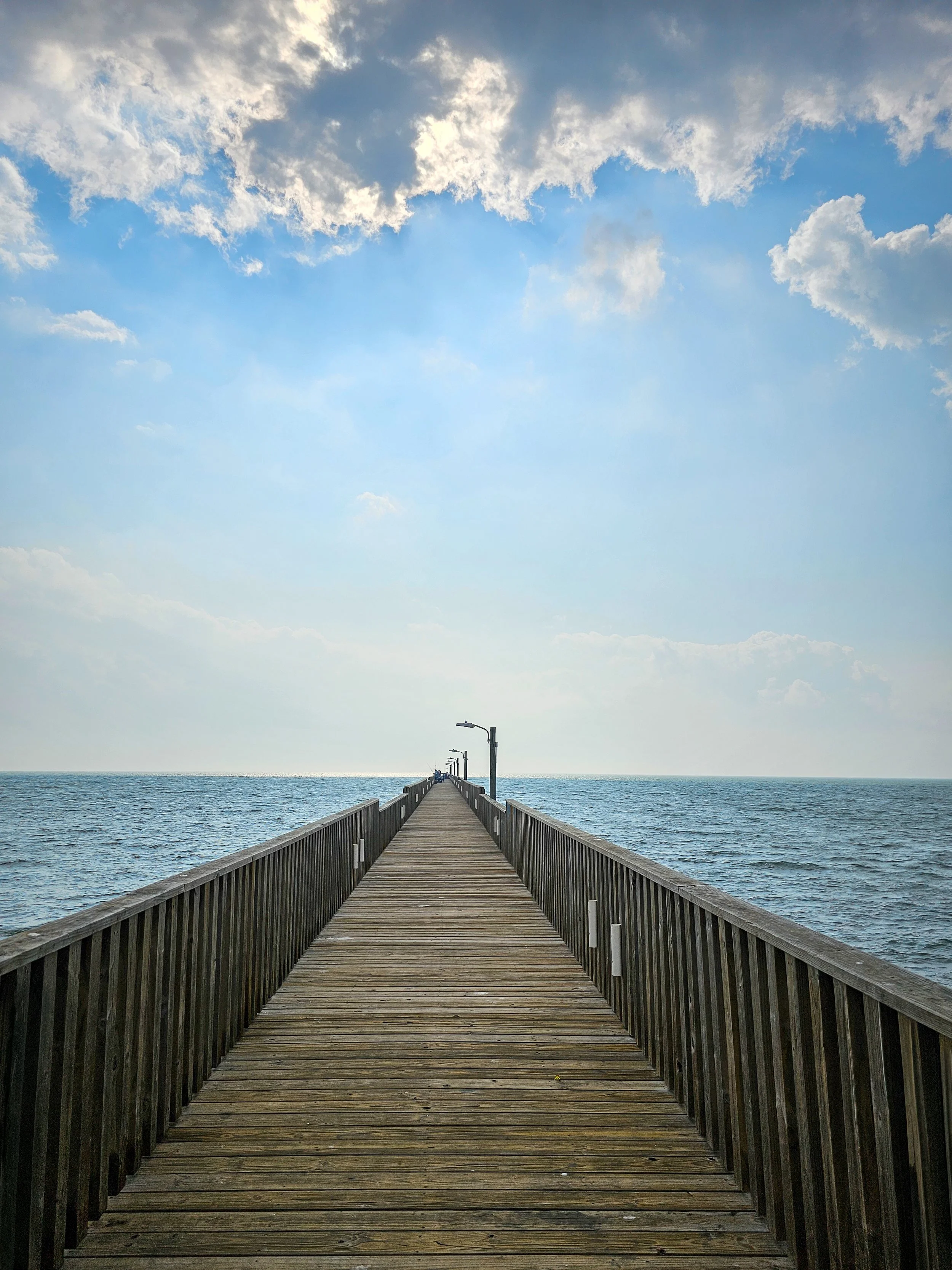
Goose Island State Park- Rockport
Our stomachs were alerting us to their emptiness, so we headed back south across the bridge and enjoyed a nice seafood lunch at Charlotte Plummers in Fulton. The food was excellent and we had a great view of the bay during our meal. Bellies now full and fighting off the post-lunch sleepies, we headed further southwest past Rockport, through Aransas Pass and across the Redfish Bay Causeway. Where all of a sudden there was an ENORMOUS backup of cars at a standstill. What the heck? Is there a drawbridge here or something? Nope. As it turns out, this causeway ends abruptly at Aransas Pass and you have to take a ferry across the bay to Port Aransas. Google maps did not warn me about this (well maybe it did, but I sure didn’t notice it), nor the fact that we chose a terrible time of day to make the crossing, around 3pm on a Saturday. I don’t recall exactly how long we waited in the care queue, but when you have birding to do, any slowdown feels like an eternity. We finally made it onto the ferry and had a quick 10 minute ride across the bay, which was smooth and admittedly somewhat pleasant. From the landing we had a quick 5 minute drive to the Leona Turnbull Birding Center. The parking lot was jam packed and cars were lining the side streets leading away from the center, it is quite the popular place! We parked about a quarter-mile up the road and hoofed it to the center. There are two boardwalks that lead out into the wetland marsh, which is teeming with birds and wildlife. There was a similar smattering of birds to the previous locations, with a few new species for the day, which was great. What we were really after was to catch sight of an American Flamingo that had been hanging out here for several months. Unfortunately, we didn’t have any luck with the Flamingo- as it turns out, it moved on two weeks before our trip. We did get a glimpse of “Boots” the resident American Alligator, however! An hour was plenty here, it was time to take another shot (figuratively speaking) at seeing the Cattle Tyrant! We drove down the length of Mustang Island and headed across the JFK bridge. Along the way south we had our lifer White-tailed Hawk perched as many raptors do- on a power pole surveying out over the landscape. We passed on attempting to see the rare Iceland Gull that had been hanging out near the bait shop at the middle of JFK bridge due to time.
To the oyster bar! We parked across the street from the infamous “blue dumpster” on Lawrence Street behind Prohibition Cigar Lounge and waited. For less than a minute. He popped right up and was happily flitting around picking off flies like a champ. We enjoyed his antics for 15 minutes or so, risking a parking ticket since we were technically in a private apartment complex spot. We got some nice shots of him bug hunting- he’s quite the entertainer. (Later review revealed that he was my 500th US life species, how cool!) As the sun threatened to start setting, with a trip south to Brownsville for the night ahead of us, we had to say goodbye to our Tyrant friend and move on. We hopped on US 77 to Interstate 69E directly south and made it to Brownsville by around 8pm. We got checked in at our hotel and desperately needed to find some food. As luck would have it, there was a fantastic Mexican restaurant within walking distance that was open late. We stuffed ourselves on the pre-meal chips and salsa (as one does) and followed that with large, delicious portions of authentic Mexican. It could not have been better. A fantastic end to a wonderful first full day of southern Texas gulf coast birding. Sleep.
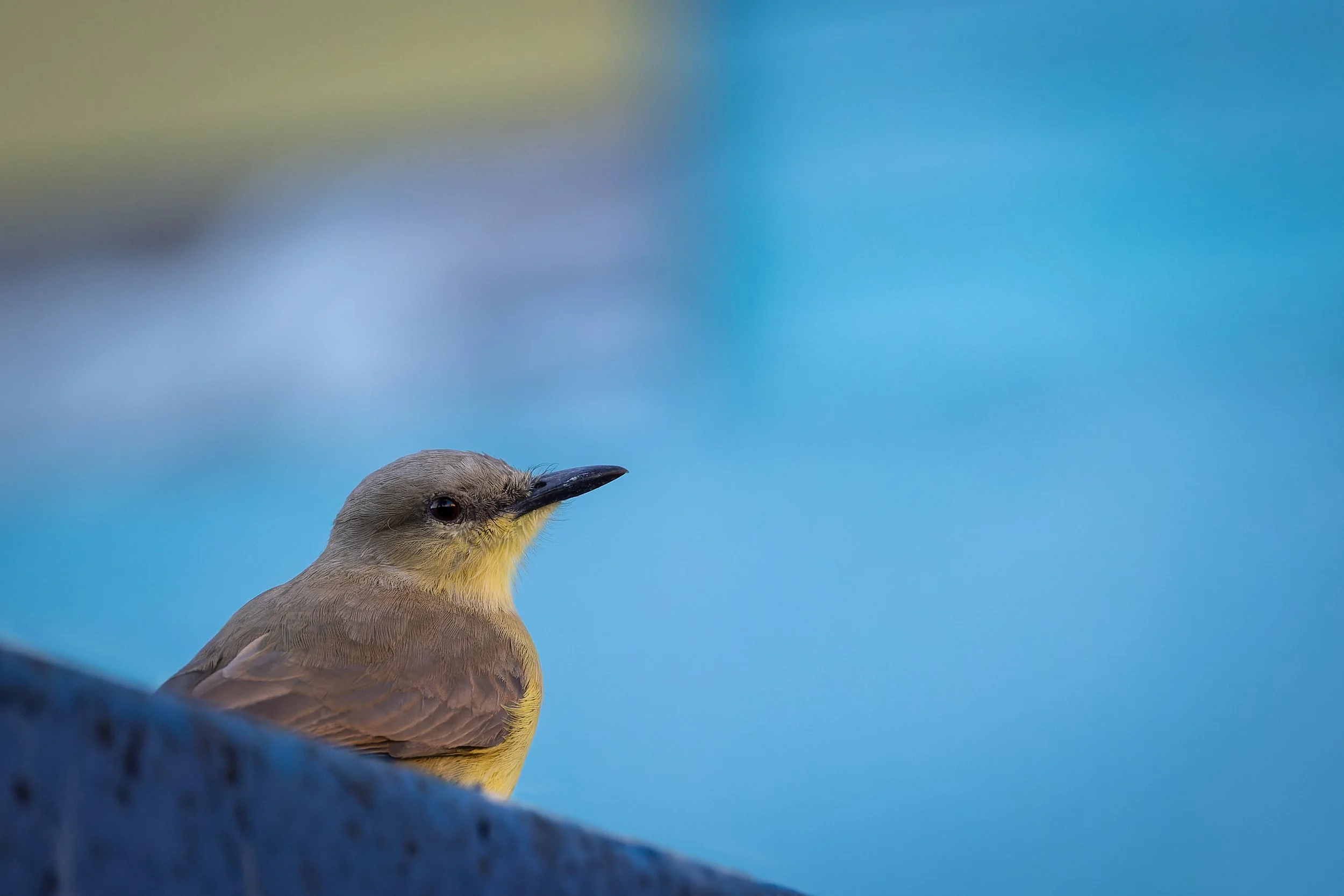
The Famous Cattle Tyrant- Corpus Christi
12/29/24
We started our third day dark and early, before sunrise. We grabbed a bite to eat at the hotel, and some Starbucks to aid with consciousness. We headed east across town, onto the 48 northeastish towards South Padre Island. We had a family Trio of Harris’ Hawks in a loose hunting group along the power poles, similar to our previous day’s White-tailed Hawk. Another species for Texas (and one of our favorites from back home). We made it to the South Padre Island Birding & Nature Center before it opened, so decided to spend some time on the mudflats on the north side of the SPI Convention Center (right next door) surveying shorebirds. There had been Piping and Snowy Plovers in the area recently, along with Gull-billed Tern (all potential lifers) and a handful of other Texas targets. A Groove-billed Ani was also reported to be hanging about in the cluster of trees near the birding center. We caught a wary coyote traipsing across the mudflats in search of a snack, along with thousands of gulls, hundreds of ducks, stilts, sandpipers, plovers, terns, egrets, herons, pelicans, Osprey, Black Skimmer, and a single Crested Caracara. It was incredibly birdy, my estimate was somewhere around 3000 birds of 30 different species. We picked up 7 new Texas species over about 45 minutes including a lone Marbled Godwit. Alas, we were unable to find any of the life birds. On to the birding center we go!
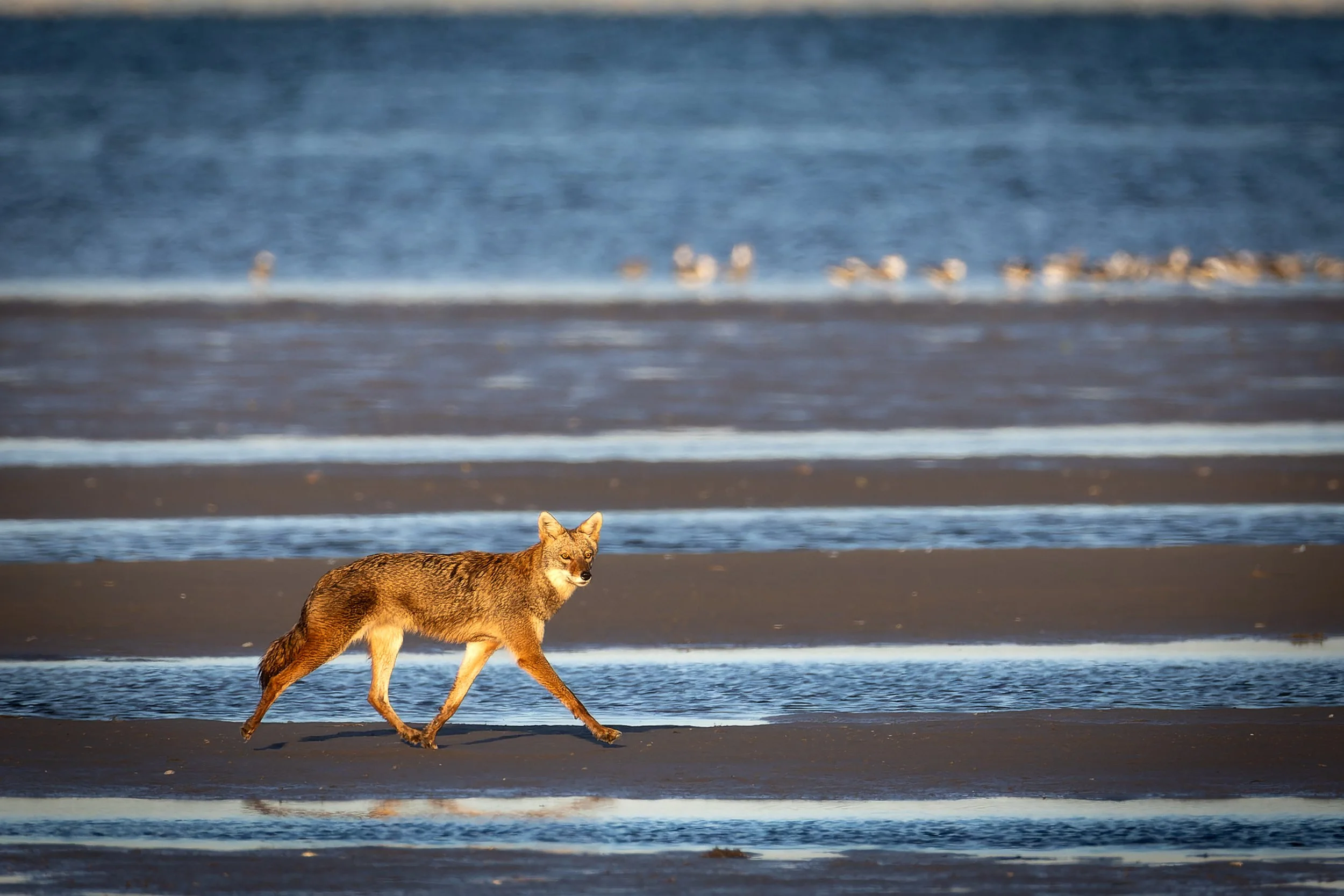
Coyote- South Padre Island
The South Padre Island Birding and Nature Center is touted as one of the premiere places to visit and bird in south Texas. It has a really nice boardwalk that leaves the nature center, travels out through mangroves into the mudflats and overlooks the waters of Laguna Madre, a portion of the Gulf of Mexico sheltered by South Padre Island. There is also a fantastic education center and observation tower. Present on the grounds is a small alligator sanctuary, complete with “Big Padre” and “Lady Laguna”, a pair of adult American Alligators. Like the adjacent mudflats on the north side of the Convention Center, there are oodles of birds here. We spent about 2 hours strolling along the boardwalk, taking them all in. Highlights included Yellow-crowned Night Heron, Little Blue and Tricolored Herons, Reddish Egret, Tropical Kingbird, Sora, Clapper Rail and Black-bellied Whistling Ducks. While we thoroughly enjoyed the experience, afterward while chatting we realized that both M and I were just a little underwhelmed. Perhaps because the cadre of birds is similar to what we see in Florida, or maybe because we had already spent 45 minutes on the mudflats, or maybe because we didn’t see any life birds- who knows. It’s still a wonderful place and I would absolutely visit again- I highly recommend it.
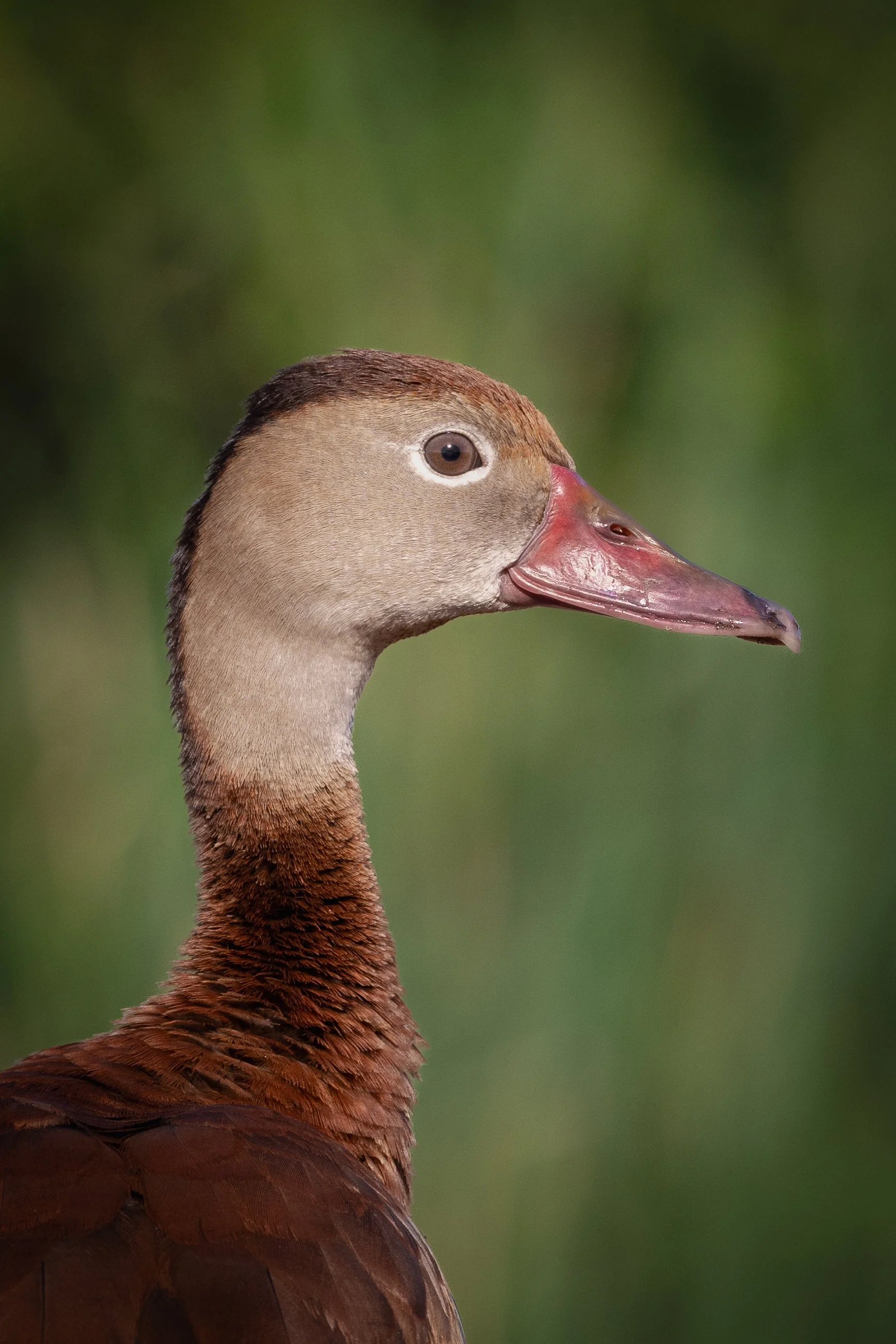
Black-bellied Whistling-Duck
South Padre Island Birding and Nature Center
As usual, birding is hungry business and the hangries were approaching. We found a great place for brunch, the Grapevine Café, just 5 minutes down the road in town. There was a short wait, but they were hustling and both the food and service were excellent. M found some great gluten free options and we were both able to fill up our energy tanks. We left SPI and headed back to the mainland for our next spot, Laguna Vista Nature Trail. This is a small, 15-acre wooded area on the opposite side of Laguna Madre from the birding center in the small residential town of Laguna Vista. The trails are very well-maintained and beautifully planted with native vegetation. There are three bird blinds, each complete with feeders and a water feature- it’s just lovely. Lots of warblers and other small passerines flitting about- Wilson’s, Nashville and Yellow Warbler (Mangrove subspecies), White-eyed Vireo, and we were treated to our lifer Buff-bellied Hummingbird, which was coming to a feeder at one of the blinds. We also heard (but did not see) Great Kiskadee for the first time- boy are they squeaky! Our only disappointment was not seeing the Tropical Parula that is seen regularly here. However, we both thoroughly enjoyed this spot, agreeing that we would spend a lot of time here if we lived in the area.
We were able to tear ourselves away from Laguna Vista Nature Trail after about an hour. We took a 20 minute drive north on Buena Vista Boulevard, up to Laguna Atascosa National Wildlife Refuge Headquarters. Here we got our first “real” taste of the southern Texas specialities! Immediately adjacent to the parking lot at the visitor center is a small feeder station, which was riddled with Plain Chachalacas and Green Jays! The Green Jay was the top of my list of birds I desired to see when we started birding. Corvids are one of my favorite bird families and this is one just spectacular- lime green with a black mask and throat and bright blue cheeks, crown and eyebrows! You definitely know you are in the subtropics when you are seeing birds like the Green Jay, they seem like they belong in Central and South America (which they are), rather than Texas. In addition to the Jays and purring Chachalacas, skulking along the ground were also Long-billed Thrashers, another south Texas speicalty. We also had a Golden-fronted Woodpecker and again heard (but did not see) Great Kiskadee. We had officially arrived in south Texas! After about 30 minutes here at the feeding station and strolling the Kiskadee Trail we had tallied four life birds- what a great spot! We left this raucous group of south-Texas specialities and headed back through Laguna Vista, snagging a trio of Eastern Meadowlarks on some grass at a traffic signal, then drove west on Texas 100.
Plain Chachalaca- Laguna Atascosa NWR
One of the other “must have” birds from the Lower Rio Grande Valley is the Aplomado Falcon. This is a small, long-winged and tailed falcon found in savannahs, grasslands and marshes throughout most of South America. It used to be common in Mexico and southern Texas, but was extirpated in the 1950s, likely due to habitat destruction. Reintroduction efforts by The Peregrine Fund in the 1990s have led to a small breeding population in southeast Texas. Similar efforts in New Mexico and the Chihuahuan Desert of west Texas were not successful and have been discontinued. One of the best spots to see them is here along TX 100 near a huge blue cellular tower. There are several barred nesting platforms in the area that they use to breed. Their preferred nesting sites are short yucca plants, however these leave them exposed and prone to predation from Great Horned Owls and other predators, so the barred platforms were created. They have been very successful and led to the falcon making a small comeback here in Texas.
We arrived at the viewing site around 3:30pm for a “quick stop,” as they seemed from my research to be reliable at most times of day. We scouted the enormous roadside cell tower and the nest platform (which is really far out in the grassland to the south- thank goodness for our spotting scope), nothing. We scouted all around, looking for birds perched on the sparse Yucca and other low brush for a good 15-20 minutes with no success. Well, we saw a White-tailed hawk, American Kestral, Osprey, Turkey Vulture, Loggerhead Shrike, Northern Mockingbird, and some grackles, but no falcons. We put up the hatch of the Rogue for some shade and enjoyed a snack to fight off the afternoon grumpies. A trio of people arrived with the same goal, stayed for 15 minutes or so, then gave up. We almost gave up as well. However, as they other group was getting back in the car, Michelle called out “They’re on the cell tower!” Sure enough, they had snuck in past five pairs of eyes watching for them. We alerted the other group just in the nick of time before they left and got them on the birds, for which they were very thankful. We spent a few minutes snacking and watching the pair, who then flew down onto the nest platform for us. Very happy with our luck, it was time to head out for our last stop of the day.
We ended our day in Oliviera Park, one of a few well-known parrot roosts in the valley. There are a few spots in the lower 48 where various species of parrots have been released and established feral/naturalized populations- southern California, Texas, and Florida being the most notable. When we arrived, we stumbled upon a group of local Texas birders that were intensely focused on a small stand of evergreen trees in the northeast part of the park. Apparently there had been a rare Grace’s Warbler spotted here for the past few days, which was a big deal for southeast Texas. We are fortunate to be able to see these gorgeous gray and yellow warblers often up in our sky islands around Tucson. Since it was a bit before dusk and we haven’t seen this bird in Texas, we hung out with them for a few to try and catch a glimpse, to no avail. We toured around the park, which seemed a fairly typical suburban park with a few ball fields, tennis courts, playgrounds, bathrooms, even a small skate park. We had some good birds, including American Kestrel, Merlin, Golden-fronted Woodpecker, Tropical Kingbird, Northern Mockingbird, and even a pair of Peregrine Falcons perched on a distant cell tower (falcons seem to like these a lot). We AGAIN heard a Great Kiskadee, but could not find it- what the heck?!?! The place became anything but typical just before dusk when flocks of parrots started to fly in to roost for the night. Handfuls of parrots arrived in small flocks, alighting on the power lines outlining the park. The majority were Red-crowned Amazons (about 200), but we also saw 2 Red-lored Amazons (distinguished by their yellow cheek patch), 45 White-fronted Amazons, and a single Yellow-headed Amazon, which is a likely escapee. If you’re never been around a flock of parrots, boy are they LOUD. We spent the rest of the available daylight admiring these racous, social, naughty birds as they nibbled on berries, pestered each other and told the entire zip code they were here for the night. Michelle and I had a blast, it was like nothing else we’d experienced birding thus far. It was loud, racous, crazy, and definitely the most fun part of the trip thus far.
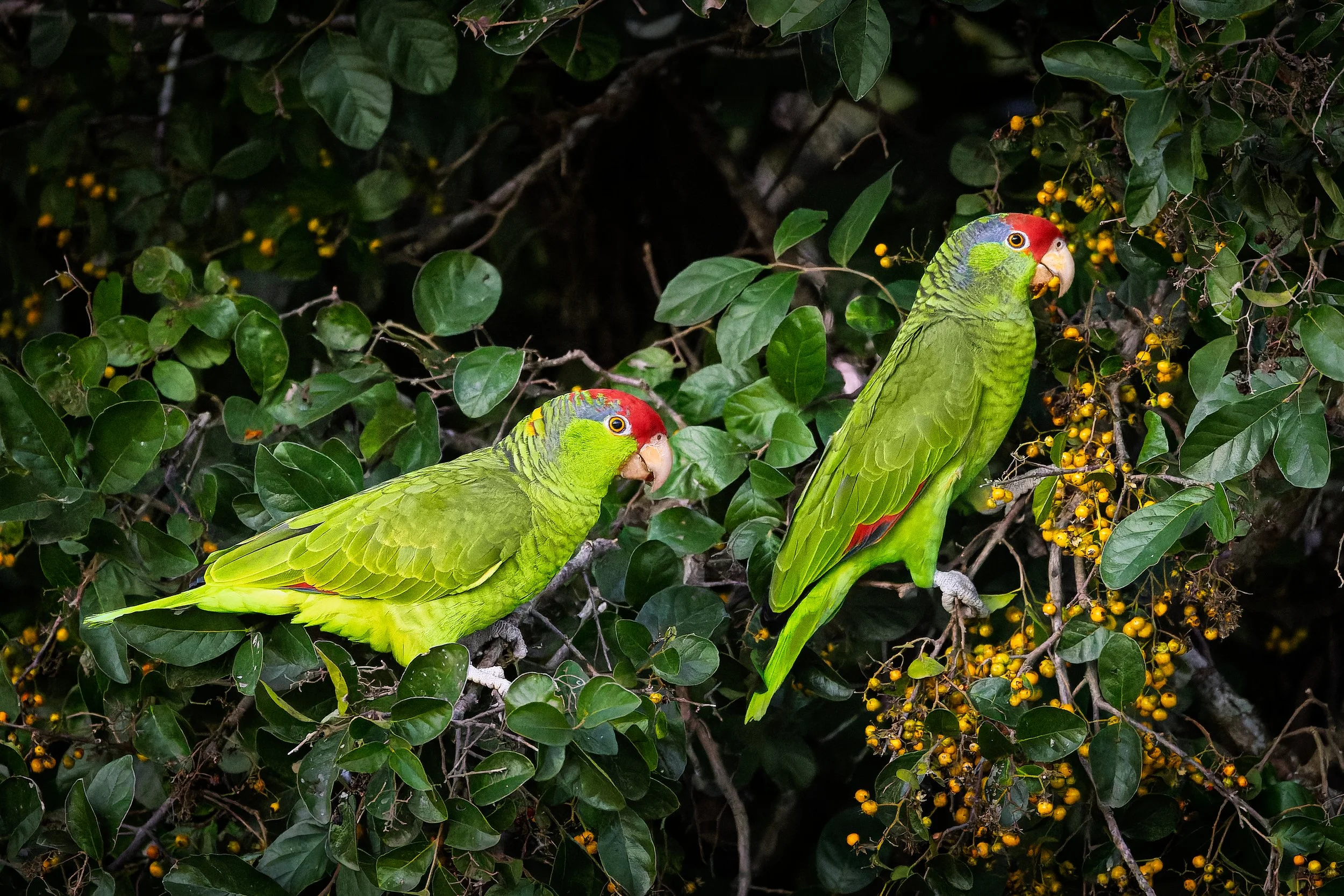
Red-crowned Amazons- Oliviera Park, Brownsville
We headed back to the hotel and celebrated the day with a feast of pizza at Parry’s Pizzeria and Taphouse. Yum.
As we prepared to crash for the night, I was reviewing reports from around the valley for the day- as it turns out, the Groove-billed Ani was seen on the trail on the opposite side of the Convention Center from our mudflats exploration first thing in the morning. Whoopsies.
12/30/24
This day really marked our first full day IN the lower Rio Grande Valley proper. Our big ticket location for the day was Resaca de la Palma State Park, just outside Brownsville to the northwest. 1200 acres, towers, trails, and birding goodness. We arrived nice and early, right at sunrise.
CLOSED.
Shit.
I had read that the visitor center was closed Mondays, but there is a small 4-spot lot where you could still park outside the gates and walk in. As it turns out, you can only park here if there isn’t a giant dump truck and utility pickup truck parked there taking up ALL the spaces. Needless to say, this made me grumpy. I raged a bit, contemplated squeezing in next to the trucks (hey, it’s a rental), but decided against it. Michelle was the voice of reason keeping me calm and recommended we move on. On to the cemetery I guess.
Buena Vista Cemetery was back in downtown Brownsville, about 20 minutes. Our targets here were Black-crested Titmouse and the elusive/rare Tropical Parula. If you aren’t a birder, it may surprise you that cemeteries are actually pretty good places to bird. They are particularly well-suited for small perching birds like warblers, flycatchers and woodpeckers. Typically quiet, well-planted, rife with trees, shade and water- just what the birds need. This spot fit that description well, other than quiet. It sits along a busy road right off Interstate 69E in the south portion of Brownsville proper.
Pro Tip: When birding in cemeteries, you MUST be respectful of any people visiting loved ones or services going on. Additionally, keep to the sidewalks/roads and don’t walk over graves willy-nilly! Proper etiquette is paramount to ensure everyone can continue to enjoy these places.
We arrived around 8am and got started. Right away we found a mixed flock of passerines- vireos, kinglets, gnatcatchers, titmice and warblers. We followed this flock around the grounds for about an hour, picking up our lifer Black-crested Titmouse, along with two vireos and six species of warblers, including Northern Parula- no Tropical Parula, however. Along the way, we also saw a Green Jay, Tropical Kingbird (we examined these closely to ensure they weren’t the very similar Couch’s), and Golden-fronted Woodpeckers. We bumped into a very nice couple from Sierra Vista, AZ (One of our favorite birding spots back home) and had a chat with them for a bit. They spend some time every winter here in the LRGV, which sounds lovely. After about 2 hours, Michelle was incredibly overstimulated by all the traffic noise and a little burnt out “warblering-“ one of her least favorite types of birding. Admittedly, it can be a bit tedious- trying to track these tiny, restless birds bopping around up in the canopy, often backlit, craning your neck up constantly isn’t easy. But when you find those new/rare species though- totally worth it!
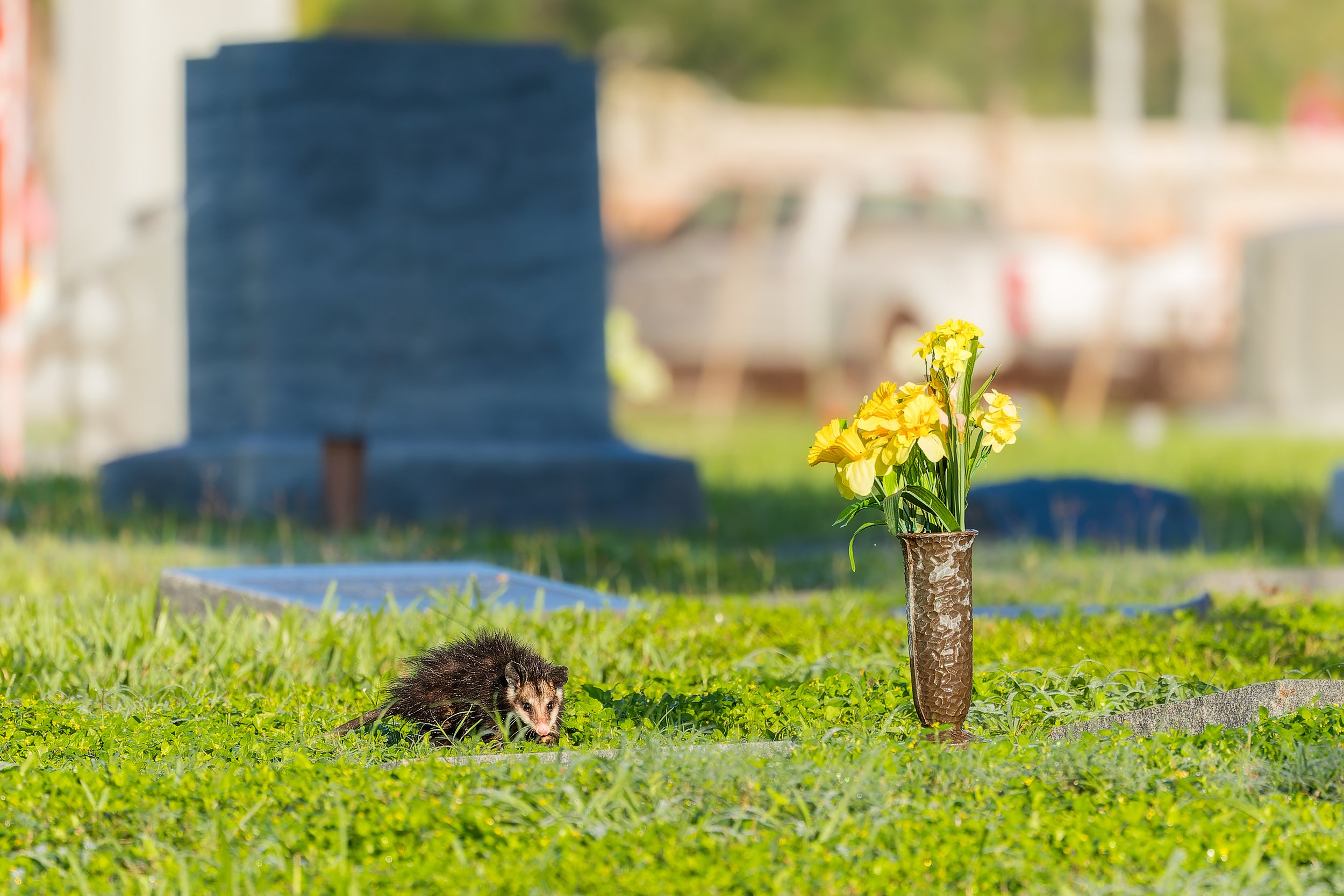
Virginia Opossum- Buena Vista Cemetery
Our necks sore, our bodies tired, we decided to move on to our next spot- the Sabal Palm Sanctuary, right down on the Rio Grande proper. We attempted to grab M another coffee on our way down, but nothing popped up. Just before arriving, you pass through the border wall- our first encounter of many on this trip. The visitor’s center is a converted plantation house that used to serve as a stop for bustling river trade on the Rio Grande. The Rabb Plantation formerly had 60,000 acres of Sabal Palm forest. Sadly, there are only 30 acres of Sabal Palm forest left, all of it protected here by the sanctuary. In 2010, the Gorgas Science Foundation and National Audubon Society opened the sanctuary to the public and has become a prime birding/nature site to visit in the lower Rio Grande Valley.
After registering at the visitor center, we hit the trails. It was noticeably more humid here (and a little buggy, I made friends with a few mosquitos- to be fair, we were warned). The trails are very nicely maintained, snaking in and out of covered subtropical forest, with numerous views of the river. Here we were hoping for Olive Sparrow, Least Grebe, and one of the more tropical Kingfishers- Green or Ringed, along with our first Couch’s Kingbird. We spent about 2.5 hours on the trails, sweating and getting pestered by bloodthirsty mosquitoes. Despite the pesky insects, it was a nice hike. We FINALLY got our eyes on Great Kiskadees, honestly on a few “too many,” if there is such a thing. They seemed to be hidden and particularly vociferous (as per our previous experiences) or perched nicely in the open and completely silent. The noisy ones greatly outnumbered the quiet ones, to the point that Michelle was getting a bit annoyed by their incessant squeaking. We managed to spy some quiet Olive Sparrows skulking in the underbrush and snapped some passable pictures as well. Along the Rio Grande, we heard a new kingbird call, which Merlin helped us identify as Couch’s Kingbird! We also saw two White-tipped Doves, making a nice trio of USA lifers for this location, very exciting! (Side note: we saw some White-tipped Doves on our honeymoon in Costa Rica) We didn’t manage to see any new Kingfishers, though we spotted a Belted Kingfisher from the river overlook pagoda where we spent a restful, shaded 20 minutes in the middle of our hike. All in all, it was a great spot, but after nearly 2.5 hours we were massively undercaffeinated and both getting quite hangry. We headed back toward town, looking for a small/local place to eat but didn’t find anything. Back in Brownsville, we defaulted to a stop at Chic-Fil-A. Unfortunately, they didn’t have a gluten-free bun for michelle’s sandwich, so she ended up getting a lettuce wrap, which was “meh.” Poor gal. Not the ideal refueling after a vigorous morning of sweaty birding.
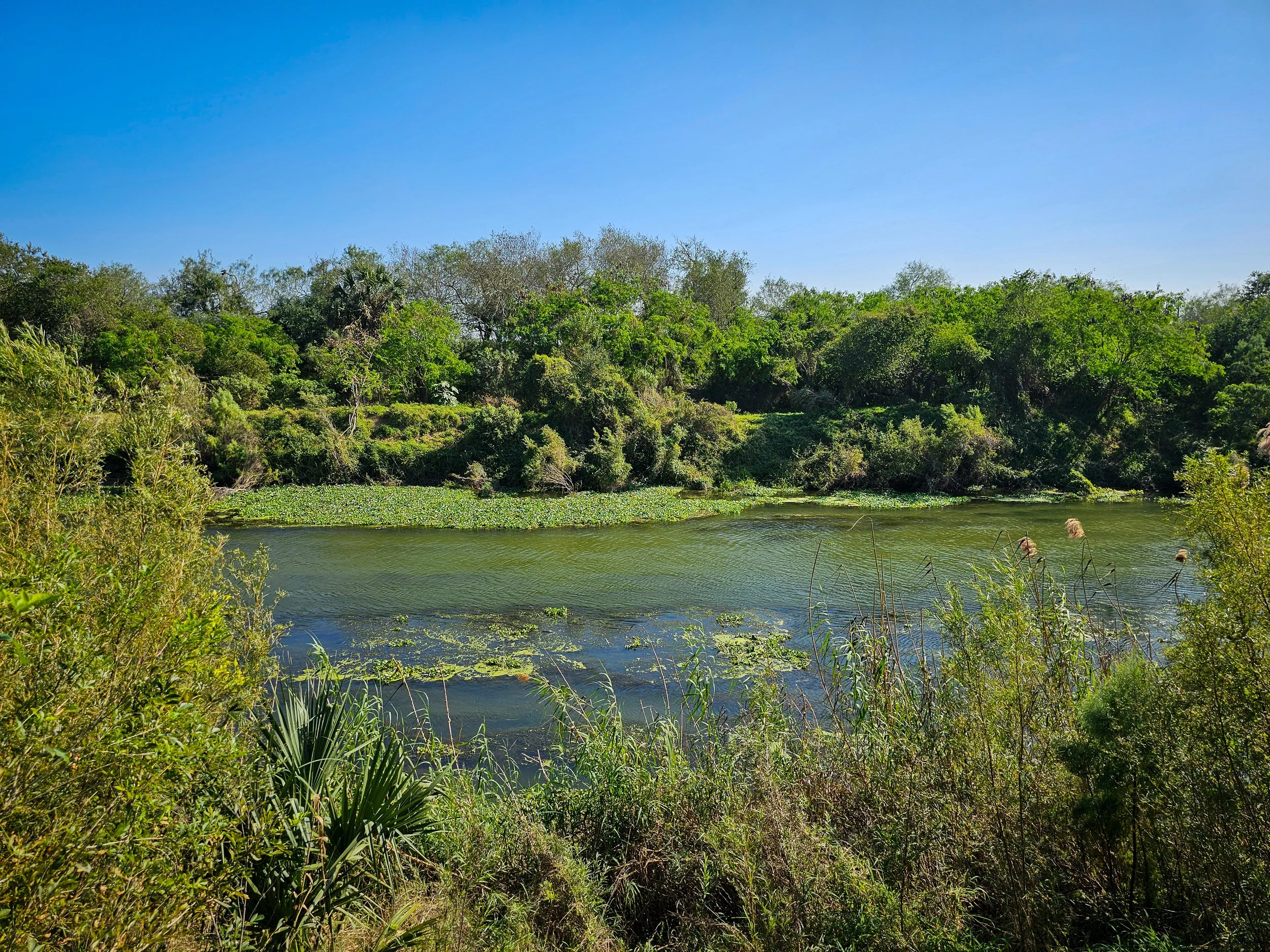
The Rio Grande River and Mexico- Sabal Palm Sanctuary
The raging hangries subdued and our mosquito-drained blood volume replenished, we headed out to our next destination- the University of Texas, Lower Rio Grande Valley campus. This campus is situated along two large resacas- Spanish for oxbow bends: slow, curving bends in a river that eventually get pinched off the main river, forming curved ponds. They provide a permanent water source for numerous local birds. It’s a lovely, clean campus with fantastic sidewalks along beautifully planted landscaping. I had read that the resacas are reliable for Green and Ringed Kingfishers, and there had been a rare Fulvous Whistling-Duck here recently. We found a spot to park where we were unlikely to be ticketed and headed out yet again. The weather was beautifully clear and we had a relaxing stroll through campus. We saw a smattering of the local specialties (including many more Kiskadees) and about 200 Black-bellied Whistling-Ducks hanging out on an island in the larger resaca. Hidden amongst them, we picked out the single Fulvous! Our big hit for this stop came when Michelle’s hawk eyes (pun intended) spotted a pair of Green Kingfishers on the smaller resaca. We get a few passable, though somewhat distant pictures of the pair, which was more than we have been able to accomplish back home in Arizona despite a few attempts. With that, both of us were exhausted and happy with a very successful day around Brownsville. We headed what would become our home base for the rest of the trip, the famous (for birders) Alamo Inn in…Alamo.
For those interested, this is not “The Alamo” a Spanish Mission and fortress in San Antonio, Texas
We headed north on Interstate 69E, then west on Interstate 2 to the Inn, just a little less than an hour. I had found the Alamo Inn as a recommendation on the website of a local guide in the Lower Rio Grande Valley. I’m so glad I decided to check it out. It’s a small B&B style Inn that caters specifically to birders. It consists of converted apartments and is old school, kitchy, and AMAZING. We got checked in quickly, and got a quick tour of the the common room which is essentially a combo dining area/outdoor store. It’s jam-packed with art, field supplies & guides, souvenirs and oodles of snacks. The gear is all bought on the honor system. Like I said, old school.
We stayed in a small unit with kitchen, so made a quick trip to Walmart to stock up on food for the next few days. Pizza, Ice Cream and other essentials. We both had a shower, hot tea, and then crashed early. Big ahead day tomorrow.
Side note: for the fellow birders, this was the day I became aware that a Kelp Gull was reported on the beaches of Mustang Island. I hemmed and hawed a bit on deciding whether or not to chase it, but ultimately elected not to. I have a titch of regret since it is such a mega-rarity, but hopefully we will have another opportunity to see one in the states some time.
12/31/24
New Year’s Eve! More importantly, the last day to get in as many birds as possible for the year! Where to go? (As if I didn’t have it all planned out)
We started with Estero Llano Grande State Park, just a quick 20 minute drive east. This is one of the jewels of the lower Rio Grande Valley, for sure. To be fair, there are many jewels, this area is loaded with fabulous birding locations, but this is one of the best.
In order to get there from Alamo, you travel though lots of Border Patrol presence and sections of ugly brown metal border wall. It’s construction has absolutely decimated large tracts of what once was pristine river valley and wildlife corridor. (That will be the extent of my political commentary- probably). Side note: despite what many people may perceive as a “dangerous” area, for the 7 days we were here literally adjacent to the border we NEVER saw anything sketchy or felt unsafe whatsoever. Local residents report the same. Don’t let presumption stop you from visiting this wonderful area.
The morning started cool and overcast, making for some nice moody looks at the wildlife. We spent 5.5 hours here (8:30am-2pm) strolling around the resacas and trails. We checked out the forested areas in the west of the park, circumnavigated the two large wetland areas including Alligator Lake (which was ironically absent of Alligators) and along a dike overlooking the Arroyo Colorado- a tributary of the Rio Grande. We tallied 64 species including 9 duck species, Snow Goose, White-tipped Dove, 4 Common Paraque! (lifer), numerous herons, egrets and other wading birds, a Red-shouldered Hawk, Phoebes, Blue-gray Gnatcatchers, Clay-colored Thrush (another US life bird- like the White-tipped Dove, we had seen this on our honeymoon), sparrows, blackbirds, warblers, and a rare Winter Wren. We also saw numerous Javelina (collared peccary), rabbits, squirrels and a Texas Indigo Snake!!! We also stumbled onto a small group of butterfly enthusiasts who were frenetically snapping photos of a Guatemalan Cracker- an exceedingly rare species of butterfly in the US. What a fantastic place! We could have easily spent the whole day here, but alas our growling stomachs forced us to move on, lest we fall into fisticuffs or perish of starvation. We grabbed some Chipotle to remain civil and keep our energy up.
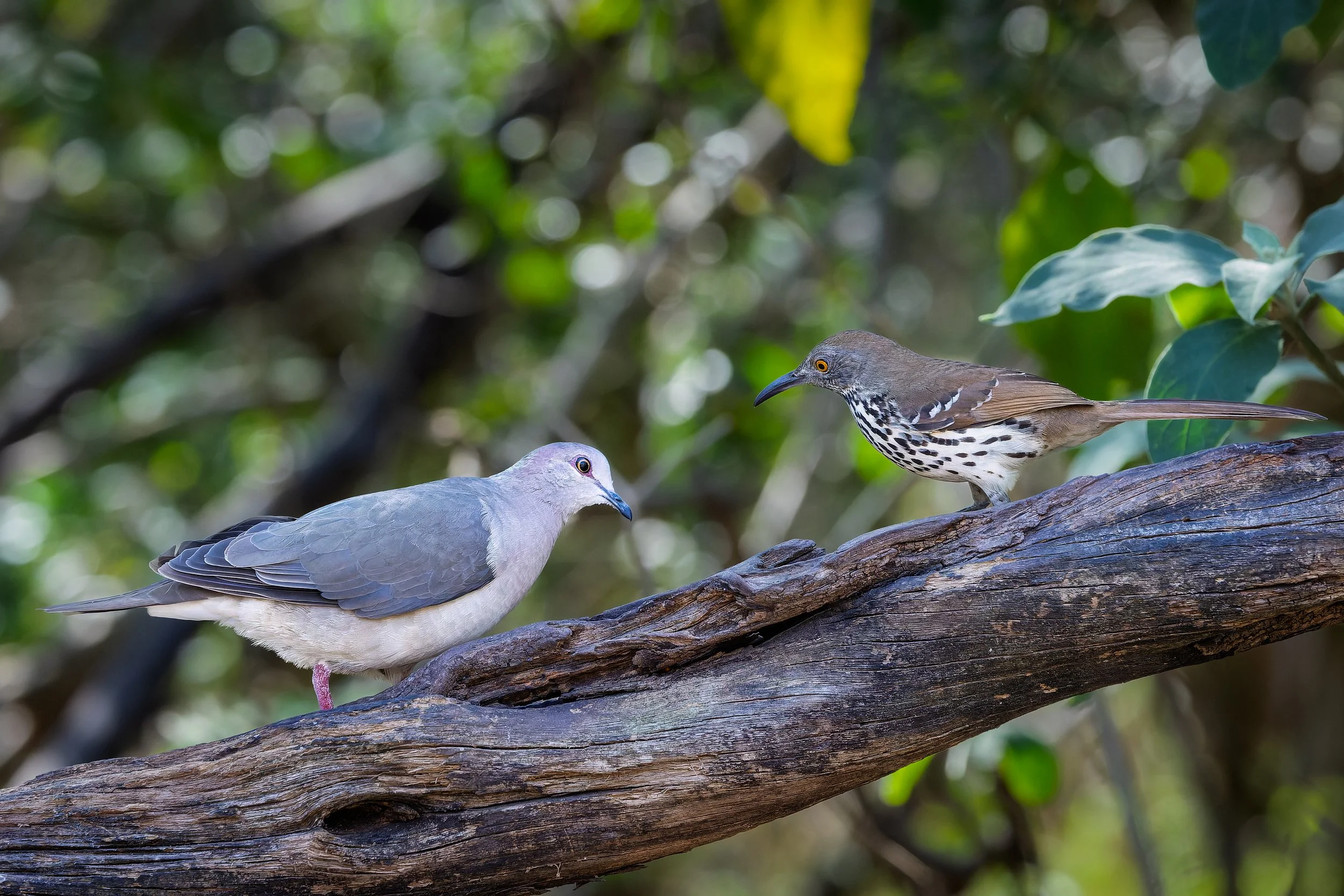
White-tipped Dove and Long-billed Thrasher
Estero Llano Grande State Park
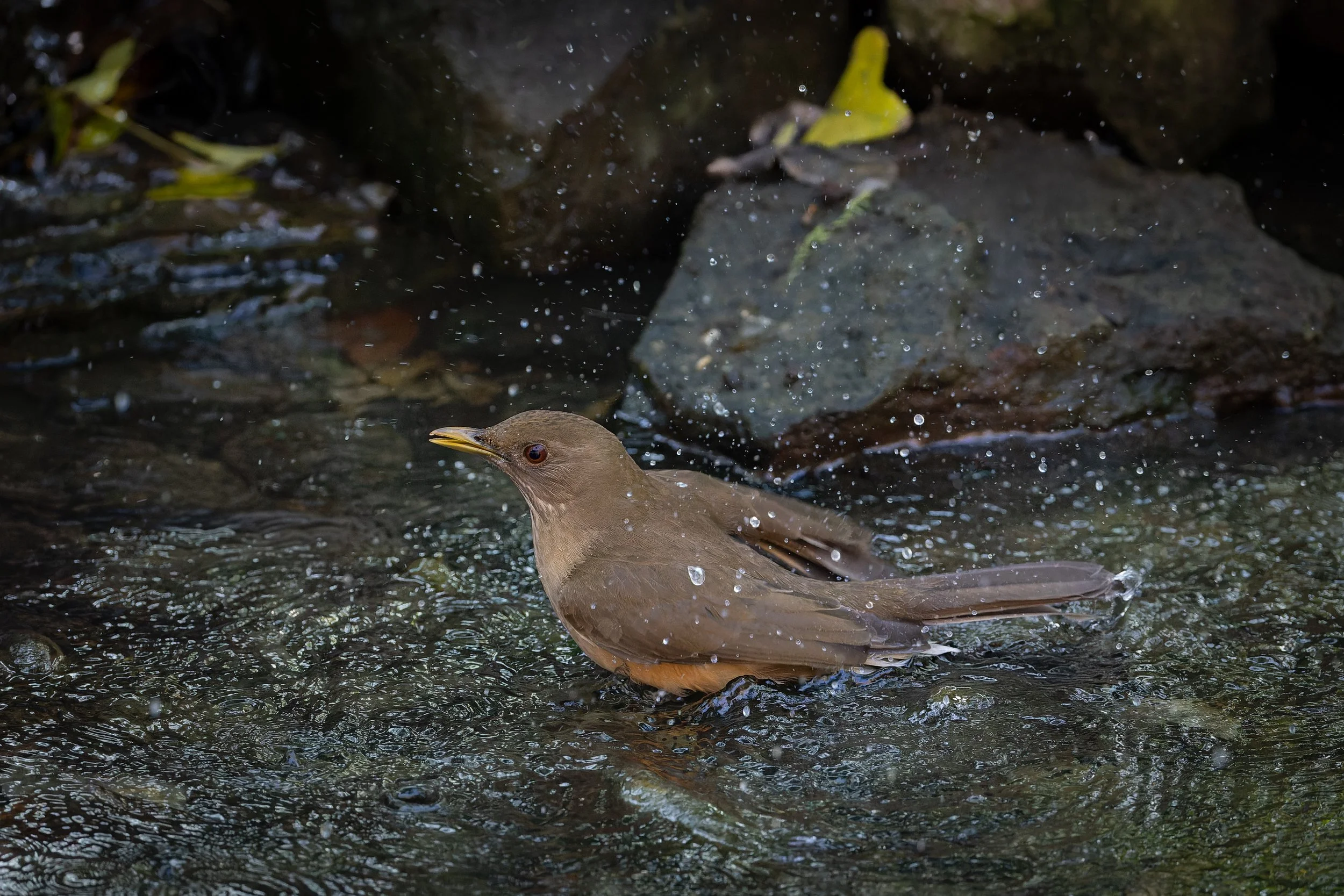
Clay-colored Thrush- Estero Llano Grande State Park
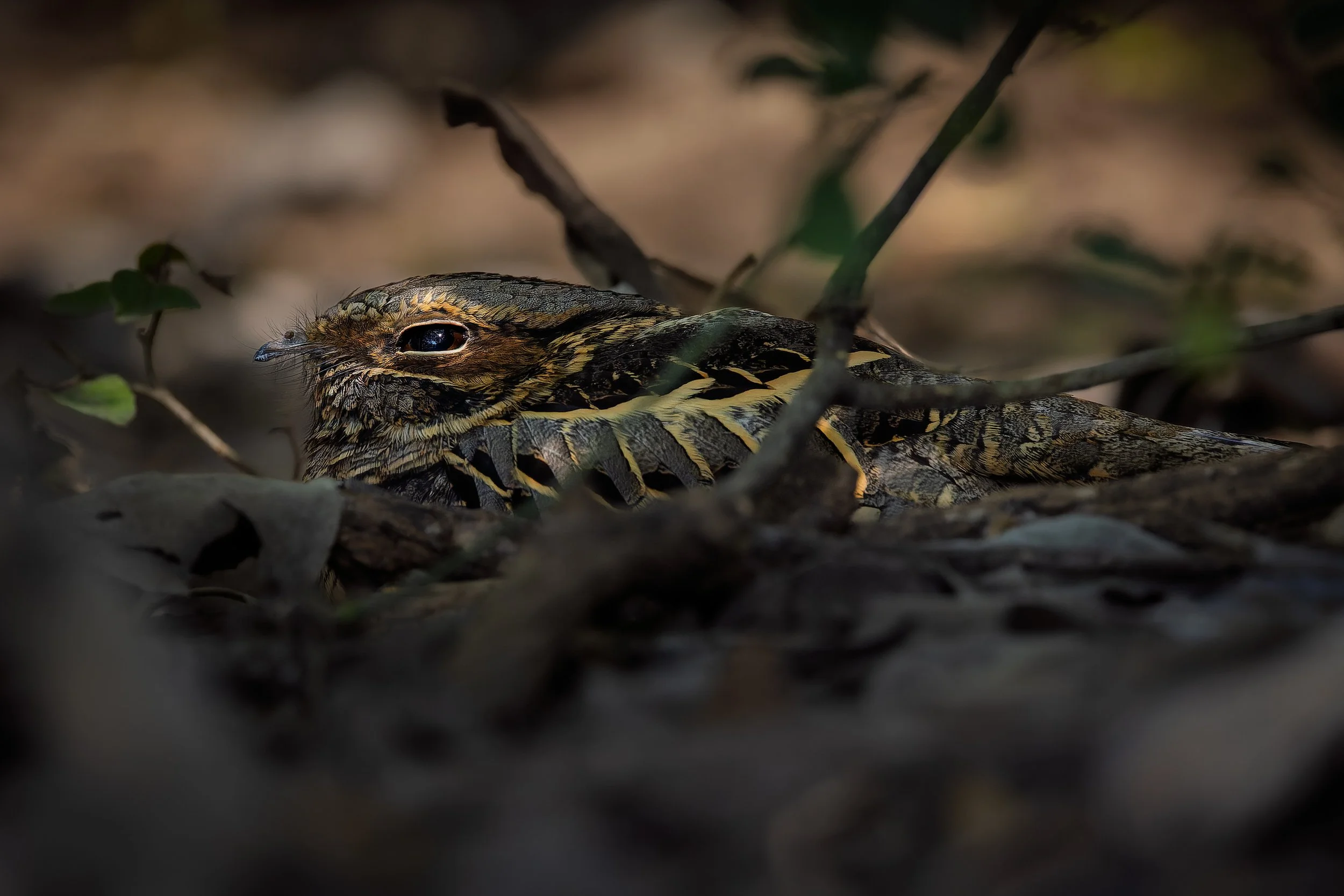
Common Paraque- Estero Llano Grande State Park
After filling our empty bellies, we visited Quinta Mazatlan, a small, very well-manicured/landscaped suburban park. It is one of the local “World Birding Centers” and has numerous feeding stations of various types. We arrived around 3:30pm and the gate was technically open just a crack, with just a single orange traffic cone sitting in the opening. A nicely dressed couple walked in and started taking pictures, so it must be open, right? I convinced M to join me in a little shenanigans and we went in. We walked around the majority of the grounds, covering just under a mile for about 40 minutes. We saw ONE other couple there enjoying a stroll. We tallied 20 species, including many of the regional specialties. This is a fantastically beautiful garden, and incredibly easy to walk- we highly recommend it.
Our possible minor trespass completed, we headed north to Edinburg Scenic wetlands to try for some more water birds- specifically Kingfishers. However, when we arrived, they had JUST closed early for NYE. Bah! We pivoted and decided to try for more parrots.
Of local notoriety is the McAllen parrot roost. We managed to pick up the Green Parakeet in a Target Parking lot- they love the trees here! We had about 100 of them screaming their brains out flying north to roost for the evening. Afterward we scouted another roost, picking up the Lilac-crowned Amazon – there were only 3 amongst about 300 Red-crowned Amazons. We also spotted a couple Red/Lilac-crowned hybrids, 2 yellow-headed, and 1 Red-lored Amazon. Quite the festival of parrots. Boy was it LOUD.
McAllen Parrot Roost- McAllen
Thus concluded our mad dash for the end of the year. With the sun setting and our tummies grumbling, we headed back to Alamo. We had spotted a Mexican restaurant next to the Inn and popped in for dinner. The hostess greeted us, grabbed menus, asked “for two?” then turned around, asked someone where to seat us, then apologized: “Sorry we’re closed for New Years.” Well OK then.
I believe we made a quick run to Chic-fil-A for dinner (again) as we were too tired to even scrap something together for food.
Back at the Alamo, we continued our tradition of NYE movies. Rather than work on a puzzle this year, we started reviewing/culling pictures and I worked on our birding checklists from the day, along with my birding spreadsheet (yes I am very much THAT GUY). We got through both The Big Year and Princess Bride before crashing for the night. I’m not sure if we made it until midnight, but Michelle insists we did. The fireworks outlasted us both, however, until 4am. Yikes.
The final 2024 tally: 440 species seen, bringing me to 690 lifers!
(Mangrove Yellow Warbler pushed this to 691 later in 2025 when it was split from Northern Yellow Warbler)
1/1/25
Happy New Year! What better way to start off than a birding day at Bentsen Rio Grande Valley State Park? Our first bird of the year was the adorable squeaky Black-bellied Whistling-Ducks that roosted in the yard behind our suite. We were up before dawn, which was impressive given the lack of sleep from festivity of explosions the night before. We got dressed, ate some food and made the 25 minute drive to arrive around 8:30am.
Bentsen Rio Grande Valley State Park is yet another must-see “jewel” of the Rio Grande Valley for birders and nature lovers alike. It lies directly on the Rio Grande river and contains a mix of wetland, scrub, riparian and woodland habitats. The current 587 acres of land was donated to the state of Texas in 1944 by the Bentsen family and was opened as a state park in 1962.
We parked at the visitor center, grabbed our gear, and were immediately greeted by our first lifer of the year- an adorable Eastern Screech Owl! It was quite perturbed, being mobbed by some grumpy Green Jays while perched in the crown of a palm tree outside the visitor center. The poor little guy just wanted to take a nap! We got some excellent looks at this little owl before they tucked themselves deep in the crown of the palm and the ruckus quieted down. We went inside, paid our entry and headed south! This park is almost entirely south of the border wall, and after exiting the shop you walk (or bike) up a hill and over “Border Fence Service Road,” which is well-patrolled/monitored by Border Patrol. La Familia Nature Center is just around the bend and is nicely set up with numerous feeding stations. You can get most of the Rio Grande Valley specialty birds here at the feeder setup- it’s a nice spot for tripods/photography. The area is complete with a ramada and concrete pad that serves as a waiting station for the tram. We hung out here for some time admiring all the unique birds vying for a spot among the feeders.
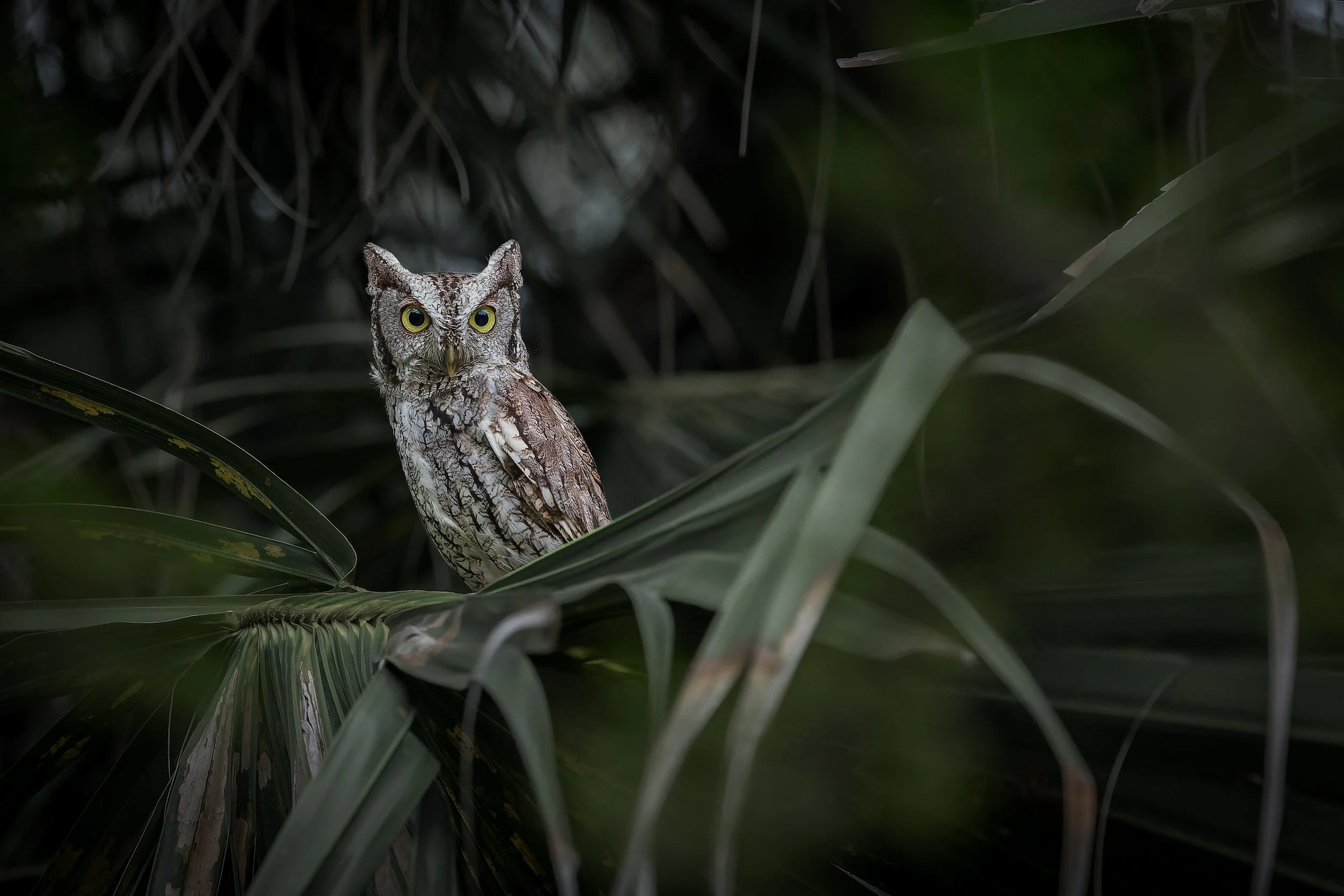
Eastern Screech-Owl- Bentsen Rio Grande State Park
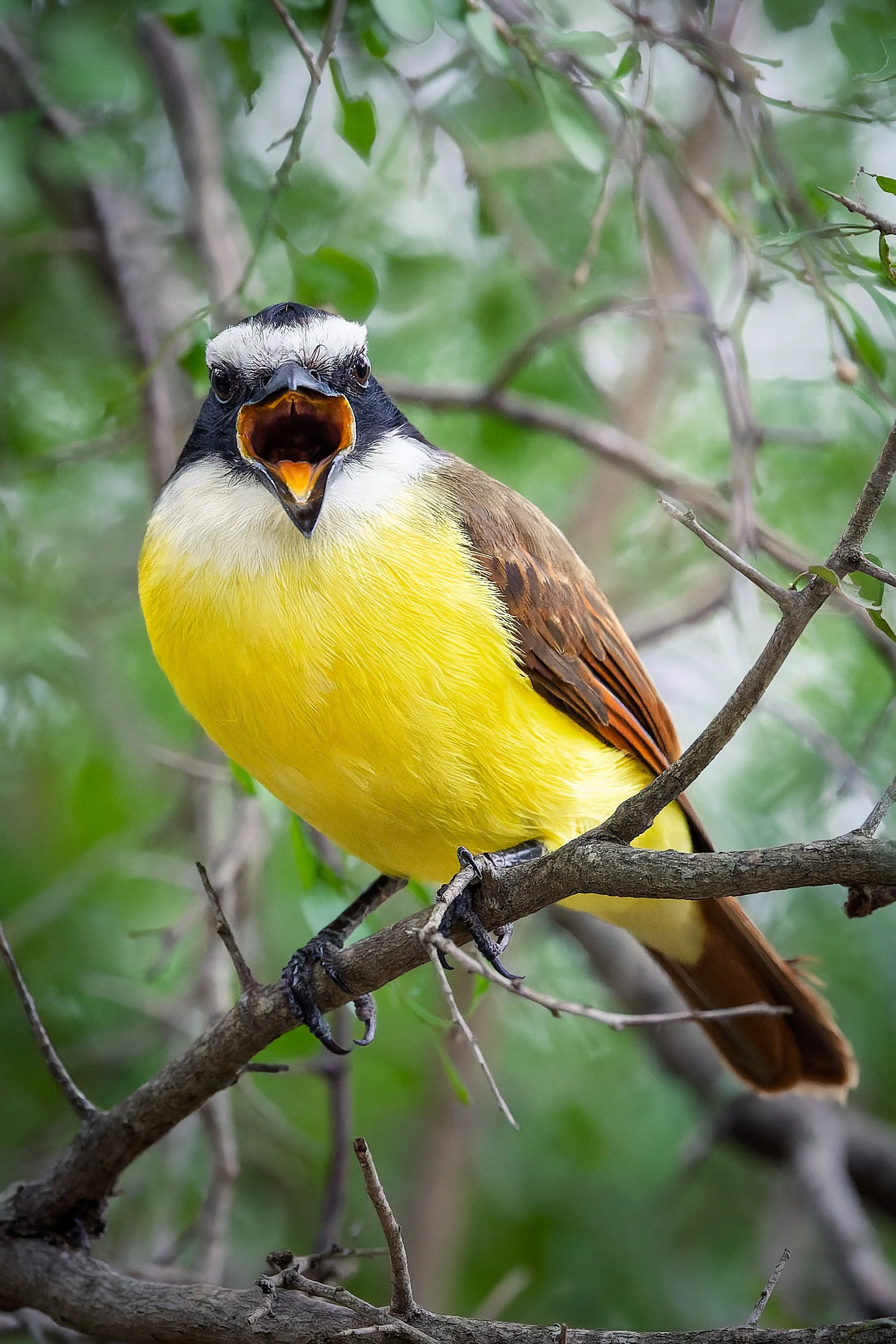
Great Kiskadee- Bentsen Rio Grande State Park
The paths open up to the south, entering a mostly forested area encompassed by a large bend in the Rio Grande. There are several blinds with feeding stations of various types, and a Hawk Tower that overlooks a dried up resaca, now teeming with tall grasses. This is a great spot to find Hook-billed Kites, who’s norther range just ekes into the United States in this area. We were not lucky enough to see one, so this species remains my most desired bird for our next trip here. We did, however get our lifer Altamira Oriole! What a beautiful electric orange and black bird! Our finally tally was 58 species, with over 460 individual birds. We spent around 5 hours here, walked about 4.5 miles in total and managed to see only about half of the park, it’s huge! We munched on some snacks in the car (yay for planning ahead), but were getting quite hungry despite the snacks.
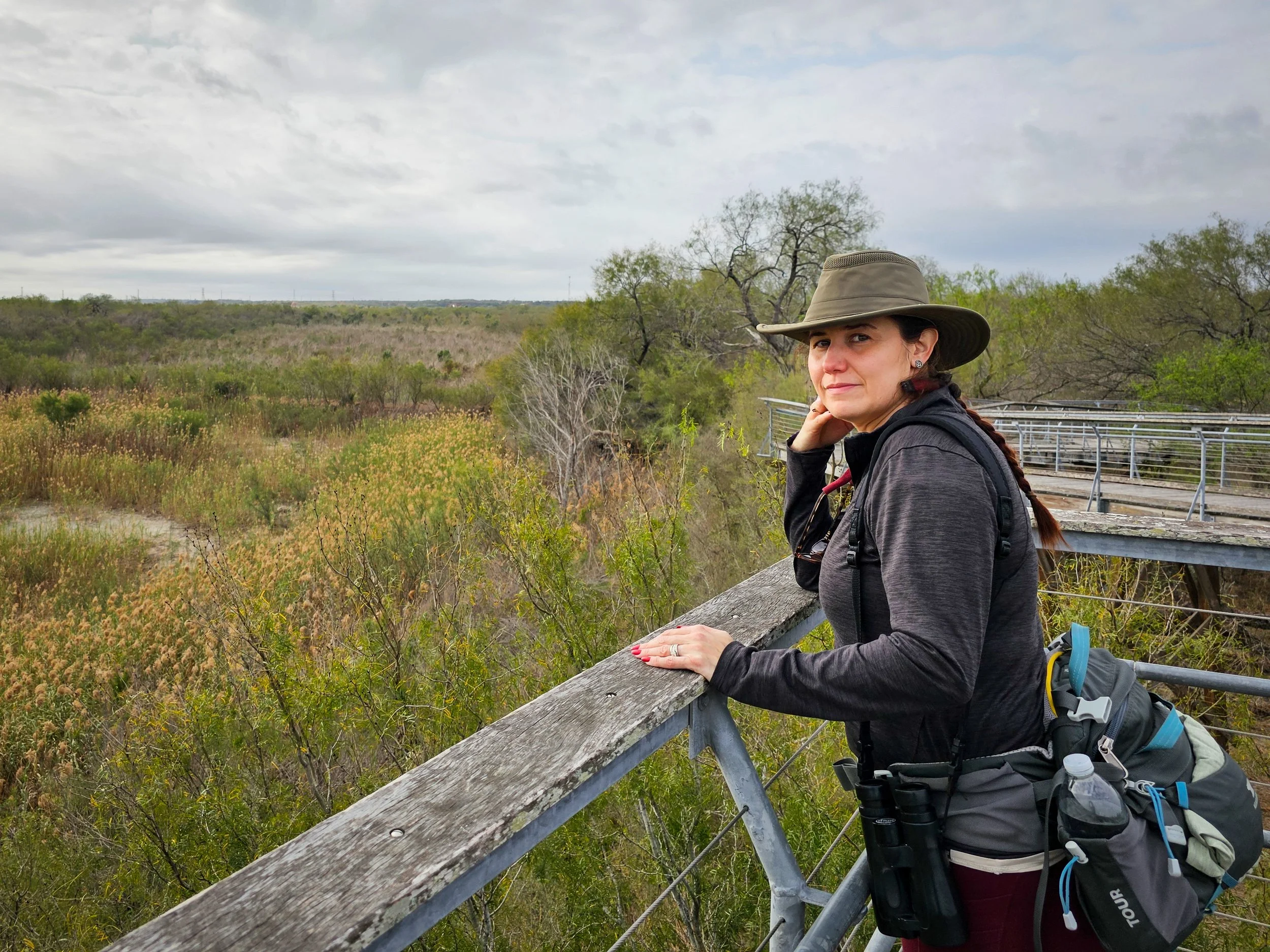
The Hawk Tower- Bentsen Rio Grande State Park
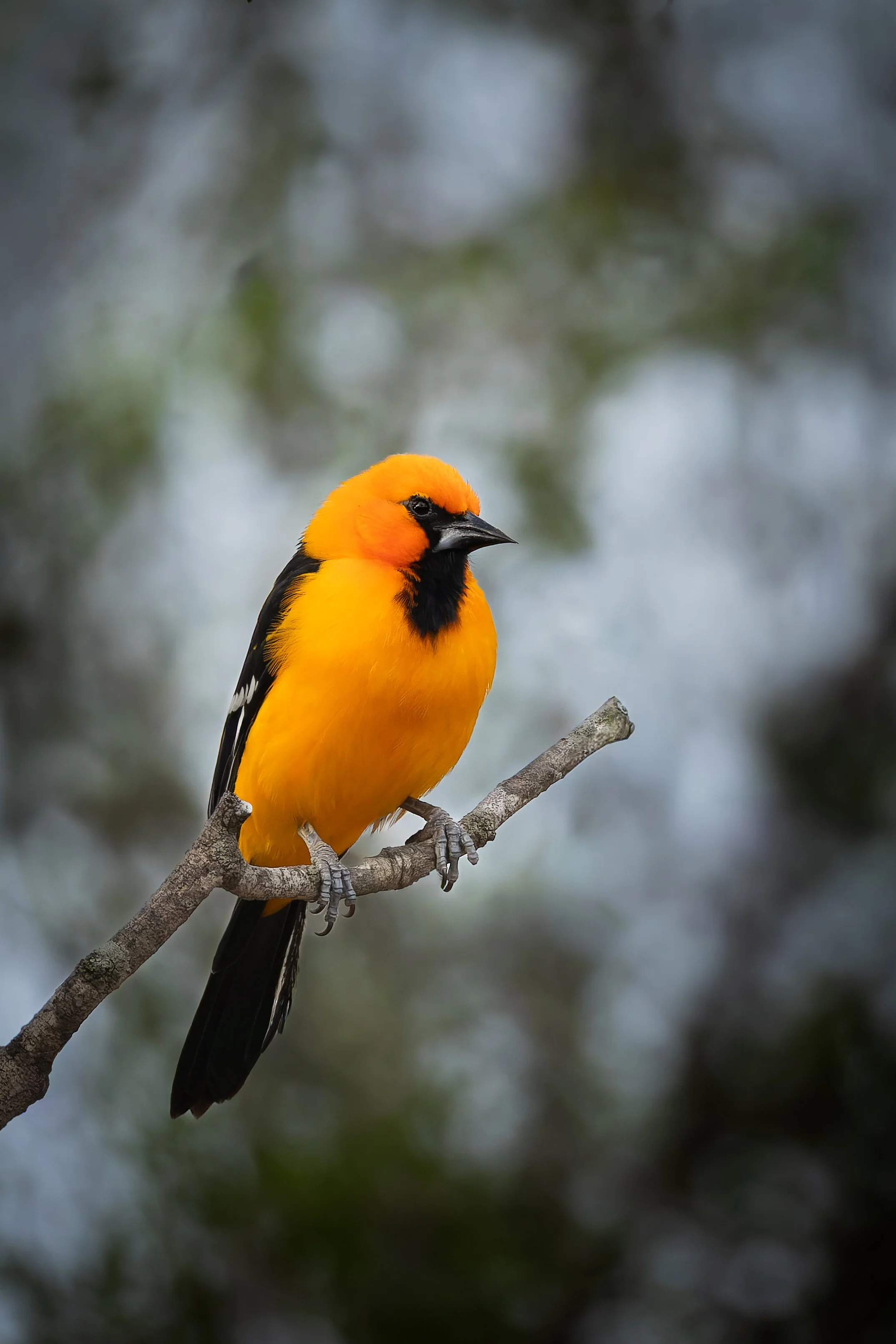
Altamira Oriole- Bentsen Rio Grande State Park
Right next door is the National Butterfly Center- another “must-see.” Owned by the North American Butterfly Association, this is a 100 acre, outdoor botanical garden and education center that caters to butterflies (and incidentally, birds). Our interest was, of course, the birds. We had a couple more targets for the day and this is a reliable spot for one of them- the Audubon’s Oriole. Additionally, there is a fairly renowned Altamira x Audubon’s Oriole hybrid named “smudge” seen here regularly. When we arrived around 2pm, the visitor center was closed (likely for new years day), but there were a handful of cars parked and people walking around. We headed in! The grounds are very nicely kept with lots of greenery, flowering plants, and of course- bird feeders. The best birding spot is in the southeast corner which touts a feeder setup and covered picnic tables. This is where the orioles were seen most often. We made a beeline for it and got a spot at a picnic table. With all the walking we’d already done, it was nice to sit and just wait for a bit. Before too long, the Audubon’s Oriole made an appearance! Shortly thereafter, we met “Smudge!” Several of the other specialty birds such as Green Jay, Plain Chachalaca, White-tipped Dove, Great Kiskadee, Black-crested Titmouse, Long-billed Thrasher, and Olive Sparrow were here as well. There were also roving gangs of Plain Chahalacas meandering all over the grounds. They were very acclimated to people and not very shy, it was fun to watch their behavior. After about an hour, we headed out, very satisfied with the two new birds and oodles of others. We had one more stop for the day! On our way north we of course found some nutrition.
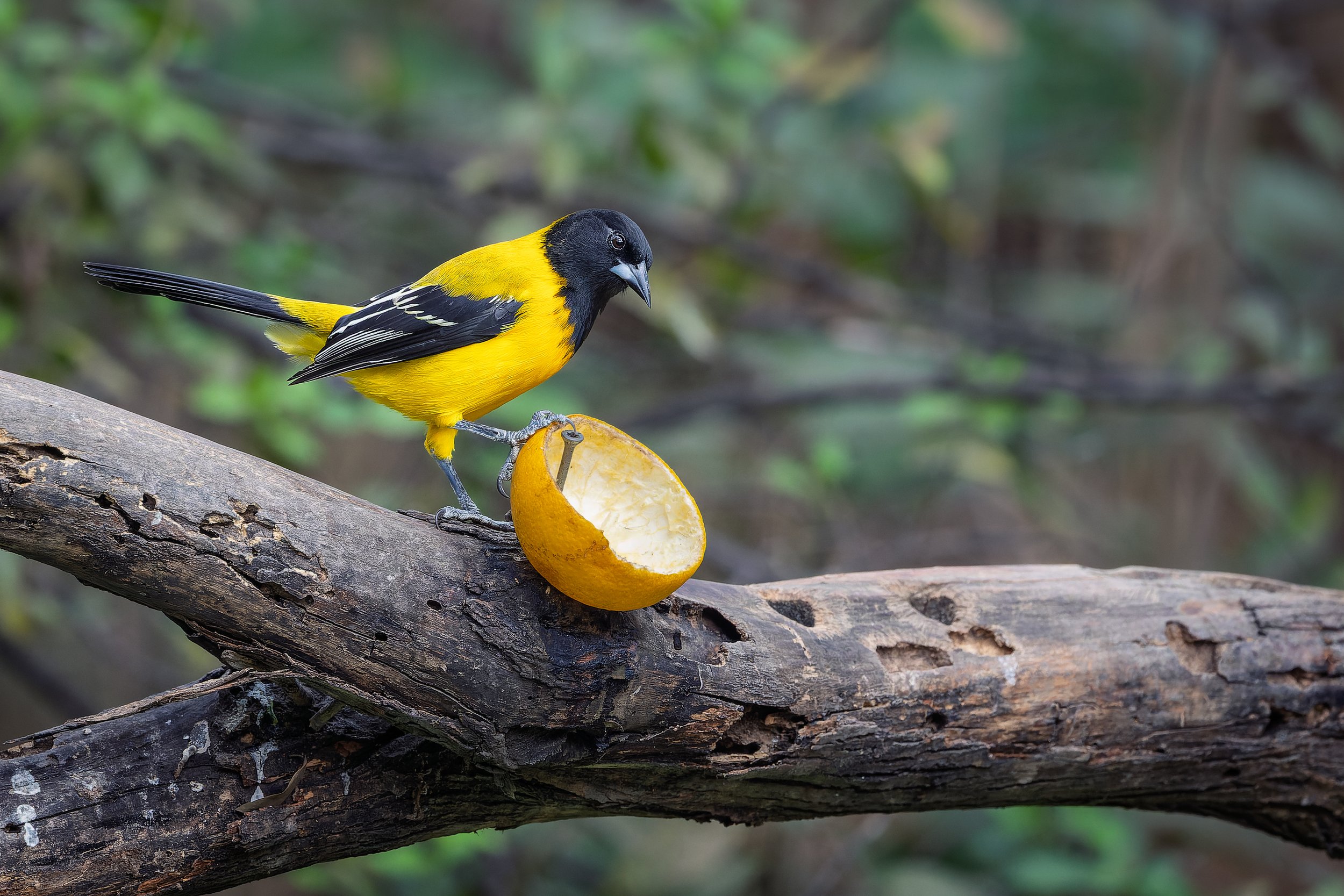
Audubon’s Oriole- National Butterfly Center
We drove back north to Edinburg Scenic Wetlands. Hoping it was open this time, we were finally in luck. Like many similar locations, this is a small water reclamation facility that doubles as a wetlands. There are also two small manmade ponds right across the street in the local park. Our goals here were to finally find Michelle a Least Grebe and get our lifer Ringed Kingfisher. Both are regular here. Through the cute little gift shop and out onto the short straight paths around the water we went. Michelle spotted a Green Kingfisher flitting about low over the water along with several other local specialties and lots of species commonly seen around ponds. After quite some time, I spotted a rather chunky looking blue and rusty red bird all the way across the pond. Setting up the scope, it was a Ringed Kingfisher!!! It sat on display for some excellent (though distant) looks for us. No Least Grebe on this side. As the shop was closing for the day, we popped across the street to the south retention pond. Holy oodles of egrets, batman! Western Cattle, Snowy and Great Egrets congregated for an evening roost on the north shore. Several duck species, a beautiful little Green Kingfisher, and FINALLY Michelle spotted her Least Grebe. What a cute little booger! She used the last of the waning sunlight to get some pictures of this adorable little guy.
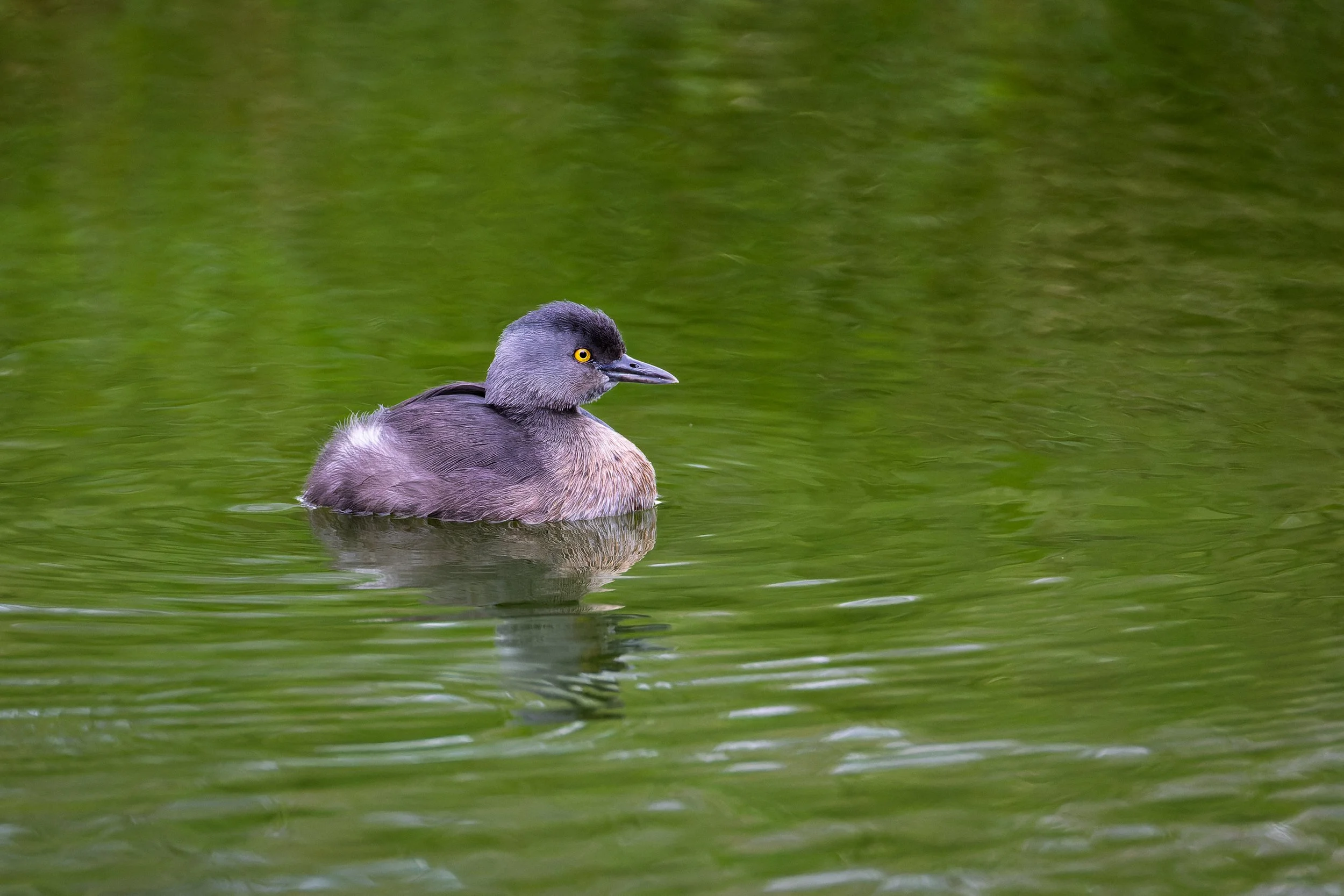
Least Grebe- Edinburg Scenic Wetlands
With the sun getting low and our energy stores running out, it was time to call it a day. We were both exhausted from the walking, driving, and all the birding excitement. BUT. Holy smokes that was an amazing first day of 2025! We were able to get ALL of our target birds for the day, tallying 75 species! It was quite the celebration of 15 years together (to the day!) Truly a day neither one of us will forget.
1/2/25
This was the big day! We had booked two guided tours on the Santa Margarita Ranch- one early in the morning and one at sunset. Both were arranged in order to see some of the rare species that had popped up in this area and NOWHERE else in the US in the last year. In 2024 this ranch exploded in popularity after several Mexican species dropped in here. Bare-throated Tiger Heron, Mottled Owl, Brown Jay, Roadside Hawk, Gray-collared Becard, and more. It’s also a reliable spot for other rarities such as Red-billed Pigeon, Morelet’s Seedeater, Muscovy Duck (wild, not naturalized), Rose-throated Becard, Audubon’s Oriole, and Hook-billed Kite. The ranch is just oozing with cool birds.
We got a very early start from the Inn, as we had to meet our guide Simon before dawn along the border wall, which runs right through the ranch. There were three or four other cars with pairs of birders as anxious as we were for the ranch experience (this was our first guided tour, everything to this point has been self-guided/found).

The border wall at sunrise- Santa Margarita Ranch
Simon arrived and I embarrassingly had to ask if he had a spare set of binoculars, as Michelle had accidentally left hers at the Inn. As every good guide should, he had two spare sets, thankfully. Simon gave us some quick instructions- basically “follow me,” punched in his gate code and we formed a tripod-carrying conga line, walking down to the bluffs overlooking the Rio Grande. This is where we scouted for all the soaring and perching birds that would be popping up over the canopy. It was quite chilly and exposed on the bluff, but the excitement for potential new birds helped distract us!
We stayed here for the first hour of our day and picked up quite a few birds including a quick fly-by Red-billed Pigeon, Mexican Duck, Common Paraque, Caspian Tern, Roseate Spoonbill, Sharp-shinned and Gray Hawks, and more. At nearly 45 minutes in, I spotted what looked like a group of large, dark corvids cavorting in the canopy across the river in Mexico. “I see the Jays!” I swung my scope on them, and sure enough it was the Brown Jays- the whole flock/family unit! This was one of my most desired birds to see on this trip, and they did not disappoint. We saw them off and on for a few minutes working their way towards us. Simon knew what that meant and told us it was almost time to head to the next spot. We finished scouting for another 15 minutes or so, keeping a close eye out for the floppy-winged, huge-billed Hook-billed Kites. Still no luck on that species, however.
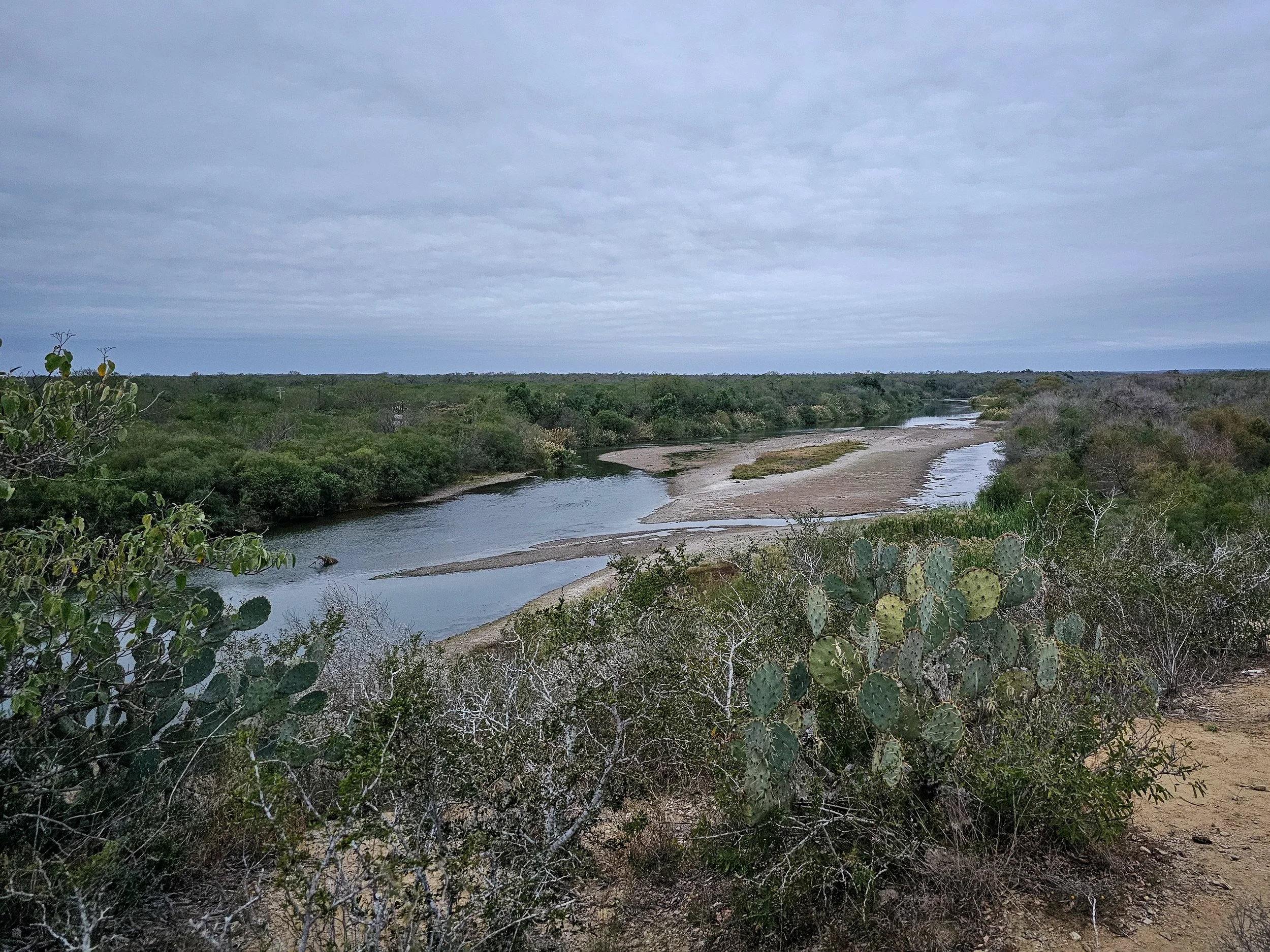
The Rio Grande from the Bluffs- Santa Margarita Ranch
An hour in, it was time to head down to the river. We piled back in our cars and followed Simon through the border wall down towards the Rio Grande. It was about a 10 minute drive down bumpy, dusty ranch roads- I loved it. We entered a fairly woody area near the river and all squeezed into some small turnouts off the road. We had to make sure we weren’t blocking the way for any of the ranch vehicles. Once again grabbing our gear, we set off on a hike through the woods.
Border Wall- Santa Margarita Ranch
There was tons of bird activity on the path and we ended up at a natural feeding station next to a small supply shed. Simon opened up the shed and hauled out peanut butter, oranges, marshmallows, and bird seed. We all sat quietly and waited for a bit. A Rose-throated Becard called just behind us. Then a Northern Cardinal came in, a Golden-fronted Woodpecker, followed by a Black-crested Titmouse. Then we heard the raucous loud calls of the Brown Jays. They had been hanging nearby waiting for us to put out some food- apparently they are very partial to marshmallows. Six Brown Jays, both adults and immature birds, came in to the feeders, along with Green Jays, Long-billed Thrashers, Olive Sparrows, Plain Chachalacas, Clay Colored Thrushes, an Orange-crowned Warbler, and a very hungry Javelina. It was just fantastic. We stayed here about an hour and got some fantastic pictures. When the group was sated with the views of these amazing species, we headed further southeast, again towards the river.
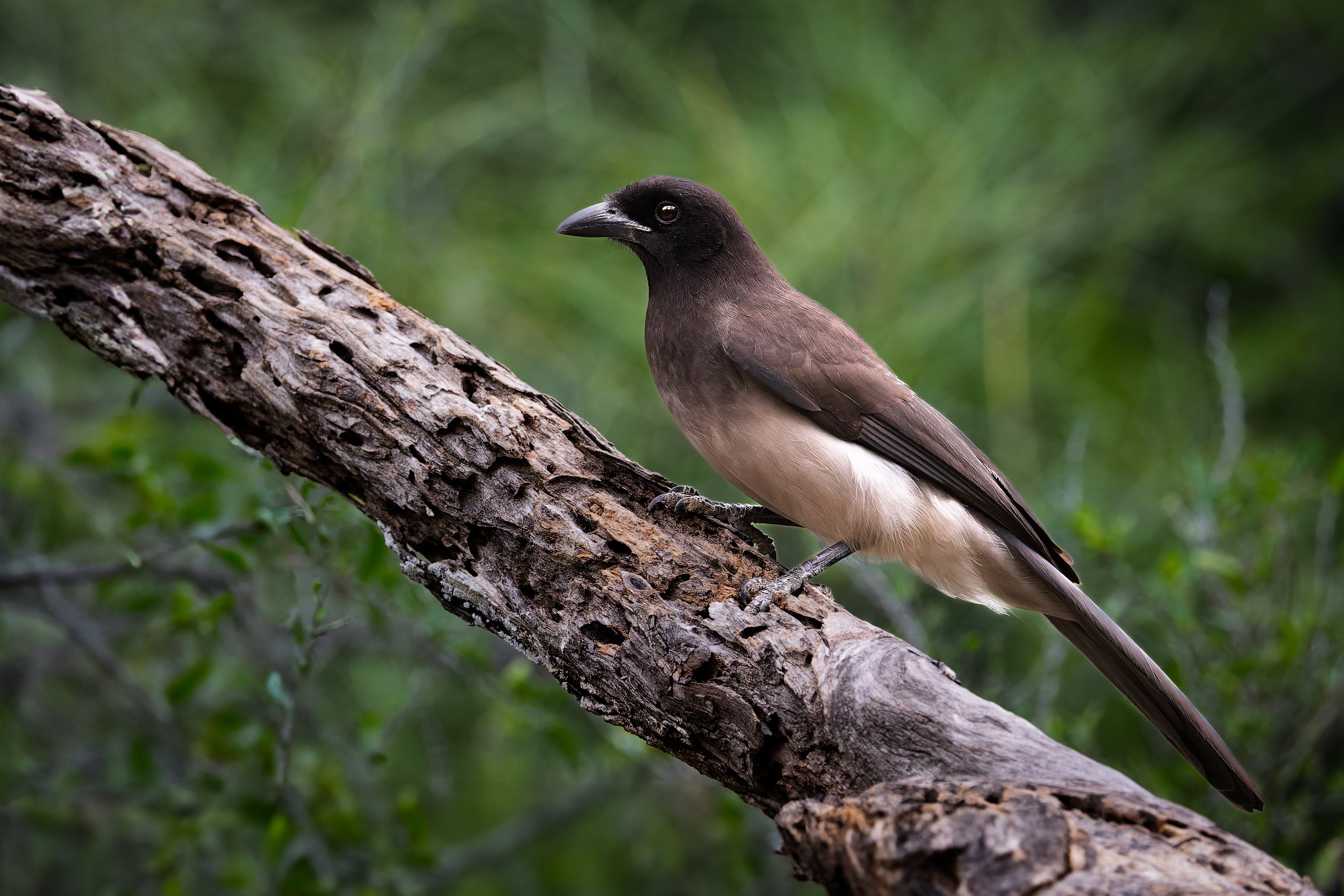
Brown Jay- Santa Margarita Ranch
We traveled to an overgrown, weedy section down on the riverbank that was a good spot for Morelet’s Seedeater, which we hadn’t had yet. On the way, we encountered a sleepy Eastern Screech Owl poking it’s head up from a nest cavity to see what the loud primates were all about. There were a couple sketchy spots along the trail with pretty treacherous drops, one of which was crisscrossed with network of downed logs and sticks, camouflaged by a covering of grass. You really couldn’t see where to best put your feet and a couple of us (but certainly not Michelle), got tripped up and maybe sustained a few scrapes. When we got near the weedy/island area, we heard the Seedeater a few times, but no one was able to get eyes on them. Since we know they were there, they count on the checklist as “present” but will remain in our “heard only” list on my spreadsheet until we get back to the LRGV again and see them. With this as our last target technically acquired, we had to head back to the cars. We slowly trudged back along the trail, retreading the treacherous ground a little more carefully this time. We chatted with a lot with Sean, a long time birder and eBird reviewer for Delaware. He gave us an open invite to come bird with him back east and I certainly hope we can take him up on that some day. All in all, we were out on the Rio Grande (sometimes right smack IN the river) for 6 and a half hours. We walked about 3 miles and saw 102 species! A couple of our cohort also saw a group of Northern Bobwhite and two Great Horned Owls as well. I didn’t really know what to expect for our first professionally guided bird outing, but Simon sure delivered! Checking my eBird account, I ended the tour with 698 life species! Woah!
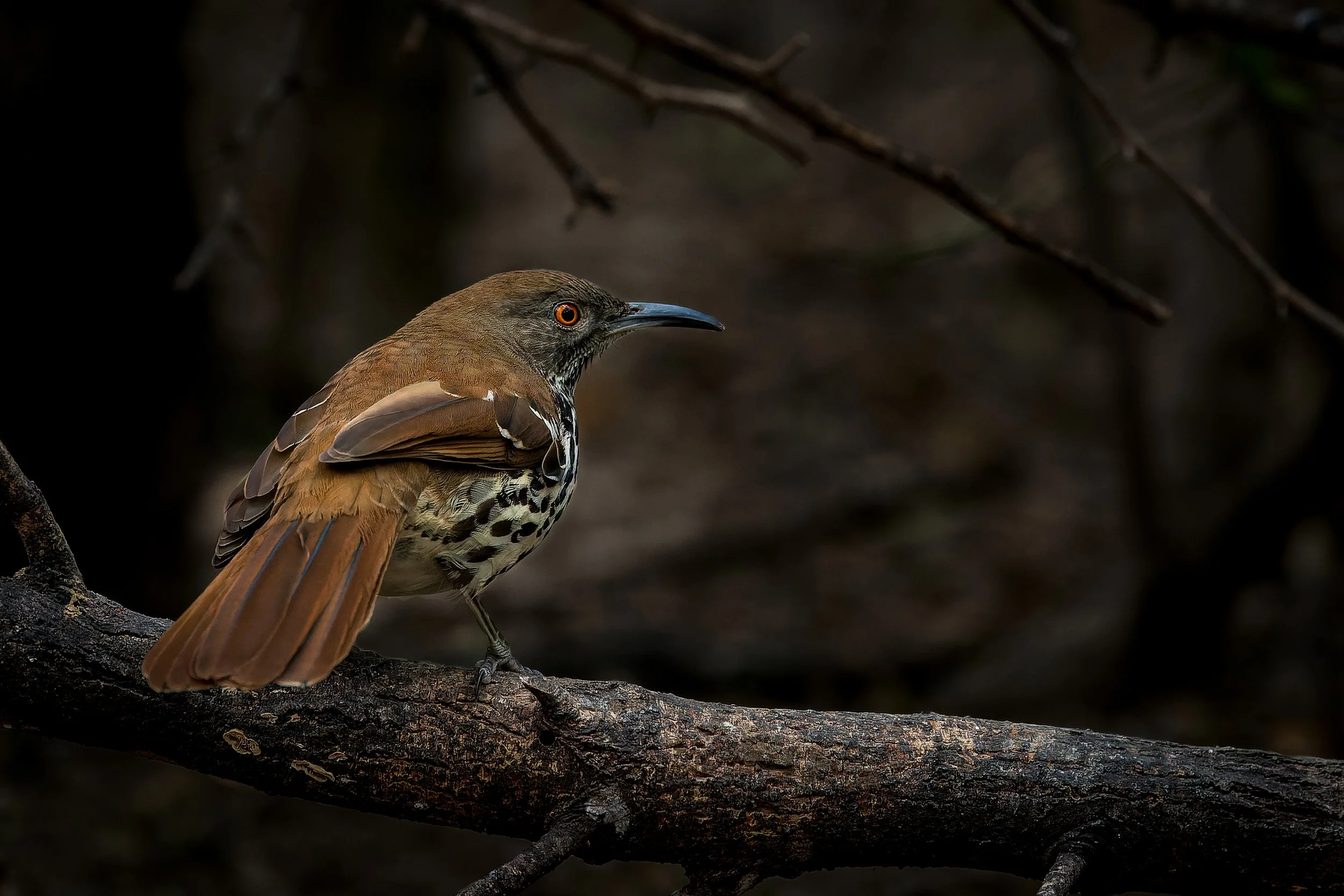
Long-billed Thrasher- Santa Margarita Ranch
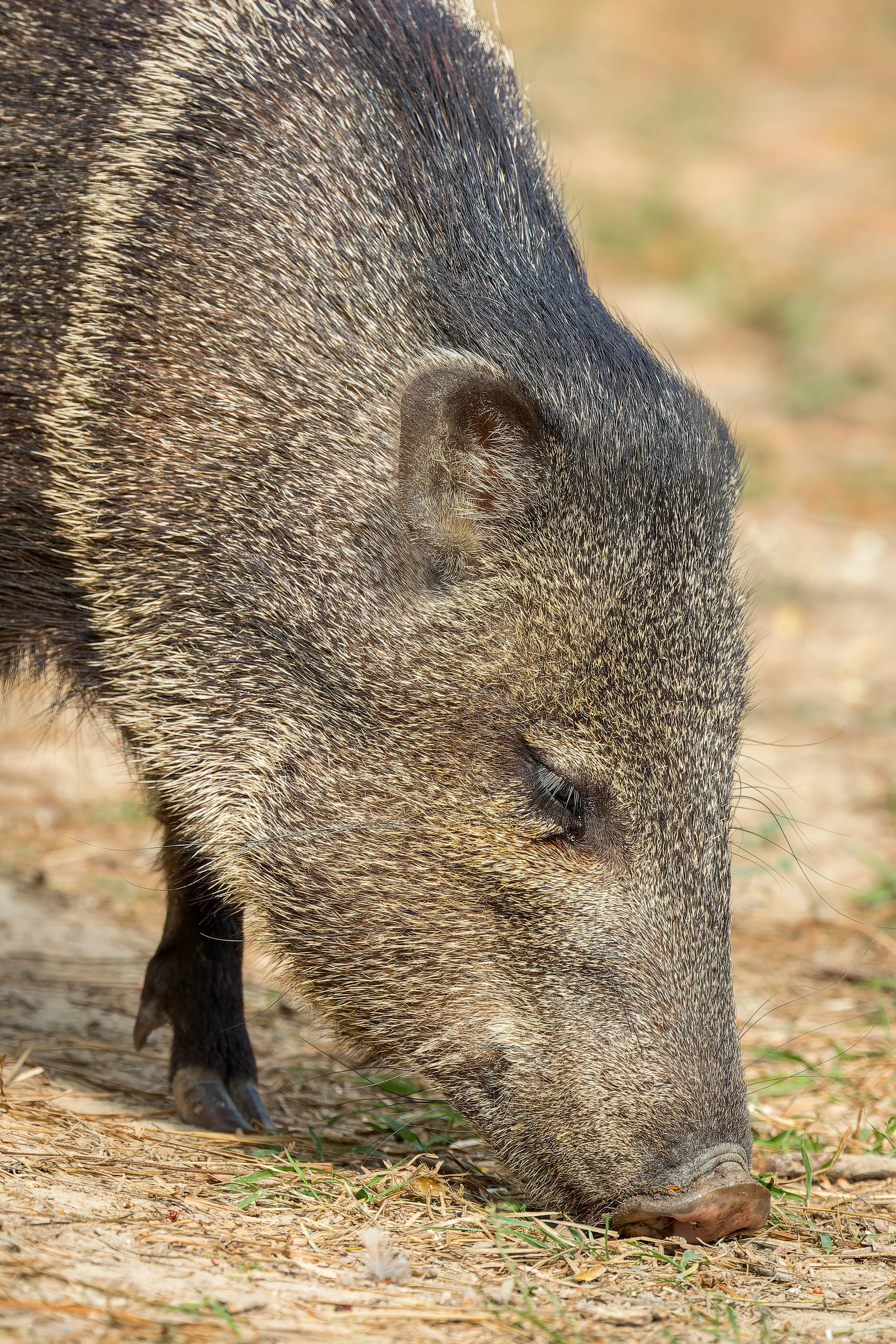
Javelina (Collared Peccary)- Santa Margarita Ranch
We chatted with Simon for a few minutes as we finished up and snacked at the cars. Michelle and I were both starving and he gave us some local food recommendations. We had about two hours to eat and then had to meet Simon back at the border wall again for our night tour around 4pm. I asked if there was a reliable spot nearby for Northern Bobwhite, it was one of the last local targets I had missed thus far. I was cautiously optimistic we would see the Mottled Owl (no guarantees, of course), which could be my 700th life bird. Owls being my favorite group of birds, I was particularly excited for this possibility. He pointed us towards Falcon State Park, just a short drive west on Highway 83.
To Falcon State Park for a shot at 699! The little taco stand he recommended happened to be on the way, perfect! It was essentially a prefabricated wooden shed complete with a kitchen in the front yard of the proprioter’s house. It was surprisingly busy, with a lot of locals stopping here- a good sign. We bumped into Sean again, who was on his way to Salineño- another fantastic birding spot here in Starr county. We chatted a bit more before parting ways. As we were about to head out, Simon dropped in for food as well. At least we knew he wasn’t recommending a place he wouldn’t eat! The food was cheap, tasty and came with a “free” generic Walmart can of soda, you can’t beat that! Off we went to see some Bobwhite(s)!
Just a short jaunt west along 83 was Falcon State Park. It has a fairly long entry drive and we stopped at a little pulloff just inside the entrance to the park. No sooner had we done so than a group of 5 or 6 Northern Bobwhite popped out of the woods behind us. 699! Woohoo! Time for some celebratory late lunch. We ate our food then headed to the butterfly garden, conveniently next to some public bathrooms. (Not an emergency, just routine) This was the spot Simon said the Bobwhite frequent the feeders, roughly every 30 minutes or so. We saw them there again within 15 minutes, nice and close! We also got a few familiar birds- Bewick’s Wren, Greater Roadrunner, Hermit Thrush, Black-throated Sparrow and Pyrrhuloxia- new state birds for us for Texas! We were here for about an hour and a half, then had to head back to the ranch for some owling.
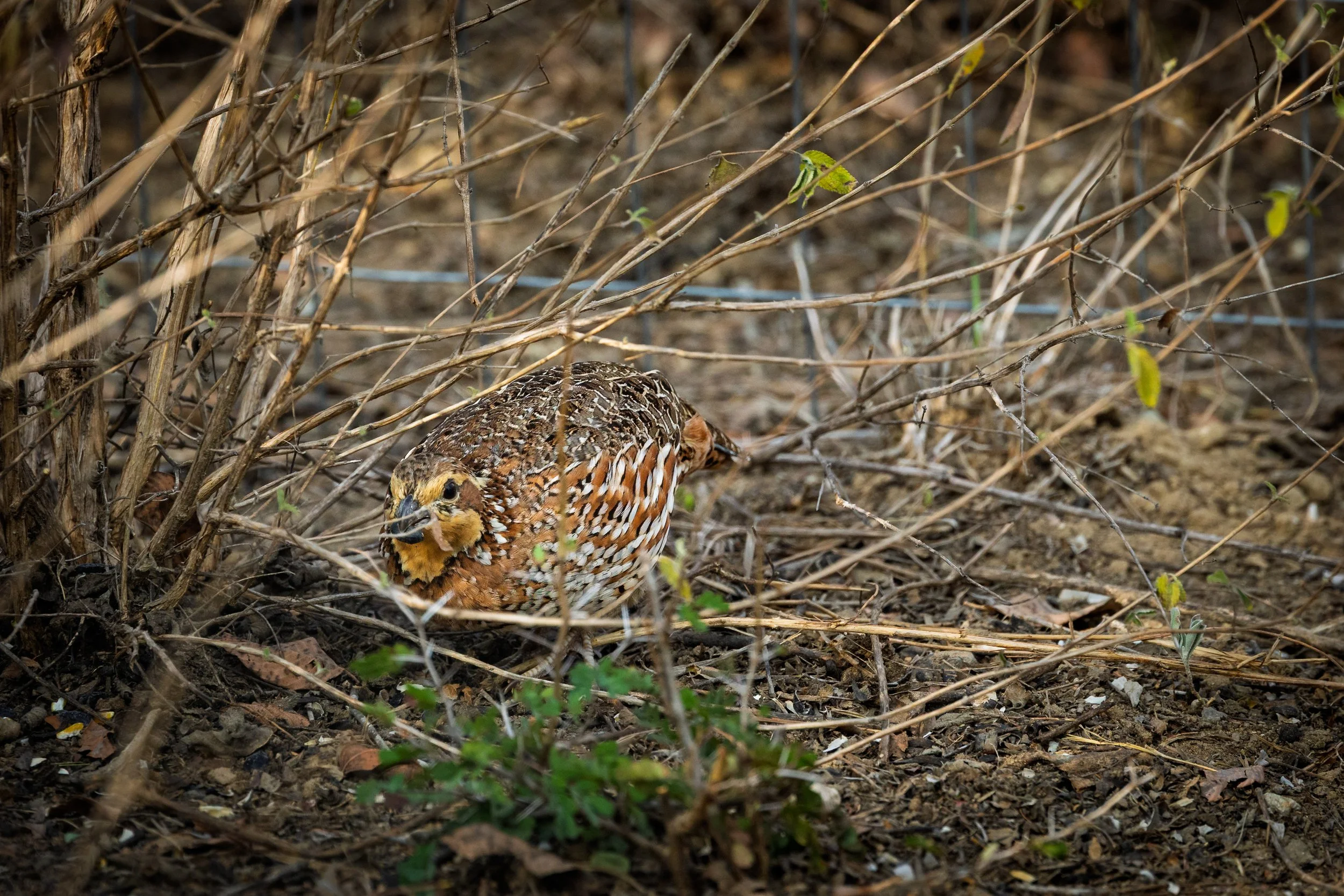
Sneaky Northern Bobwhite- Falcon State Park
We met up again with Simon, Sean and a handful of others- some from our morning jaunt, some new. Once again into the breach (through the border wall) and down the trail to the feeding station. He didn’t put out any new food this time so it was less busy, but there were still a good handful of birds in the area. We got eyes on the male Rose-throated Becard this time, which was nice as we had only seen females back home in AZ. We got the full trifecta of Kingfishers again, had an Osprey perched down by the river, two Caracara, lots of Great-tailed Grackles, and as the sun set we heard several Common Paraques and Eastern Screech Owls. We also heard Great Horned Owl and a Barn Owl. (If you want a good jump scare, turn up your phone volume and listen to the call of the Barn Owl- don’t say I didn’t warn you!)
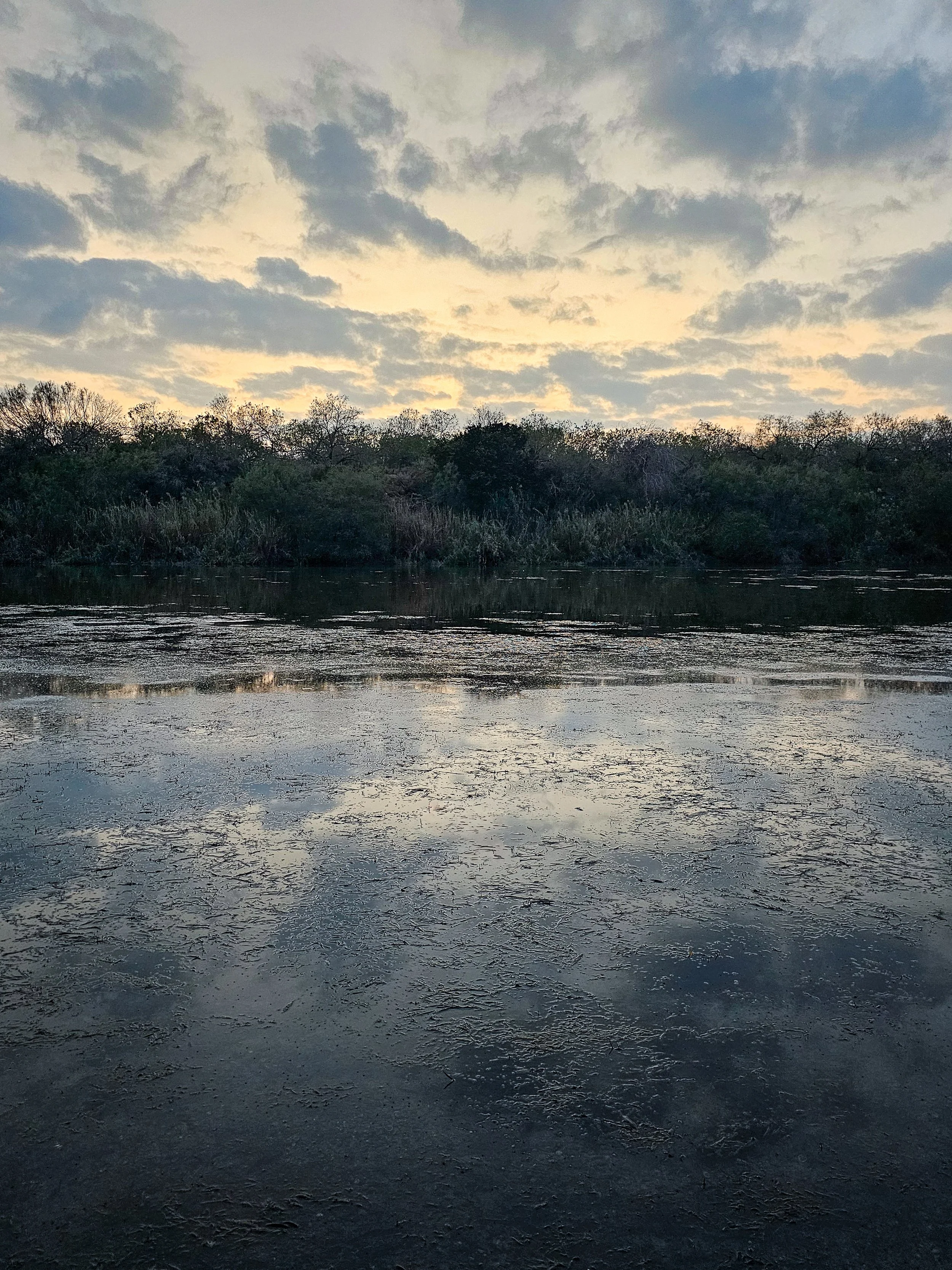
The Rio Grande at sunset- Santa Margarita Ranch
With the sun setting and darkness fast approaching, we headed past the feeding station to a small widened area in the dirt track adjacent to a farm gate. We all sat down here and chatted quietly. After it was fully dark, Simon gave us more instructions- sit still, shut up (he said it nicely) and be ready to QUIETLY move directly behind him when he says so. We all nodded enthusiastically, yes sir! We sat (mostly) quietly and luckily enough, a little to the south we heard the female Mottled Owl calling softly. He used a Barn Owl and Mottled Owl calls to try and coax her in. We all waited anxiously and could hear her short sets of calls slowly working their way a little closer. After 15-20 minutes (it felt like a decade), he whispers “alright, everybody slowly/quietly get up and come stand right behind me. The 5 of us stood, shuffled over, and his spotlight came to life, shining directly on the most beautiful bird I’ve ever seen. Strix virgata- a female Mottled Owl. Mottled Owls are the smallest in the Strix genus (think Barred Owl), with a round head, no ear tufts, dark eyes and a yellow bill. There is moderate streaking on the chest and belly and a white ring around the face. Simply gorgeous.
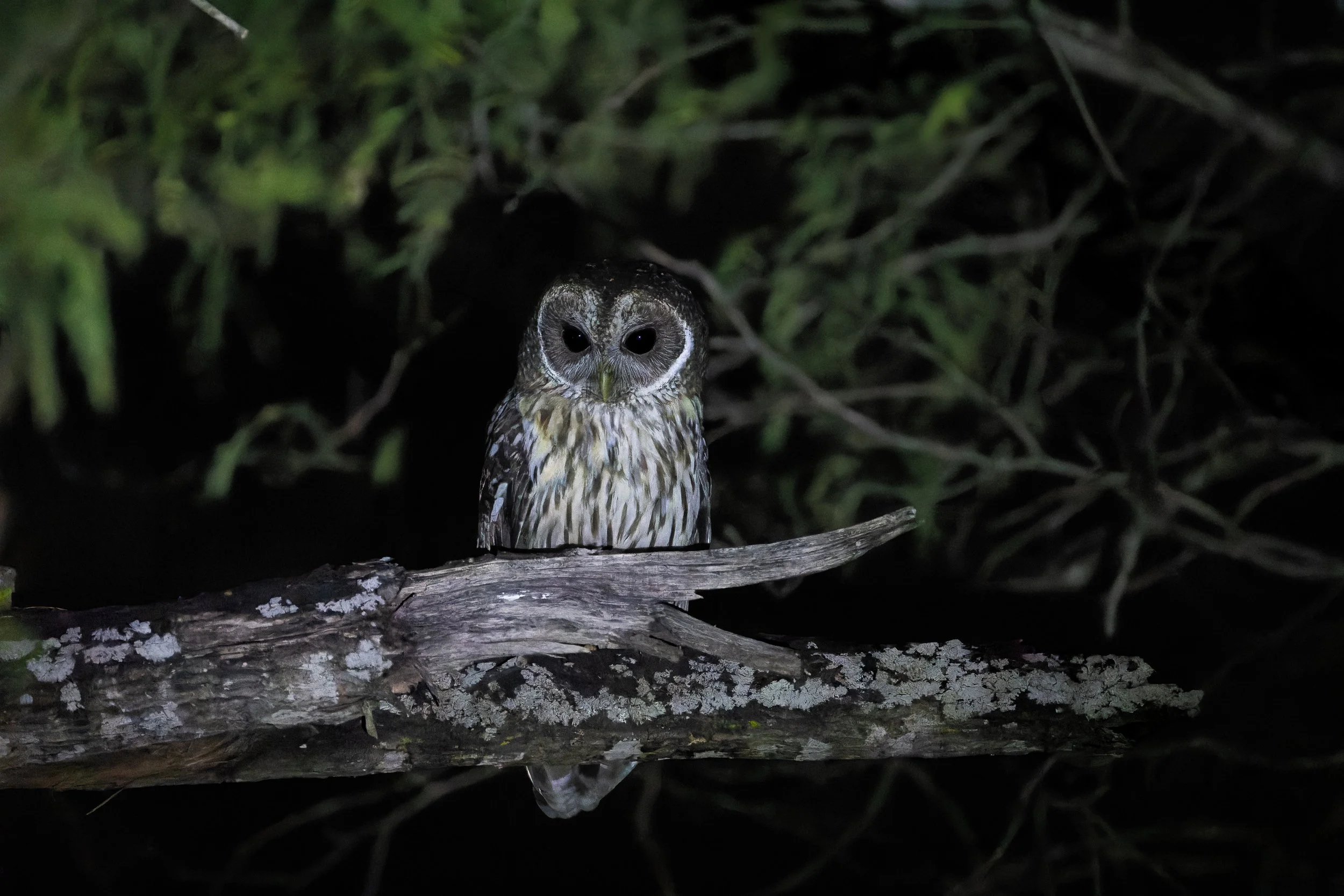
The Mottled Owl- Santa Margarita Ranch
She stayed on her perch just under the canopy for about two minutes, aware of us but seemingly not bothered. We got some acceptable pictures, watched and just took in her beauty. Then it was time for her to move on, no doubt to look for dinner. We all breathed a collective sigh of satisfaction- we got the bird! And not just the bird, but THE BIRD. She is the only known Mottled Owl in the entire United States! Such a special creature to be able to see and admire, and the perfect bird for my 700th life species! I will never forget that experience and gave myself goosebumps reliving the experience here. We were on cloud nine for the entire walk back to the car and the drive back to the Alamo Inn. What a fabulous day.
1/3/25
The day broke and all was well in the world. Despite this being our last day in the LRGV, I was still riding the high of yesterday’s experience. We took it very easy for the morning, having a relaxed cup (or two) of coffee and breakfast at the inn. We packed everything up and checked out of the Inn around 9:30am. I had scheduled a late departure from McAllen Airport, which didn’t leave until 5:20pm. Lots of time for a little more exploration this morning. We headed directly south to Santa Ana National Wildlife Refuge, one of the most popular spots to bird here in the LRGV. On the way south, we had a White-tailed Kite and Northern Harrier hunting over some agricultural fields, along with Western Meadowlarks, and a few blackbird species to add to our Texas lists.
We made it to Santa Ana around quarter after 10am. Like I said, a nice relaxing morning. Similar to Bentsen, the visitor center is separated from the rest of the park by the border wall service road. *sigh* At least at the preserve proper there is no actual wall, just a canal, fencing, raised graded road and of course heavy border patrol presence. The refuge is about 2000 acres, with oodles of hiking paths, trails, roads and observation towers. It’s a hotspot for birders, butterfly enthusiasts, and anyone who enjoys the outdoors and wildlife. This was one of our favorite parks (it’s really hard to pick one over the others, they are all fantastic), it really has a little bit of everything- lakes/ponds, riparian areas, riverside and forested areas. We stayed about three hours, walked 3.5 miles and didn’t even see a quarter of it. We did see 60 bird species (almost 600 individuals), Javelina and Bobcat! The icing on the cake was a group of five Cave Swallows playing in the wind over one of the small resacas! Another lifer! It was a great final stop on a simply amazing trip.
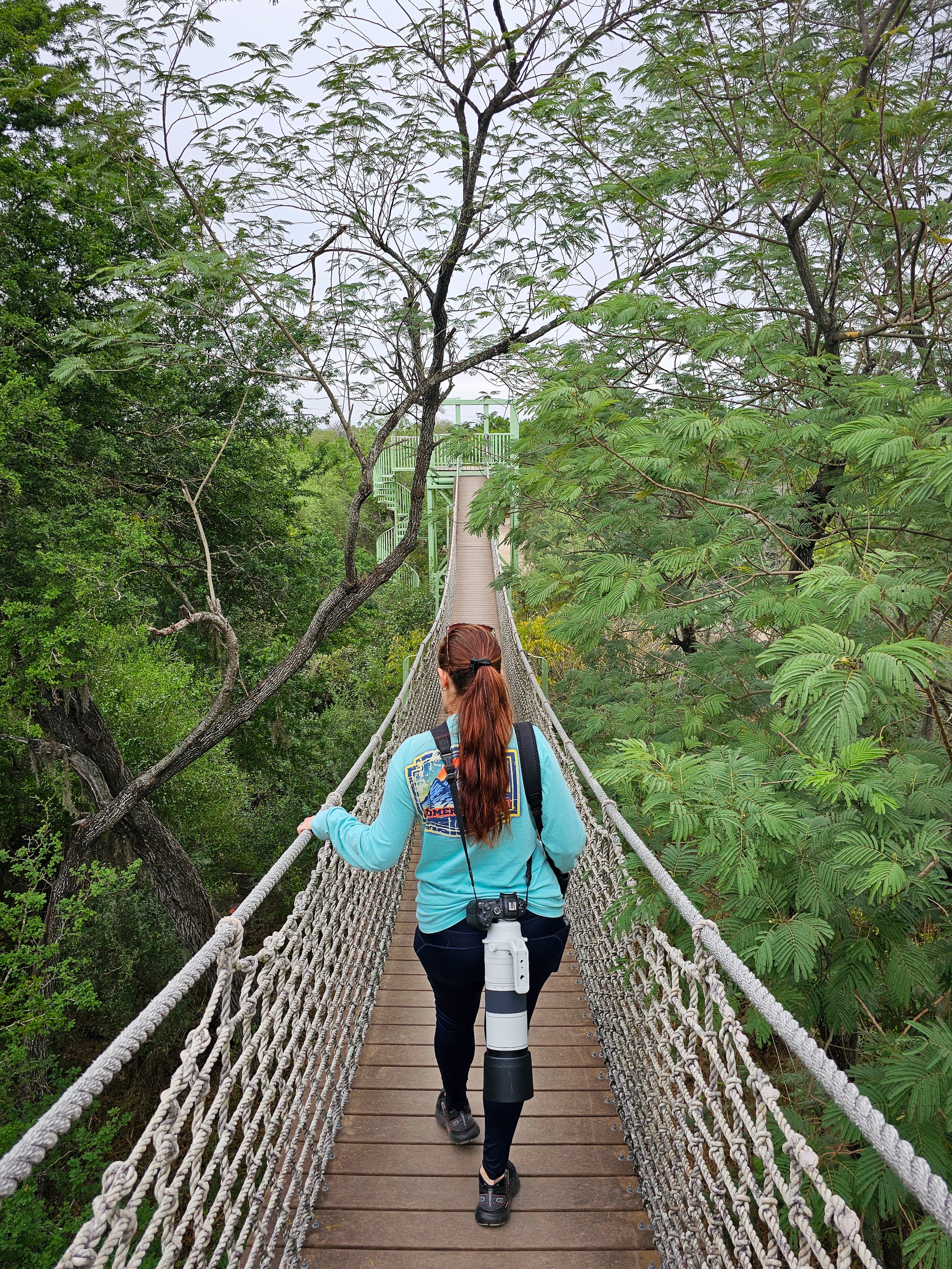
Observation Towers- Santa Ana Wildlife Refuge
We wrapped up around 1:30pm and headed back north through Alamo towards McAllen International Airport. We grabbed some food, put the rental through the car wash (boy was she dirty), and headed to the airport. With our bags checked, we relaxed and reflected on our trip until it was time to board. The flights to Houston, then home were pretty routine- no funny business.
What a wonderful adventure!
It was the perfect way to wrap up 2024 and start 2025 with a bang!
Lower Rio Grande Valley Final Tally:
18 locations visited in 5 different habitat zones
185 species seen, almost 11,000 individual birds!
28 lifers, 3 new ABA/USA species (Out of 41 and 7 possible, respectively)
2 exhausted and completely satisfied bird nerds
2024 Yearly goals:
350 species seen- Achieved by October, final tally was 440!
500 US Life Species- 517! With 85 new US species!
690 World Species- 691! We got 11 more for 701 by trip end on January 3rd
